The Line of a Legend: The Life and Legacy of Phil May
In the bustling, soot-stained streets of Victorian London, where the fog clung to the Thames and social hierarchies were as rigid as iron, one man possessed the singular ability to distill the chaos of urban life into a few masterful strokes. Philip William May, known more affectionately to the public as Phil May, was not merely an illustrator; he was a visual chronicler of an era in transition. Born in 1864 in Wortley, near Leeds, May’s journey from the industrial heart of Yorkshire to the pinnacle of British satire is a testament to the power of a refined eye and an economical hand. His early life, though marked by the loss of his father when he was only nine, was nurtured by a family lineage that valued the draughtsman's craft, providing him with the foundational tools to eventually reshape the landscape of modern cartooning.
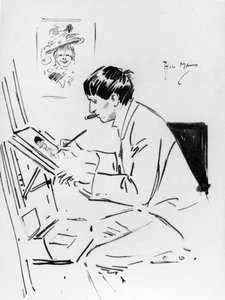
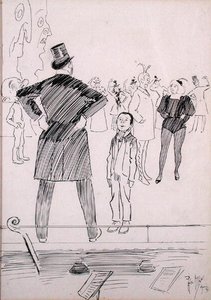
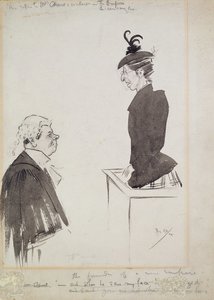
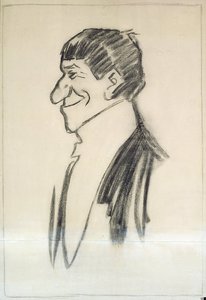
May’s artistic evolution was deeply rooted in his formal training at the Leeds Art School. It was here that he moved beyond simple imitation, absorbing the burgeoning influences of Impressionism and Post-Impressionism. This exposure to new ways of perceiving light, texture, and atmosphere would later infuse his work with a depth that transcended mere caricature. While many of his contemporaries focused on heavy, cluttered Victorian ornamentation, May began to experiment with a vigorous economy of line. He learned the art of what he left out as much as what he put in, developing a technique where a single, confident stroke could convey the weary slouch of a London laborer or the haughty tilt of a socialite's chin.
A Master of Satire and the Punch Era
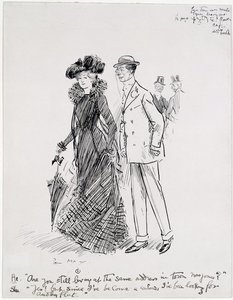
The true zenith of May’s career arrived through his prolific association with Punch magazine, the definitive voice of British humor during the late nineteenth century. Within the pages of this legendary publication, May became a household name. He possessed an uncanny ability to navigate the complexities of social and political commentary, using wit rather than malice to critique the absurdities of his age. His illustrations were not merely drawings; they were character studies that captured the very essence of the Cockney spirit and the shifting class dynamics of London. Through his work, the ephemeral moments of street life—the banter in a pub, the bustle of a market, the quiet melancholy of a rainy afternoon—were immortalized.
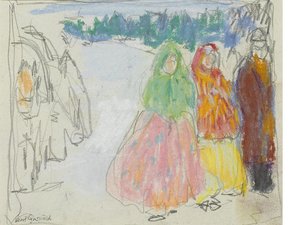
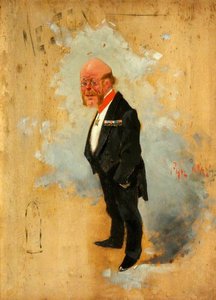
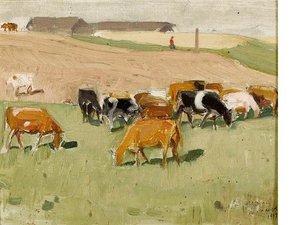
His technical prowess was most evident in his ability to blend different mediums to evoke emotion. While he is celebrated for his sharp, satirical cartoons, his more contemplative works, such as his pastel sketches and watercolors, reveal a much softer, more sensitive artist. In pieces like “Study Of Russian Village Women,” one can observe a profound mastery of layered textures and muted palettes. By utilizing subtle blues, greens, and earthy tones, he could create a sense of atmosphere that felt both intimate and expansive. This duality—the ability to be both a biting satirist and a tender observer of human vulnerability—is what truly set him apart from the illustrators of his time.
The Enduring Impact of a Visionary
Tragically, the light of May’s career was extinguished far too soon. His death in 1903 at the age of thirty-nine left the art world in mourning and left many wondering what further revolutions his pen might have sparked. Yet, his historical significance cannot be overstated. Phil May acted as a vital bridge between the ornate, detailed illustration styles of the mid-Victorian period and the streamlined, modern cartooning that would define the twentieth century. He stripped away the unnecessary, proving that simplicity is often the highest form of sophistication.
Today, his legacy lives on in every artist who seeks to capture a complex truth with minimal means. His work remains a window into a vanished world, offering a poignant look at the faces and feelings of a London that was rapidly disappearing under the weight of modernity. To study May is to witness the birth of a modern visual language, a language built on the foundation of empathy, humor, and an unerringly precise line.