The Visionary Lens of Gabriel Lekegian
In the twilight of the nineteenth century, as the Ottoman Empire and Egypt underwent profound transformations, a singular artistic eye was capturing the soul of the East through the emerging medium of photography. Gabriel Lekegian (1853 – c. 1920), an Armenian artist whose name became synonymous with the prestigious studio Photographie Artistique G. Lekegian & Cie, bridged the gap between classical painting and the burgeoning art of the camera. Born in Istanbul, Lekegian was not merely a documentarian but a storyteller who infused his photographic compositions with the dramatic flair of an Orientalist master. His work serves as a luminous window into a vanished era, where the streets of Cairo and Constantinople were captured with a level of meticulous detail and atmospheric depth that few of his contemporaries could replicate.
The foundation of Lekegian’s aesthetic was deeply rooted in the traditions of fine art painting. His early training under the Italian expatriate Salvatore Valeri provided him with a sophisticated understanding of light, shadow, and the grandeur of Eastern landscapes. This academic rigor was further enriched by his exposure to the monumental works of Jean-Léon Gerome, whose influence is palpable in Lekegian’s ability to orchestrate complex scenes with compositional precision. When Lekegian transitioned into photography, he did not abandon these painterly principles; instead, he translated them into the silver gelatin and albumen processes, treating every frame as if it were a canvas prepared for an exhibition of high art.
A Legacy Captured in Cairo and Constantinople
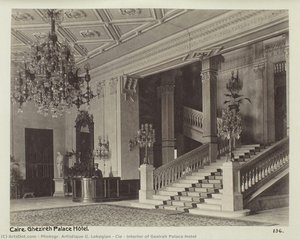
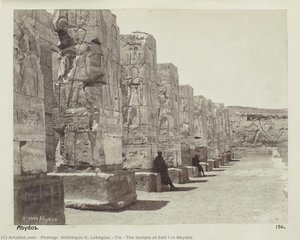
Around 1880, Lekegian’s journey led him to Cairo, a city then teeming with the exotic allure that captivated the European imagination. It was here that he established his studio, Photographie Artistique G. Lekegian & Cie, which became a vital destination for travelers, scholars, and aristocrats. His photographic output during this period represents a monumental achievement in historical documentation. Through his lens, we encounter the architectural splendor of Egypt and the rhythmic pulse of its urban life. His work is characterized by several defining elements:
- Orientalist Sensibility: A profound ability to capture the "exotic" beauty of Egyptian landscapes and architecture through a romanticized yet detailed lens.
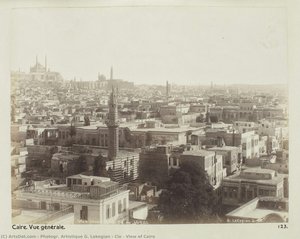
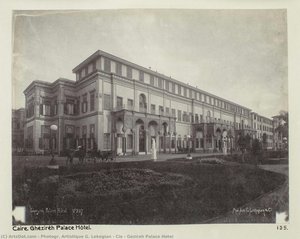
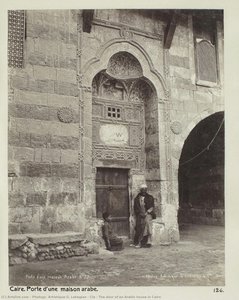
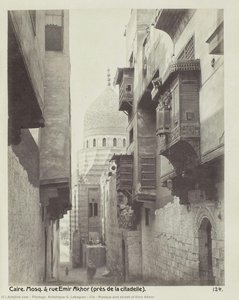
- Architectural Precision: An extraordinary focus on the intricate textures of the era, from the heavy, ornate door of an Arabic house in Cairo to the sweeping vistas of the city skyline.
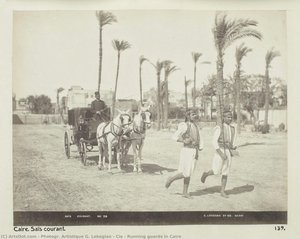
- Human Narrative: Beyond mere landscapes, his work captures moments of movement and life, such as the dynamic energy found in pieces like Running guards in Cairo.
- Atmospheric Light: A mastery of natural light that evokes the heat of the Egyptian sun and the soft shadows of twilight, reminiscent of his classical training.
The historical significance of Lekegian’s oeuvre cannot be overstated. As a pioneer of Egyptian Orientalist photography, he provided an invaluable visual record of Ottoman Egypt at a pivotal moment in history. His images are more than mere snapshots; they are carefully constructed artistic statements that preserve the dignity and complexity of the cultures he documented. Today, his photographs stand as essential artifacts for historians and art lovers alike, offering a hauntingly beautiful glimpse into the textures, faces, and landscapes of a world on the precipice of modernity.