Menu
FREE ART CONSULTATION

pieter cornelisz. van slingelandt

1640 - 1691

Quick Facts

  • Born: 1640, Leiden, Netherlands
  • Topics explored: women
  • Art period: Early Modern
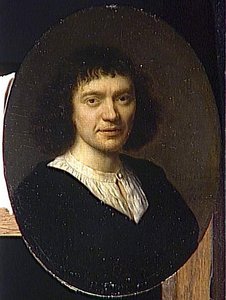
  • Top-ranked work: PORTRAIT DE L'ARTISTE
  • Died: 1691
  • Mediums: oil on canvas
  • Lifespan: 51 years
  • Color intensity: monochromatic
  • Room fit: living room
  • More…
  • Creative periods: mature period
  • Top 3 works:
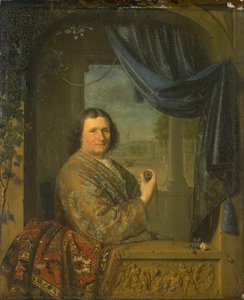
    • PORTRAIT DE L'ARTISTE
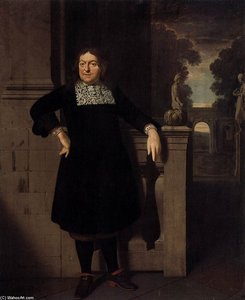
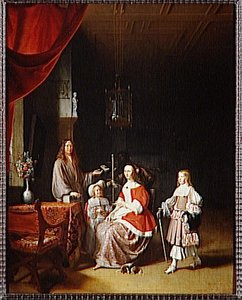
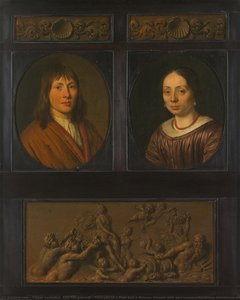
    • JOHANNES MEERMAN (1624, 1675) , BOURGMESTRE DE LEYDE ET SA FAMILLE
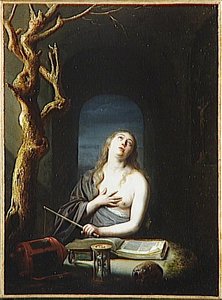
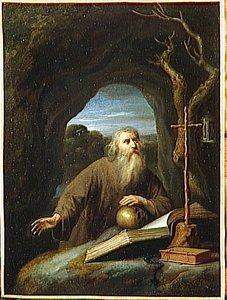
    • SAINTE MADELEINE PENITENTE
  • Also known as: Pieter C. van Slingelandt
  • Works on APS: 20
  • Copyright status: Public domain
  • Nationality: Netherlands
  • Museums on APS: The Louvre
  • Typical colors: espresso

Art Quiz

There is only one correct answer for each question.

Question 1:
Under whom did Pieter Cornelisz van Slingelandt receive his artistic training?
Question 2:
Van Slingelandt was known as one of Leiden's what?
Question 3:
What guild was Pieter Cornelisz van Slingelandt a member of?
Question 4:
According to Houbraken, what was a notable characteristic of Van Slingelandt's work ethic?
Question 5:
In what year did Pieter Cornelisz van Slingelandt die?

A Master of Meticulous Detail: Pieter Cornelisz van Slingelandt and the Leiden *Fijnschilders*

Pieter Cornelisz van Slingelandt, born in Leiden in 1640 and passing away there in 1691, occupies a fascinating niche within the illustrious landscape of Dutch Golden Age painting. He wasn’t a revolutionary innovator like Rembrandt or Vermeer, but rather a supremely gifted practitioner of *fijnschilderij* – “fine painting” – an aesthetic emphasizing painstaking detail, smooth surfaces, and an almost enamel-like finish. His life was deeply interwoven with the artistic community of Leiden, a city renowned for its subtle refinement and dedication to realistic representation. Van Slingelandt’s career unfolded during a period when portraiture and genre scenes flourished, catering to a burgeoning middle class eager to commemorate their lives and possessions with remarkable accuracy. He wasn't merely recording appearances; he was crafting miniature worlds of quiet domesticity and dignified presence.

Apprenticeship and the Legacy of Gerard Dou

Van Slingelandt’s artistic journey began under the tutelage of Gerard Dou, a prominent figure in Leiden and a master of intimate genre scenes. This apprenticeship proved formative, deeply influencing Van Slingelandt's style and technique. Dou’s emphasis on light and shadow, his meticulous attention to texture, and his preference for small-scale compositions all became hallmarks of Van Slingelandt’s own work. In fact, the influence was so profound that many of his early paintings were mistakenly attributed to his teacher. This isn't surprising; both artists shared a commitment to rendering everyday objects with astonishing precision – a gleaming pewter plate, the delicate folds of fabric, the subtle play of light on skin. However, Van Slingelandt gradually developed his own distinct voice, characterized by an even more methodical approach and a slightly cooler palette than Dou’s often warmer tones. He wasn't simply imitating; he was refining and expanding upon the lessons learned in Dou’s studio.

The Art of *Fijnschilderij* and Van Slingelandt’s Oeuvre

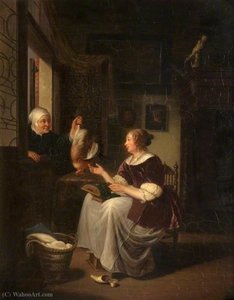
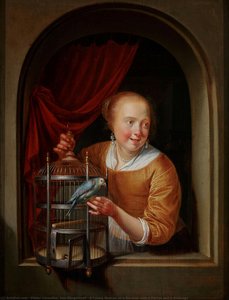
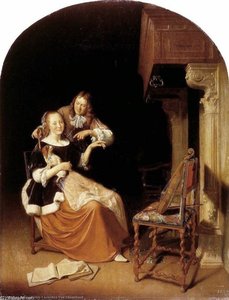
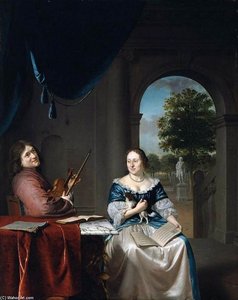
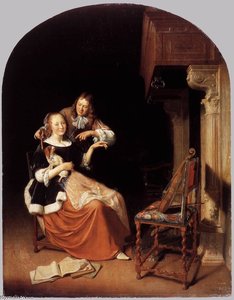
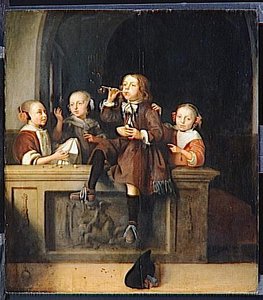
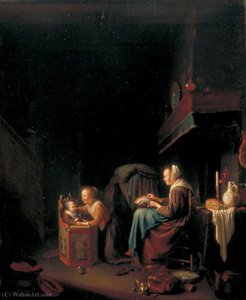
Van Slingelandt excelled at both portraiture and genre painting, though his portraits are arguably more celebrated. These weren't grand, imposing statements of power or status; instead, they were intimate studies of individuals, often depicted in quiet contemplation or engaged in everyday activities. A prime example is “Portrait of a Lady Seated with a Music Book on her Lap,” which showcases his ability to capture not just physical likeness but also a sense of inner life. The lady’s gaze is gentle and thoughtful, her hands delicately holding the music book, and the light falls softly upon her face, illuminating her features with subtle grace. His genre scenes, while fewer in number, demonstrate an equally keen eye for detail and a sensitivity to the nuances of daily life. He depicted scenes of domestic tranquility – a woman preparing breakfast, children playing games – imbuing them with a sense of quiet dignity and understated elegance. The sheer laboriousness of his technique is legendary; stories circulated that he would spend weeks perfecting the lace on a collar or the reflection in a silver goblet. This dedication to perfection, while sometimes criticized as overly meticulous, resulted in paintings of extraordinary beauty and refinement.

Guild Membership and Lasting Significance

Van Slingelandt’s commitment to his craft extended beyond his studio. He was an active member of the Leiden Guild of St. Luke, serving as its headman in 1690 and deacon in 1691 – positions that attest to his standing within the artistic community. His involvement with the guild underscores his dedication not only to his own art but also to the preservation and promotion of artistic standards. While he may not be a household name today, Van Slingelandt’s legacy endures as a prime example of the *fijnschilder* tradition. He represents a particular strand within the Dutch Golden Age – one that valued meticulous observation, technical virtuosity, and an unwavering commitment to realism. His paintings offer a glimpse into the lives of 17th-century Dutch citizens, capturing their world with remarkable accuracy and sensitivity. Today, his works are treasured by museums and collectors alike, serving as a testament to the enduring power of quiet beauty and painstaking craftsmanship. Exploring Van Slingelandt’s oeuvre is not merely appreciating beautiful paintings; it's stepping into a bygone era and experiencing the world through the eyes of a master artisan.