Pietro (Falda) GB Ferrerio: Architect of Roman Grandeur
Pietro (Falda) GB Ferrerio, a name perhaps less familiar than those of his contemporaries Bernini or Borromini, nevertheless stands as a pivotal figure in the burgeoning field of architectural documentation and a crucial voice in shaping the visual landscape of 17th-century Rome. Born around 1600 and tragically passing away in 1654, Ferrerio’s legacy resides primarily within his monumental work: *Palazzi di Roma de piu' celebri architetti*, a meticulously researched and illustrated treatise on the palaces of Rome built between the 15th and 17th centuries. This ambitious project, undertaken with Giovanni Battista Falda, offered an unprecedented level of detail and accuracy in depicting these architectural marvels – a testament to Ferrerio’s dedication and artistic vision.
Ferrerio's early life remains shrouded in relative obscurity. Records suggest he was apprenticed to a Roman architect, likely absorbing the principles of classical design and Renaissance ornamentation. However, it was his collaboration with Falda that truly cemented his place in architectural history. The partnership produced not just a book, but a systematic approach to understanding and representing architecture – a radical departure from the largely descriptive accounts prevalent at the time. Falda’s contribution focused on the practical aspects of measurement and proportion, while Ferrerio's artistic eye ensured the illustrations were both technically accurate and aesthetically compelling.
The *Palazzi di Roma* Project: A Revolution in Architectural Documentation
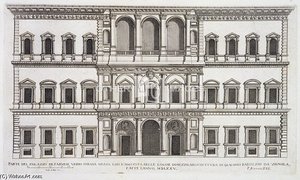
The *Palazzi di Roma* is more than simply a book of architectural drawings; it’s a foundational text. Prior to its publication, detailed representations of Roman palaces were scarce, often relying on anecdotal accounts and incomplete sketches. Ferrerio and Falda systematically visited and documented numerous palaces across Rome, employing precise measurements and creating scaled diagrams. The resulting two-volume work is remarkable for its uniformity – each palace depicted with a consistent level of detail and proportion. This standardization was revolutionary, allowing architects and scholars to compare designs and understand the evolution of architectural styles.
Each volume meticulously illustrated key palaces, including the Farnese Palace (a subject of particular fascination for Ferrerio), the Palazzo Barberini, and numerous others. The engravings, executed with remarkable skill, capture not only the exterior facades but also interior spaces – a rarity in contemporary architectural publications. The project’s meticulousness was further enhanced by the inclusion of notes on construction techniques, materials used, and even the historical context surrounding each building. It's estimated that over 60 plates were originally planned for Volume II, though only 39 were completed due to the untimely death of Falda.
Influences and Artistic Style
Ferrerio’s artistic style reflects a deep engagement with both classical Roman architecture and the Baroque aesthetic emerging in Rome. While firmly rooted in classical principles – evidenced by his careful attention to proportion, symmetry, and ornamentation – he wasn't afraid to embrace the dynamism and theatricality characteristic of the Baroque period. His engravings often convey a sense of grandeur and movement, capturing the light and shadow that defined the Roman cityscape. The influence of Andrea Palladio, the celebrated Venetian architect, is clearly discernible in Ferrerio’s designs, particularly his emphasis on harmonious proportions and balanced compositions.
Furthermore, Ferrerio's work demonstrates a keen awareness of contemporary architectural trends. He documented palaces built by leading architects of his time, including Carlo Maderno and Francesco Borromini, providing valuable insights into the evolving styles of the era. The project’s comprehensive scope suggests a desire to create a definitive record of Rome’s architectural heritage – a task that speaks volumes about Ferrerio's ambition and scholarly rigor.
Legacy and Historical Significance
Despite his untimely death, Pietro (Falda) GB Ferrerio left an enduring legacy. *Palazzi di Roma de piu' celebri architetti* remains a seminal work in the history of architectural documentation and a valuable resource for scholars and enthusiasts alike. The book’s meticulous illustrations and detailed descriptions have informed generations of architects and historians, shaping our understanding of Rome’s architectural past.
The project also played a crucial role in establishing a systematic approach to architectural study – moving beyond mere description to encompass measurement, proportion, and historical context. Ferrerio's work helped to preserve the memory of Roman palaces that would otherwise have been lost to time, ensuring their legacy continues to inspire awe and admiration centuries later. His dedication to accuracy and his artistic skill cemented his place as a significant contributor to the Baroque era’s architectural discourse.