Julian Stanczak: Pioneer of Geometric Abstraction and Cosmic Vision
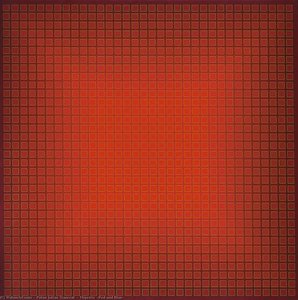
Julian Stanczak (Polish: Julian Stanisław Stanczak; August 19, 1924 – March 25, 2017) was a Polish-American abstract painter renowned for his pioneering contributions to Op art and geometric abstraction. Born in Łódź, Poland, he emigrated to the United States in 1956, establishing a prolific artistic career that spanned decades and cemented his place as one of the most influential figures in postwar American painting. His distinctive style—characterized by dynamic red-blue compositions and energetic mark-making—captured the essence of cosmic energy and timeless beauty, reflecting both Eastern European intellectual traditions and Western avant-garde experimentation.
Early Life and Artistic Influences
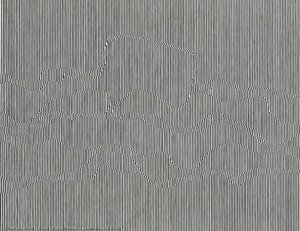
Stanczak’s formative years were marked by exposure to Surrealist ideas and Dada nihilism during his studies at Łódź University. These influences instilled in him a rebellious spirit and a fascination with exploring the subconscious mind, concepts that would later permeate his artistic practice. Notably, he was deeply impacted by László Moholy-Nagy's Op art movement, which championed illusionistic techniques to stimulate visual perception and challenge conventional notions of representation. This encounter ignited Stanczak’s passion for manipulating color and texture to create immersive experiences for the viewer—a pursuit that would define his artistic trajectory.
The Rise of Geometric Abstraction
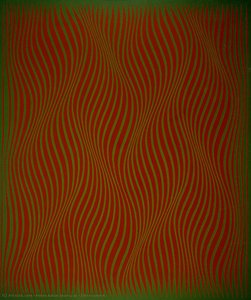
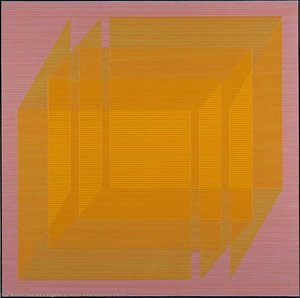
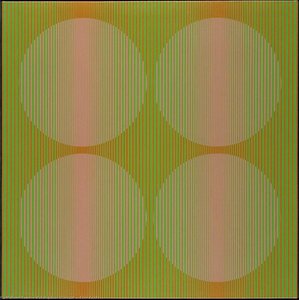
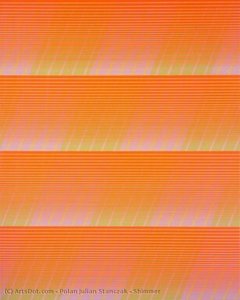
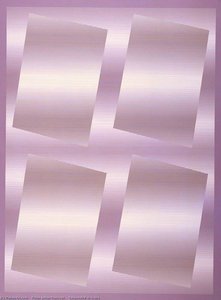
Following his arrival in New York City, Stanczak embraced geometric abstraction as his primary medium, developing a highly disciplined approach rooted in mathematical principles. He meticulously crafted compositions using interlocking triangles and rectangles, creating visually arresting patterns that seemed to defy gravity and evoke the grandeur of space. His canvases pulsated with vibrant hues—primarily reds and blues—applied in layered textures and subtle gradations—a technique he termed “determinative focus.” This method aimed to generate visual sensations akin to those experienced during meditation or hypnosis, mirroring Stanczak’s interest in exploring psychological states through art.
Notable Works and Artistic Legacy
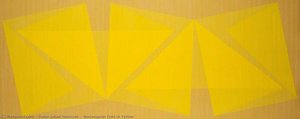
Stanczak's oeuvre encompasses a vast array of paintings spanning from the 1960s to his death in 2017. Among his most celebrated pieces are “Determinative Focus” (1962), “Rectangular Fold in Yellow” (1971), and “Translucent” (1975). These artworks exemplify his mastery of Op art principles while simultaneously demonstrating a profound engagement with the philosophical implications of geometric abstraction. Critics lauded Stanczak’s ability to distill complex ideas into deceptively simple visual forms—a testament to his artistic vision and intellectual rigor. His influence extended beyond painting, inspiring artists across various disciplines who sought to harness the power of geometry and color to convey emotional resonance.
Recognition and Historical Significance
Stanczak received numerous accolades throughout his career, including honorary doctorates from Yale University and Parsons School of Design. He was recognized as a leading figure in American art history and celebrated for his unwavering commitment to artistic innovation. His work continues to resonate with audiences today, serving as an enduring symbol of the modernist quest for transcendence—a pursuit that aligns seamlessly with Stanczak’s belief in the transformative potential of art to illuminate the human condition. He remains a pivotal voice in the canon of 20th-century abstraction, securing his legacy as one of the most visionary artists of his time.