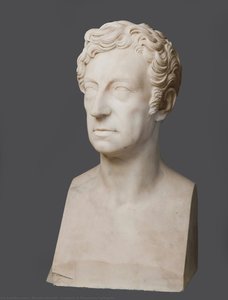
The Sculptor of Stone and Sentiment: The Life of Rinaldo Rinaldi
In the grand tapestry of nineteenth-century Italian art, few figures embody the transition from Neoclassical rigor to Romantic emotionality as gracefully as Rinaldo Rinaldi. Born in the historic city of Padua in 1793, Rinaldi’s journey into the world of fine art began not with a brush, but with the tactile intimacy of wood. Under the watchful eye and patient tutelage of his father, he mastered the delicate nuances of wood carving from the age of eight, a foundational period that instilled in him an unparalleled understanding of form, texture, and the very soul of organic material. This early apprenticeship served as the bedrock for a career that would eventually see him commanding the most prestigious mediums of his era, transitioning seamlessly into the demanding discipline of stone carving by the age of fourteen.
Rinaldi’s artistic evolution was propelled by an insatiable academic hunger. His studies at the Accademia di Belle Arti in Venice, guided by luminaries such as Leopoldo Cicognara and Matteini, provided him with a sophisticated command of classical ideals. However, it was his move to Rome in 1812 that would irrevocably alter the trajectory of his life. Secured by a prestigious stipend, Rinaliente entered the orbit of the legendary Antonio Canova. To study under Canova was to touch the very pinnacle of Neoclassicism; Rinaldi became more than just a pupil, absorbing the monumental style and the serene, idealized beauty that defined the Roman school. His ambition was so profound that following the master's death, Rinaldi sought to inhabit the very studio Canova had occupied for three decades, a testament to his desire to carry forward the torch of classical excellence.
A Legacy Forged in Politics and Piety
The life of Rinaldi was never merely confined to the quiet sanctuary of the sculptor's studio; it was deeply intertwined with the turbulent political currents of the 19th century. His commitment to civic duty was famously tested during the tumultuous events of 1849. As a participant in the brief and idealistic Roman Republic, Rinaldi found himself on the wrong side of history following the Papal Restoration. The resulting period of imprisonment served as a poignant chapter in his biography, highlighting a man whose convictions were as firm as the marble he carved. Yet, even amidst political upheaval, his artistic output remained prolific and deeply resonant, blending intellectual rigor with a burgeoning Romantic sensibility.
His later years were marked by significant institutional recognition and profound commemorative works. Rinaldi ascended to the position of dean of the Accademia di San Luca in Rome, a role that solidified his status as a pillar of the artistic community. His ability to weave narrative and emotion into stone is perhaps most poignantly realized in his monumental task: the creation of the Monument to Pietro Fortunato Calvi. Unveiled in 1872 in Noale, this tribute to one of the Belfiore martyrs stands as a breathtaking synthesis of his technical mastery and his capacity for spiritual depth, capturing the essence of sacrifice and faith.
The breadth of Rinaldi's repertoire is a testament to his versatility. His works often drew inspiration from classical mythology and profound human drama, including:
- Erminia Moïse: A work reflecting the influence of Michelangelo’s dramatic power.
- Ulisse recognized by his dog: A tender exploration of loyalty and myth.
- The Resurrection: An evocative piece demonstrating his ability to capture the sublime.
- Justice and Peace: Sculptures that embody the allegorical weight of his classical training.
Through his hands, cold stone was transformed into vessels of memory, politics, and profound human emotion. Rinaldo Rinaldi remains a vital link in the history of Italian sculpture, representing the bridge between the disciplined perfection of the Neoclassical era and the expressive, soulful depths of the Romantic movement.