The Architecture of Memory: The Sculptural World of Rubén Ochoa
In the sprawling, concrete-laden expanse of Los Angeles, where the boundaries between urban infrastructure and human existence often blur, the work of Rubén Ochoa emerges as a profound meditation on space and social identity. Born in Oceanside, California, in 1974, Ochoa has cultivated an artistic practice that does not merely observe the city but actively engages with its skeletal remains. His work is a visceral dialogue between the permanence of construction materials and the ephemeral nature of human movement, creating a sensory experience that forces the viewer to confront the very foundations of our built environment.
Ochoa’s artistic lineage is rooted in a rigorous academic pursuit of both form and concept. After earning his Bachelor of Fine Arts from the prestigious Otis College of Art and Design in 1997, he continued his intellectual evolution at the Parsons School of Design in New York City, before ultimately securing a Master of Fine Arts from the University of California, Irvine in 2003. This multidisciplinary training provided him with the tools to bridge the gap between experimental studio practice and critical sociological inquiry. His education instilled in him a fascination with how architecture dictates behavior, leading him to treat the city itself as both his medium and his subject.
Materiality and the Urban Pulse
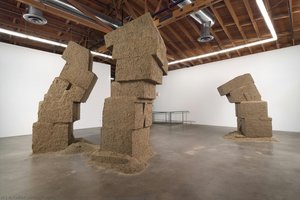
To encounter an Ochoa installation is to witness the raw, unadorned truth of urban decay and reconstruction. He is perhaps most renowned for his uncompromising use of industrial materials—specifically rebar and concrete. These are not merely choices of convenience but symbolic anchors; they represent the rigid, often oppressive structures that define modern life. Through the manipulation of these heavy, earth-toned elements, Ochoa creates monumental forms that evoke a sense of displacement and fragmentation. His sculptures often feel as though they are in a state of becoming or deconstructing, mirroring the constant flux of the metropolitan landscape.
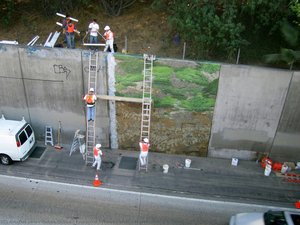
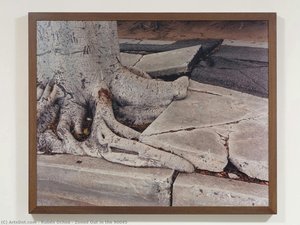
Yet, his vision extends far beyond the weight of stone and steel. Ochoa’s practice is deeply interdisciplinary, weaving together photography, drawing, and site-specific interventions to explore the tension between social classes and the natural world. He possesses a unique ability to find profound meaning in the mundane—transforming objects like wooden ladders, ficus trees, or even vendor carts into components of a larger narrative about how we inhabit space. In his hands, a concrete freeway wall is not just a barrier, but a canvas for exploring the ideological and economic relationships that shape our sociopolitical reality.
Recognition and Lasting Impact
The significance of Ochoa’s contribution to contemporary art has been validated by some of the most prestigious institutions in the world. His inclusion in the 2008 Whitney Biennial marked a pivotal moment in his career, signaling his emergence as a vital voice in American art. This period of recognition was accompanied by significant accolades, including a John Simon Guggenheim Memorial Foundation Fellowship in 2008 and a Creative Capital Grant in 2005. These honors underscore the intellectual rigor and emotional depth that define his oeuvre.
His legacy is etched into the permanent collections of several world-class museums, ensuring that his exploration of urban echoes continues to resonate with future generations. Notable holdings include:
- The Whitney Museum of American Art
- The Smithsonian American Art Museum
- The Orange County Museum of Art
- Pérez Art Museum Miami
Through his evocative installations and thoughtful photographic explorations, Rubén Ochoa remains a sentinel of the urban experience. He challenges us to look closer at the cracks in the pavement and the shadows cast by our skyscrapers, reminding us that within the rigid structures of architecture, there lies a complex, breathing history of human struggle and resilience.