Salvador Viniegra y Lasso de la Vega: Life and Legacy
Early Life and Education
Salvador Viniegra y Lasso de la Vega (November 23, 1862 – April 29, 1915) was a Spanish historical painter and patron of the arts. Born in Cádiz, Spain, he initially pursued legal studies but soon discovered his passion for painting. He enrolled at the Escuela de Bellas Artes de Cádiz, where he received instruction from Rámon Rodríguez Barcaza and José Pérez Jiménez. His early artistic endeavors focused on watercolors, a series of which garnered him initial public recognition in 1877.Artistic Development and Influences
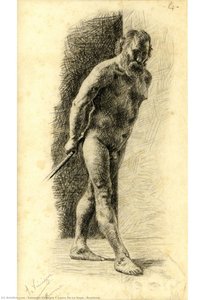
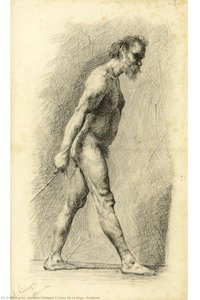
Viniegra’s talent quickly blossomed, earning him prizes at regional exhibitions. A pivotal moment in his development was his travel to Rome, where he dedicated himself to mastering life drawing techniques. This Italian period profoundly shaped his artistic style. He absorbed influences from the classical masters and developed a refined approach to composition and detail. His work demonstrates an understanding of both Spanish Romanticism and academic traditions.Major Works and Achievements
Throughout his career, Viniegra produced numerous significant paintings. Un patio de Sevilla, submitted to the Exposición de Hernandéz in 1882, showcased his emerging talent. However, it was La bendición de los campos en 1800, exhibited at the Exposición Nacional de Madrid in 1887, that brought him widespread acclaim and a first-prize award. His most celebrated work, La romería del Rocío (1897), achieved international fame, winning gold medals at world fairs in Munich and Vienna. He generously donated this masterpiece to the Museo de Arte Moderno in Madrid in 1905.Role at the Prado Museum and Patronage of the Arts
In 1898, Viniegra assumed a prominent role as deputy director and conservator of the Prado Museum in Madrid. This position allowed him to contribute significantly to Spain’s cultural heritage. Beyond his administrative duties, he became a dedicated patron of the arts, offering support to numerous artists. Notably, he provided assistance to composer Manuel de Falla and cellist/conductor Juan Ruiz Casaux, demonstrating his commitment to fostering creativity in various disciplines.Historical Significance and Legacy
Salvador Viniegra’s paintings captured the essence of Spanish life and history, resonating with audiences across Europe. His works were widely reproduced, establishing him as one of the most popular painters of his time. He bridged the gap between traditional academic painting and emerging artistic trends. While not a revolutionary figure, his dedication to craftsmanship, historical accuracy, and patronage left a lasting impact on Spanish art and culture. His legacy continues through his paintings and the artists he supported.Key Characteristics of His Work
- Detailed depictions of Spanish life and customs
- Masterful use of color and light
- Historical accuracy and romanticized narratives
- Strong compositional skills
- A blend of academic technique with a distinctly Spanish sensibility