A Visionary of the Romantic Landscape
In the heart of Versailles, amidst the fading echoes of the 18th century, Louise-Joséphine Sarazin de Belmont was born in 1790, a time when the winds of revolution and romanticism were beginning to reshape the European consciousness. Her journey into the world of fine art was not merely a pursuit of beauty, but an act of profound determination. At a time when the prestigious École des Beaux-Arts remained closed to women, Sarazin de Belmont found her path through the mentorship of Pierre-Henri de Valenciennes. This respected master recognized her innate talent and provided her with the rigorous formal training necessary to navigate a male-dominated art world, instilling in her a disciplined approach to light, shadow, and composition that would define her later masterpieces.
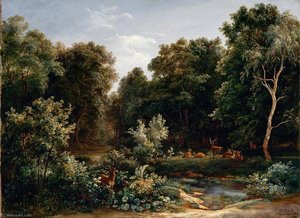
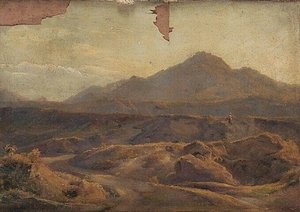
Her early career was marked by an extraordinary spirit of independence. Supported by the patronage of influential figures such as Joséphine Bonaparte and later the Duchess of Berry, she began submitting her works to the prestigious Paris Salon in 1812. These early entries were more than just artistic debuts; they were declarations of a burgeoning identity. As her talent matured, so did her appetite for exploration. Unlike many of her contemporaries who remained tethered to the studios of Paris, Sarazin de Belmont used her art as a passport, financing her own expeditions through the sale of her canvases. Her life became a nomadic tapestry of landscapes, woven from the rugged terrains of the Pyrenees and the dense, mysterious forests of Fontainebleau to the sun-drenched vistas of the Mediterranean.
The Italian Odyssey and the Romantic Spirit
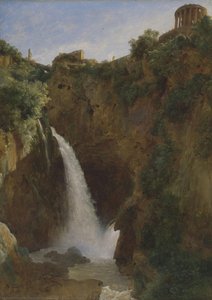
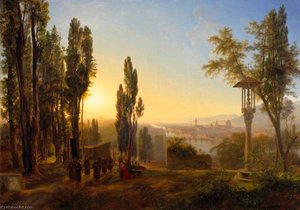
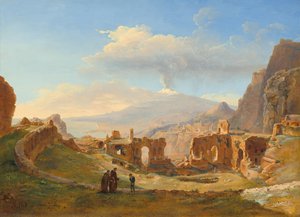
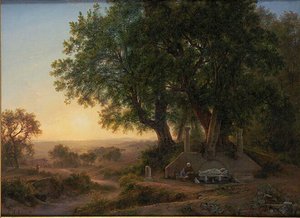
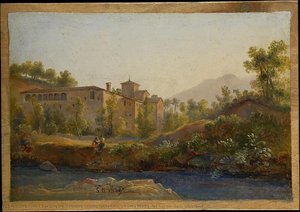
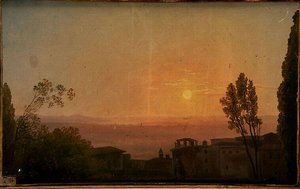
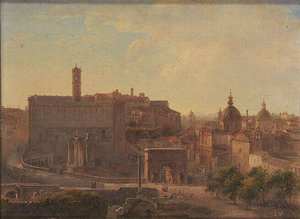
The true soul of Sarazin de Belmont’s oeuvre lies in her profound connection to Italy. Between 1824 and 1826, and again during a long residency from 1841 to 1865, she immersed herself in the classical grandeur of the Italian peninsula. Her travels through Rome, Naples, and Sicily were not mere sightseeing tours but deep, investigative odysseys into the heart of Romanticism. She possessed a rare ability to capture the tension between the enduring strength of antiquity and the ephemeral beauty of nature. In her hands, the crumbling ruins of Roman theaters and the shadowy depths of Italian grottoes became stages for emotional storytelling.
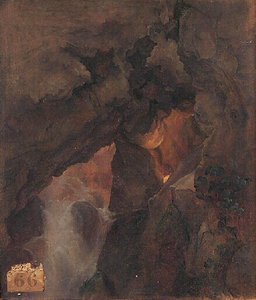
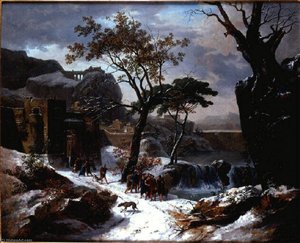
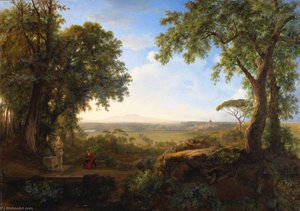
Her technique was characterized by a meticulous observation of natural phenomena. Whether she was depicting the stark, biting solitude of a snowy Italian landscape or the lush, vibrant greenery of a pastoral scene, her brushwork conveyed a sense of atmosphere that felt almost tactile. There is a haunting quality to works such as Vue intérieure de la grotte de Neptune à Tivoli, where light and shadow dance in a claustrophobic, expressionistic manner, evoking feelings of melancholy and awe. Through her lithographs and oil paintings, she documented the majesty of the natural world with a precision that honored the scientific curiosity of her era while embracing the emotional turbulence of the Romantic movement.
Legacy of a Trailblazing Artist
The historical significance of Louise-Joséphine Sarazin de Belmont extends far beyond the aesthetic beauty of her landscapes. She stands as a symbol of resilience and artistic autonomy. By navigating the limitations placed upon women in the 19th century, she carved out a space for female excellence in the landscape genre, proving that a woman could be both a meticulous documentarian of geography and a profound poet of light. Her Salon recognitions, spanning from 1831 to 1868, serve as a testament to her enduring relevance and technical mastery within the French academic tradition.
Today, her work remains a vital window into the Romantic era, offering a glimpse into a world where nature was viewed with both reverence and a sense of the sublime. Her legacy is preserved in the collections of great institutions, where her depictions of Brittany, Naples, and Rome continue to inspire awe. She remains an artist whose life and work were defined by a relentless pursuit of the horizon, leaving behind a visual record of a continent in transition and a testament to the power of the artistic vocation.