Menu
FREE ART CONSULTATION

sibylle gabriele prinzessin von preußen

Quick Facts

  • Art period: Contemporary
  • Born: 1952, Berlin, Germany
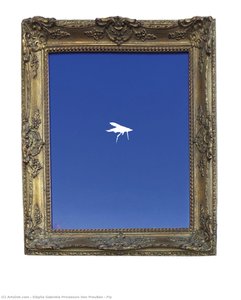
  • Top-ranked work: Fly
  • Museums on APS: Royal Bridges
  • Also known as: sibylle prinzessin von preussen
  • More…
  • Works on APS: 5
  • Nationality: Germany
  • Copyright status: Under copyright
  • Top 3 works:
    • Fly
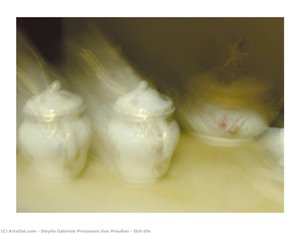
    • Still life
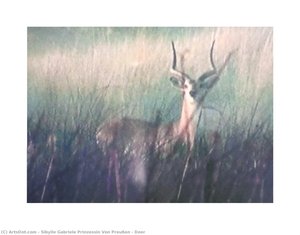
    • Deer

A Royal Vision: The Enchanting World of Sibylle Gabriele Prinzessin von Preußen

Sibylle Gabriele Prinzessin von Preußen, born in Berlin in 1952, is an artist whose work resonates with a delicate balance between the whimsical and the profound. Her journey into the realm of visual art was nurtured by a diverse academic background—studies in philosophy, psychology, biology, and fine arts at both Berlin and New York institutions laid the foundation for a uniquely perceptive artistic voice. This multidisciplinary approach is evident in her evocative paintings of animals, landscapes, and still lifes, which are not merely representations but explorations of harmony between nature, architecture, and the very essence of life. Awarded the Ehrenpreis of the DHS in 1978, Prinzessin von Preußen embarked on a career that would see her transition from lecturer to full-time artist, establishing Berlin as her creative home base since 1994.

The Pursuit of Happiness and Artistic Roots

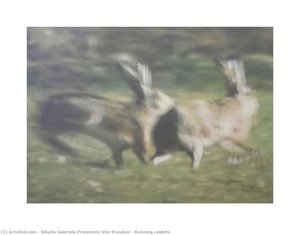
Prinzessin von Preußen’s artistic practice is deeply intertwined with the legacy of Frederick the Great and the Sanssouci Palace. For years, she has immersed herself in the palace's ornate decorations and wall paintings, drawing inspiration from their playful depictions of animals—rabbits, foxes, hunting dogs—and integrating them into her own fantastical imagery. This connection isn’t simply aesthetic; it represents a deliberate echo of Frederick the Great’s enlightened philosophy, his respect for nature, people, and animals. Her series can be seen as contemporary interpretations of animal fables, brimming with both humor and grace. The artist herself describes this exploration as a “quest towards happiness,” manifested in works like "Pursuit of Happiness," a papercut on canvas that embodies the serenity of true joy. The delicate silhouettes she creates—such as “Iris the small dancer”—combine painting with the almost forgotten art of silhouetting, resulting in floating compositions defined by pure colors like Prussian blue and crimson, stripped of extraneous detail to reveal clear form.

Technique and Symbolism: A Delicate Dance

Prinzessin von Preußen’s technique is as captivating as her subject matter. She masterfully employs papercut—often plated with silver—to create intricate layers and textures that lend a dreamlike quality to her work. This choice of medium isn't accidental; it reflects the fragility and ephemerality of life, mirroring the agility of a “Fly,” one of her notable pieces. The animals she depicts are not simply subjects but symbols of freedom, unburdened by the pressures and fears of existence. Her landscapes, too, are imbued with symbolism, often referencing specific locations like Sanssouci Palace and evoking a sense of nostalgia and longing for a harmonious past. The recurring motif of crowns—seen in “Crown of Creation”—suggests that happiness is not a universal concept but rather an individual pursuit, unique to each being.

Major Achievements and Contemporary Relevance

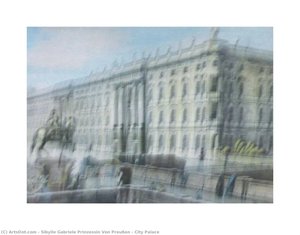
While Prinzessin von Preußen’s work draws inspiration from historical sources, it remains firmly rooted in the contemporary art landscape. Her pieces have been exhibited internationally and are held in numerous private collections. Her ability to blend traditional techniques with modern sensibilities has garnered recognition from both critics and collectors alike. The “Royal Bridges” series, showcased on Google Arts & Culture, exemplifies her commitment to reaffirming the connection between nature, architecture, and animals—a message particularly resonant in today’s world, where environmental concerns and a desire for mindful living are paramount. Her work isn't merely decorative; it invites viewers to contemplate their own relationship with the natural world and the pursuit of inner peace.

A Lasting Legacy: Art as Enlightenment

Sibylle Gabriele Prinzessin von Preußen’s artistic legacy lies in her ability to create works that are both visually stunning and intellectually stimulating. She seamlessly weaves together historical references, philosophical concepts, and a delicate aesthetic sensibility to produce art that is deeply moving and thought-provoking. Her commitment to the principles of the French Enlightenment—respect for nature, people, and animals—continues to inspire, reminding us of the importance of finding harmony in a complex world. Her paintings are not just images; they are windows into a realm where beauty, grace, and happiness reign supreme, offering a timeless message of hope and tranquility.

Art Quiz

There is only one correct answer for each question.

Question 1:
In what city was Sibylle Gabriele Prinzessin von Preußen born?
Question 2:
Besides art, what fields did Sibylle Prinzessin von Preußen study?
Question 3:
What award did Sibylle Prinzessin von Preußen receive in 1978?
Question 4:
From what year has Sibylle Prinzessin von Preußen been living and working in Berlin?
Question 5:
What is a prominent subject matter featured in Sibylle Prinzessin von Preußen's paintings?