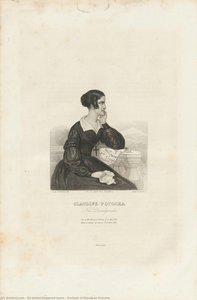
The Dual Vision of Sir James Hopwood Jeans
In the grand tapestry of twentieth-century intellectual history, few figures possess a thread as uniquely woven as Sir James Hopwood Jeans. To many, his name is etched into the foundations of modern physics, synonymous with the mathematical elegance of the cosmos and the profound mysteries of quantum theory. Yet, beneath the rigorous calculations of an astronomer lies the soul of a portraitist, an artist who sought to capture the intangible essence of the human spirit with the same precision he applied to the stars. Born in 1877 in Ormskirk, Lancashire, Jeans embodied a rare synthesis of scientific rigor and aesthetic sensitivity, creating a legacy where the boundaries between the observable universe and the emotive canvas were perpetually blurred.
His journey began in an environment of deep intellectual curiosity, nurtured through his education at Merchant Taylors’ School and later at Trinity College, Cambridge. It was within the hallowed halls of Cambridge that Jeans encountered the giants of his era, including Ernest Rutherford and Niels Bohr. This period of intense scientific discovery propelled him to the forefront of theoretical physics, where he developed groundbreaking models regarding radioactivity and atomic structure. His mind, trained to perceive the invisible mechanics of matter, naturally turned toward the nuances of light and shadow. For Jeans, the study of radiation and the observation of a sitter's countenance were not disparate pursuits; both required an acute understanding of how energy and light interact to reveal truth.
A Mastery of Light and Character
As his scientific reputation ascended, so too did his dedication to the art of portraiture. Jeans did not merely paint faces; he sought to translate complex intellectual identities into visual narratives. His technique was a profound reflection of his scientific training, characterized by meticulous detail and subtle tonal gradations that mirrored his analytical approach to color and luminosity. Using oil paints with remarkable skill, he achieved a level of realism that went beyond mere physical likeness, striving instead to capture the "inner light" or the psychological depth of his subjects. His portfolio often featured the very thinkers and philosophers who populated his scientific world, creating a visual record of an era defined by rapid intellectual evolution.
The artistry of Jeans is perhaps best understood through his ability to balance the structural with the ethereal. Just as he used mathematical equations to describe the vastness of the universe, he used brushstrokes to define the contours of human character. His work often displays:
- A profound command over chiaroscuro, using light to sculpt form and emotion.
- An emphasis on the dignity of his subjects, treating scientists and artists with equal reverence.
- A seamless integration of realistic textures that suggest both the physical presence and the intellectual weight of the sitter.
Legacy of a Polymath
The historical significance of Sir James Hopwood Jeans lies in his refusal to be confined by a single discipline. While he is celebrated for works such as The Mysterious Universe, which brought the complexities of cosmology to the public consciousness, his artistic contributions offer a more intimate window into the twentieth century. He remains a singular icon of the polymathic tradition—a man who could calculate the mass of a star and simultaneously capture the fleeting melancholy in a human eye. His life serves as a testament to the idea that science and art are not opposing forces, but rather two different languages used to describe the same magnificent reality.