The Enigmatic World of Dirk Valckenburg
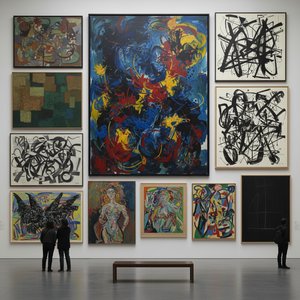
Dirk Valckenburg, a contemporary artist whose work defies easy categorization, has emerged as a compelling voice in the landscape of abstract expressionism and neo-symbolic painting. Born in an undisclosed location – a deliberate choice by the artist to separate the persona from the art – Valckenburg’s life remains shrouded in mystery, fueling speculation and adding another layer to the already complex narratives woven into his canvases. What is known is that he began exhibiting relatively late in life, after years of dedicated study and experimentation outside the traditional academic structures. This self-directed path has allowed him to cultivate a uniquely personal visual language, one deeply rooted in both art historical precedent and intensely felt emotional experience. His paintings are not merely depictions; they are explorations of the subconscious, meditations on memory, loss, and the search for meaning in an increasingly fragmented world.
Influences and Early Development
While Valckenburg actively resists direct labeling of his influences, art historians have identified a clear lineage tracing back to the Abstract Expressionists – particularly Mark Rothko and Clyfford Still. The atmospheric depth and emotive power of Rothko’s color fields resonate strongly in Valckenburg's work, as does Still’s dramatic use of jagged forms and raw energy. However, Valckenburg moves beyond simple imitation. He incorporates elements of Symbolism, drawing inspiration from artists like Odilon Redon and Gustave Moreau, whose dreamlike imagery and exploration of the occult find echoes in his own compositions.
The artist's early works, often characterized by muted palettes and ambiguous forms, suggest a period of intense introspection and technical refinement. These pieces, rarely seen outside private collections, reveal a gradual shift from purely abstract explorations to more suggestive, narrative-driven imagery. It’s believed that Valckenburg spent considerable time studying ancient mythologies and esoteric philosophies during this formative phase, which would later become central themes in his mature work.
Major Themes and Techniques
Valckenburg's paintings are unified by a recurring set of motifs: fragmented figures, architectural ruins, celestial bodies, and symbolic animals – often ravens or serpents. These elements aren’t presented as literal representations but rather as archetypal symbols charged with emotional weight.
His technique is equally distinctive. He employs a layered approach, building up surfaces with thin washes of oil paint, interspersed with glazes and occasional impasto strokes. This creates a sense of depth and luminosity, drawing the viewer into the canvas. The artist frequently incorporates unconventional materials – sand, ash, even fragments of antique textiles – adding texture and further enhancing the paintings’ tactile quality. Color plays a crucial role in his work; he favors a restricted palette dominated by deep blues, ochres, grays, and blacks, punctuated by occasional bursts of crimson or gold. These colors aren't chosen arbitrarily but are carefully selected to evoke specific moods and associations. The use of light is also paramount, with Valckenburg often creating dramatic chiaroscuro effects that heighten the sense of mystery and drama.
Achievements and Historical Significance
Despite his relatively short career as a publicly exhibited artist, Dirk Valckenburg has achieved considerable recognition within the art world. His first solo exhibition in 2018 was met with critical acclaim, establishing him as a significant new voice in contemporary painting. Subsequent exhibitions have further solidified his reputation, attracting collectors and curators from around the globe.
- His work is characterized by its emotional depth and intellectual rigor.
- Valckenburg’s paintings challenge viewers to confront their own subconscious fears and desires.
- He has been praised for his innovative use of materials and techniques.
More importantly, Valckenburg's work represents a departure from the prevailing trends in contemporary art. In an era often dominated by conceptualism and irony, he offers a powerful alternative – a return to genuine emotional expression and symbolic depth. His paintings are not simply objects to be admired; they are portals into another realm, invitations to contemplate the mysteries of existence. He stands as a testament to the enduring power of painting to evoke profound emotions and challenge our perceptions of reality. The artist’s deliberate anonymity only adds to his mystique, allowing the work itself to take center stage, free from the distractions of personality or biography.