The Delicate Legacy of a Miniature Master
In the grand tapestry of nineteenth-century American art, where sweeping landscapes and dramatic historical canvases often command the spotlight, there exists a more intimate, whispered beauty found in the works of Thomas Seir Cummings. Born in the historic city of Bath, England, in 1804, Cummings was a man of two worlds, carrying the refined sensibilities of his British upbringing to the burgeoning artistic frontier of the United States. His life was a bridge between the classical traditions of Europe and the developing identity of American portraiture, making him a pivotal figure in the quiet revolution of miniature painting.
The foundation of Cummings’s extraordinary skill was laid under the tutelage of Thomas Lawrence, one of Britain's most celebrated portraitists. From Lawrence, Cummings inherited a disciplined eye for detail and an understanding of how light could breathe life into a subject's features. This rigorous training in London instilled in him a reverence for precision that would become his artistic hallmark. When he eventually migrated to the United States, settling in New Jersey after 1835, he brought with him a sophisticated technique that allowed him to master the incredibly challenging medium of watercolor on ivory.
A Visionary Architect of American Art
Cummings was far more than a solitary craftsman; he was a cornerstone of the American institutional art movement. His arrival in New York coincided with a period of intense creative growth, and his ambition drove him to help shape the very structures that would support future generations of painters. In 1826, alongside figures such as Henry Inman, Cummings played a vital role in the founding of the National Academy of Design. His commitment to this institution was profound, serving for many years as its treasurer and acting as one of its early vice presidents.
His contribution to the art world extended beyond the brush and into the realm of historical preservation. As a scholar and writer, he documented the very evolution of the American scene in his work, Historic Annals of the National Academy from its Foundation to 1865. Through this writing, Cummings ensured that the struggles and triumphs of early American artists were not lost to time, cementing his role as both a creator of beauty and a guardian of artistic history.
The Intimacy of the Miniature
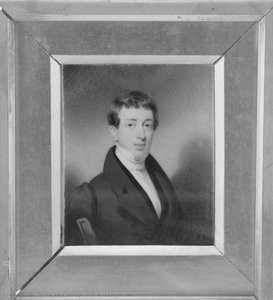
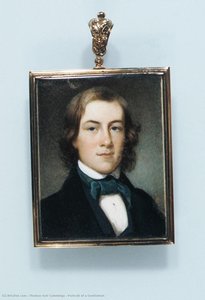
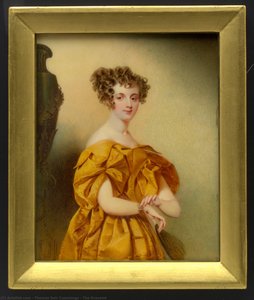
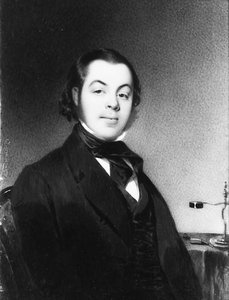
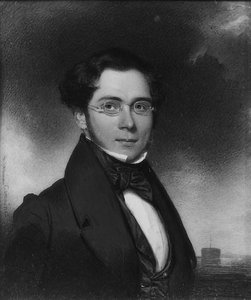
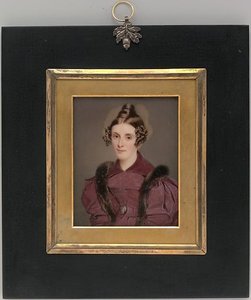
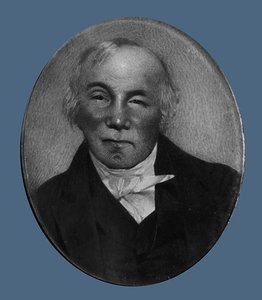
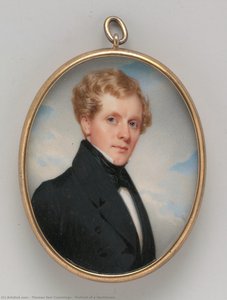
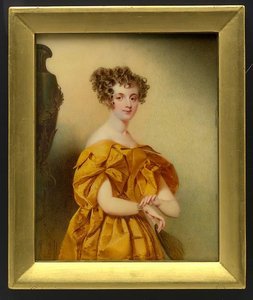
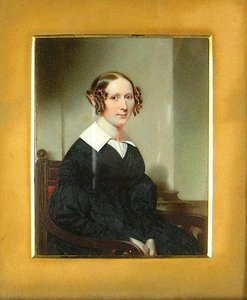
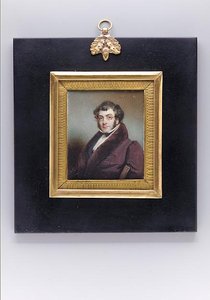
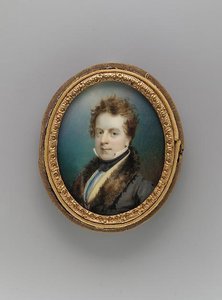
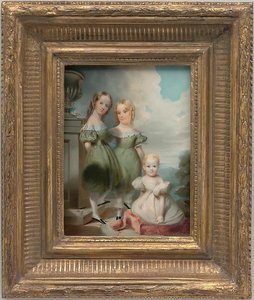
To look upon a work by Cummings is to enter a private moment. While his contemporaries often sought the monumental, Cummings found greatness in the minute. His specialty—the miniature portrait—demanded an almost superhuman level of patience and control. Working on ivory surfaces required a delicate touch, as each layer of watercolor wash had to be applied with extreme care to maintain the luminous, translucent quality that characterizes his best pieces.
His technique was defined by:
- Luminous Tonal Qualities: Achieved through the painstaking layering of washes to create depth and light.
- Psychological Depth: A profound ability to capture not just a likeness, but the very character and soul of his sitters.
- Neoclassical Elegance: A refined use of color and composition that reflected the sophisticated tastes of the Victorian era.
Whether capturing the dignified features of a gentleman or the soft, reflective gaze of a contemporary, Cummings’s work remains a testament to the power of the small-scale. His ability to evoke emotion through subtle gradations of color continues to captivate collectors and historians alike, reminding us that the most profound stories are often told in the smallest of frames.