The Vibrant Legacy of Thomas van Apshoven
In the heart of the 17th-century Flemish art scene, few names evoke the spirited charm of the Dutch Golden Age quite like Thomas van Apshoven. Born in Antwerp on November 30, 1622, Apshoven emerged from a lineage deeply rooted in the traditions of the Guild of Saint Luke. As the eldest son of Ferdinand van Apshoven the Elder, his artistic destiny was woven into the very fabric of Antwerp's painterly heritage. While his father had established himself through the prestigious atelier of Adam van Noort, Thomas would go on to carve a niche that celebrated the rhythmic, often boisterous pulse of everyday life. His early years were defined by this immersion in craft, absorbing the technical rigors and stylistic nuances that would later allow him to capture the essence of the Flemish landscape and its people with unparalleled vitality.
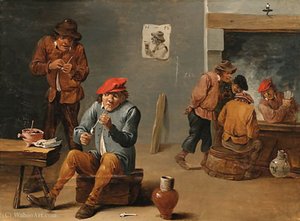
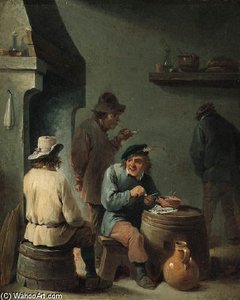
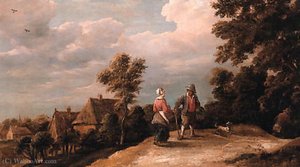
The development of Apshoven’s unique vision is inextricably linked to the influence of David Teniers the Younger. While some scholars debate whether he was a direct pupil or a masterful imitator, the stylistic kinship between the two is undeniable. Apshoven adopted a technique characterized by a light, spirited brushwork and a luminous palette that breathed life into his canvases. He possessed an uncanny ability to render the textures of rural existence—the rough fabric of a peasant's tunic, the dim, smoky atmosphere of a crowded tavern, or the glint of glass in a chemist’s laboratory. His work transcends mere documentation; it is an emotional exploration of genre painting, where humor and realism dance together to evoke the shared humanity of his subjects.
A Tapestry of Scenes: From Village Festivals to Alchemist Labs
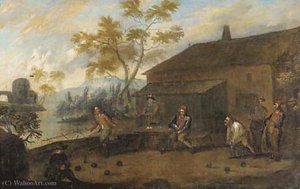
Apshoven’s repertoire was as diverse as the life he sought to portray. He moved effortlessly between vast, sweeping landscapes and intimate, cluttered interiors, creating a sense of narrative depth in every piece. His canvases often serve as windows into the social fabric of the era, featuring:
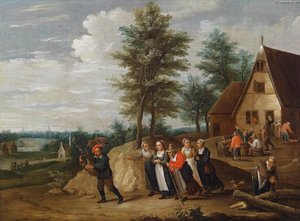
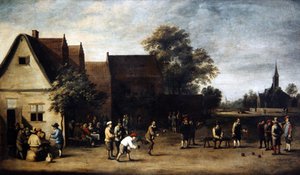
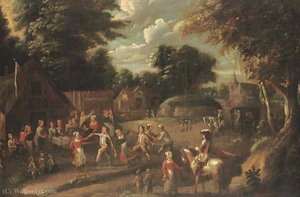
- Village Festivals: Lively outdoor gatherings where the joy of community is palpable through movement and color.
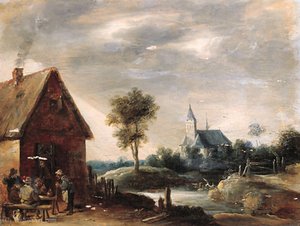
- Tavern Interiors: Boisterous scenes of patrons engaged in drinking and conversation, capturing the warmth and chaos of local inns.
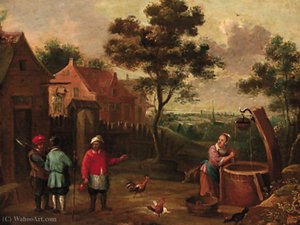
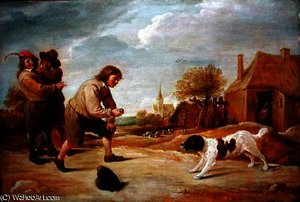
- Peasant Landscapes: Quiet yet detailed depictions of rural laborers navigating the countryside, often imbued with a sense of seasonal rhythm.
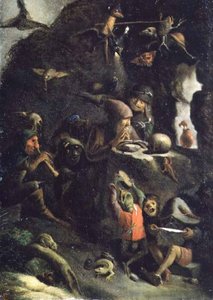
- Scientific Curiosities: Meticulously rendered laboratories of alchemists, reflecting the era's profound fascination with the mysteries of nature and transformation.
Beyond the easel, Apshoven was a man of significant civic standing in Antwerp. His life was not merely one of solitary creation but of active leadership within his community. In 1652, he took an oath as a standard-bearer for the 6th division of the Antwerp civic guard, and by 1657, he had ascended to the prestigious rank of captain of the 8th division. This dual identity—as both a refined artist and a dedicated civic leader—reflects the multifaceted nature of the successful Flemish burgher during this prosperous epoch.
Historical Significance and Enduring Impression
Though his life was relatively short, ending around 1664 or 1665, the impact of Thomas van Apshoven remains etched in the annals of Flemish art. He stood at a pivotal moment in history, bridging the gap between the formal traditions of the late Renaissance and the more observational, character-driven realism of the Golden Age. His ability to elevate "low" subject matter—the lives of peasants, soldiers, and laborers—to the level of high art helped redefine the boundaries of what was considered worthy of the canvas.
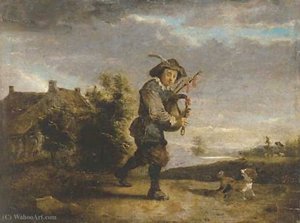
Today, his works continue to enchant collectors and historians alike. Whether it is the nostalgic charm of 'Landscape With A Musician' or the atmospheric tension in his guardroom scenes, Apshoven’s paintings offer a profound connection to a vanished world. He remains a master of atmosphere, a painter who did not just observe the world, but captured its very spirit, ensuring that the laughter, the labor, and the light of 17th-century Flanders would never truly fade.