A Fleeting Glimpse: The World of Utagawa (Shunsai) Toshimasa
The name Utagawa (Shunsai) Toshimasa, born in Japan in 1866 and passing in 1913, resonates with a quiet intensity within the annals of *ukiyo-e*, the “pictures of the floating world.” While not as widely celebrated as some of his contemporaries, Toshimasa’s work offers a compelling window into the transitional period of Japanese art, bridging the traditional woodblock printmaking techniques with an evolving aesthetic sensibility. His life, though sparsely documented, reveals a dedicated student deeply influenced by the master Tsukioka Yoshitoshi, and a skilled artist who captured dynamic scenes with a bold compositional flair. Toshimasa also sometimes signed his works as Eda Toshimasa.Under the Wing of Yoshitoshi
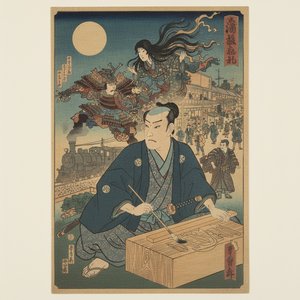
Toshimasa’s artistic journey was profoundly shaped by his tutelage under Tsukioka Yoshitoshi, arguably the last great master of *ukiyo-e*. Yoshitosho, renowned for his dramatic depictions of historical events, warrior tales, and captivating portraits of beautiful women, instilled in Toshimasa a reverence for narrative power and technical precision. The influence is readily apparent in Toshimasa’s prints; he inherited Yoshitoshi's keen eye for detail, his ability to convey emotion through expressive figures, and a similar penchant for vibrant color palettes. However, while clearly indebted to his teacher, Toshimasa wasn’t merely an imitator. He developed a distinctive style that, though rooted in tradition, possessed its own unique energy and focus.Capturing the Energy of Modernizing Japan
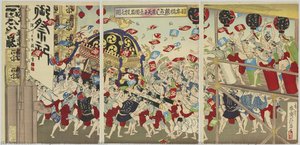
The late 19th and early 20th centuries were times of rapid transformation for Japan. The country was undergoing a period of intense modernization, embracing Western technologies and ideas while simultaneously grappling with its cultural identity. Toshimasa’s prints often reflect this dynamic tension. While he continued to produce works in the established *ukiyo-e* genres, his subject matter sometimes hinted at the changing world around him. Prints like “Nihonbashi Fish Market, Tenno (Shrine) , Thrown Fans Flying” showcase bustling scenes of everyday life—a vibrant snapshot of a Japan on the cusp of change. These weren’t simply picturesque depictions; they were imbued with a sense of movement and energy that captured the spirit of a nation in flux.A Legacy in Woodblock
Despite the limited biographical information available, Toshimasa's artistic output speaks volumes. His prints demonstrate a mastery of woodblock techniques—the delicate carving, the precise application of color, and the skillful layering of tones to create depth and atmosphere. He excelled at capturing dynamic compositions, often employing bold diagonals and dramatic perspectives to draw the viewer’s eye into the scene. While his work may not be as extensively studied or collected as that of Yoshitoshi, Toshimasa's prints offer a valuable glimpse into the artistic landscape of late Meiji-era Japan. He represents a crucial link between the established traditions of *ukiyo-e* and the evolving aesthetic sensibilities of the 20th century, leaving behind a body of work that continues to captivate and intrigue those who seek to understand this fascinating period in Japanese art history.Further Exploration
- Key Characteristics: Dynamic compositions, vibrant color palettes, influence of Tsukioka Yoshitoshi.
- Subject Matter: Scenes of everyday life, historical events, portraits.
- Historical Context: Late Meiji era Japan (1868-1912), a period of rapid modernization and cultural change.