The Master of the Metal Impression: The Life of Vittore Gambello
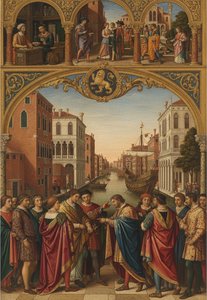
In the vibrant, salt-aired atmosphere of Renaissance Venice, a period defined by unparalleled artistic flourishing, there emerged a craftsman whose hands did not merely shape art but revolutionized its very production. Vittore Gambello, known to history by the evocative moniker Camelio, was far more than a simple sculptor; he was a visionary technician who bridged the gap between the delicate artistry of the painter and the industrial precision of the engraver. Born in Venice around 1460, Gambello’s early life was steeped in the aesthetic triumphs of his era. His formative training under the legendary Giovanni Bellini provided him with a profound understanding of light, form, and the expressive potential of the human figure—lessons that would later breathe life into the cold surfaces of metal and stone.
While many of his contemporaries sought fame through massive frescoes or sprawling altarpiements, Gambello found his true calling in the intimate, enduring medium of the medal. His career was inextricably linked to the Venetian Mint, where his extraordinary talent led him to the prestigious title of Maestro della Stampe. It was here that he achieved his most significant historical breakthrough. Moving away from the laborious and often inconsistent traditional methods of sand casting or the lost-wax process, Gambello perfected a groundbreaking technique for stamping medals in high relief. By utilizing precise pressure and specialized punches to transfer intricate designs onto metal plates, he unlocked a new realm of detail and allowed for much larger production runs without sacrificing the artistic soul of the work.
A Legacy Carved in Bronze and Spirit
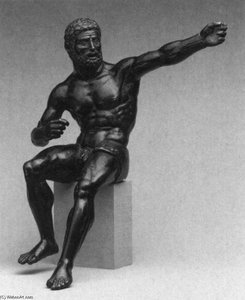
The artistry of Gambello is characterized by a remarkable duality: the strength of his sculptural compositions paired with a refined, almost lyrical grace. His ability to capture idealized beauty was a direct inheritance from the Bellini school, yet he applied this sensitivity to much smaller, more concentrated canvases of bronze. This mastery allowed him to create commemorative pieces that functioned as both political statements and miniature masterpieces of relief sculpture. His work often featured powerful mythological themes, such as his celebrated depictions involving Hercules, where the tension of muscle and the drama of myth were rendered with startling clarity.
Beyond the small-scale brilliance of his medals, Gambello’s influence extended to larger monumental works that left an indelible mark on the sacred spaces of Italy. His sculptural contributions, including notable pieces for the Basilica of San Vitore and Carlo in Genoa and his involvement with the monumental presence of St. Peter in Rome, demonstrate a versatility that few artists of his period could claim. To look upon a work by Camelio is to witness the intersection of Renaissance humanism and technical innovation; he did not just represent the world—he found a way to press its very essence into the enduring permanence of metal.
The historical significance of Vittore Gambello lies in his role as an innovator who transformed the medium of the medallist from a craft of repetition into a high art form. His life remains a testament to the power of technical evolution, proving that true artistic genius often resides in the ability to reinvent the tools of one's trade. Through his hands, the fleeting glory of the Venetian Renaissance was captured, stamped, and preserved for eternity.