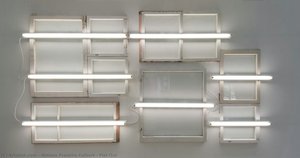
The Luminous Legacy of Bill Culbert
In the quiet interplay between shadow and brilliance, the work of William Franklin Culbert resides as a profound meditation on perception itself. Born in 1935 in the coastal settlement of Port Chalmers, New Zealand, Culbert emerged as a visionary who did not merely create objects, but rather orchestrated experiences of light. His life was a rhythmic movement between diverse landscapes—the rugged beauty of New Zealand, the historic streets of London, and the sun-drenched atmosphere of southern France. This nomadic existence allowed him to cultivate a unique artistic language, one that synthesized the structural rigor of modernism with an almost poetic sensitivity to the ephemeral qualities of illumination.
Culbert’s journey into the heart of visual experimentation began at the Ilam School of Fine Arts, where he studied alongside a generation of New Zealand luminaries. A pivotal moment arrived in 1957 when a National Art Gallery Scholarship propelled him to the Royal College of Art in London. It was here, amidst the vibrant energy of the British art scene, that his formal training in painting began to dissolve into more radical territories. While he earned accolades for his mastery of traditional media, including a silver medal for painting, his true calling lay in the exploration of what lies beyond the canvas. He began to move toward the conceptual, finding that the most compelling subjects were not static figures, but the very light that allowed them to be seen.
A Symphony of Light and Found Objects
As his career progressed, Culbert became a pioneer of what might be described as light sculpture. He possessed an uncanny ability to breathe life into the discarded, transforming found and recycled materials into vessels for radiance. His practice was characterized by a masterful use of neon tubing, glass, and domestic remnants, which he manipulated to challenge the boundaries between the viewer and the artwork. By integrating electric light with physical structures, he created works that seemed to pulse with an internal vitality, blurring the distinction between natural illumination and artificial projection.
One of his most evocative techniques involved the use of apertures—windows, frames, and grids—to direct the eye and manipulate space. In masterpieces such as Flat Out, Culbert utilized salvaged wooden window frames from Auckland’s historic villas, arranging them to create a complex dialogue between transparency and reflection. Through these windows, he invited viewers into a secondary world, using neon lines to slice through the glass and redefine the geometry of the room. This approach turned the act of looking into an active, immersive engagement, where the artwork was never truly finished until it interacted with the shifting light of its environment.
Collaborative Spirit and Lasting Impact
Beyond his solo triumphs, Culbert’s significance is deeply intertwined with the collaborative spirit of the New Zealand art community. His creative dialogues, most notably with the renowned artist Ralph Hotere, contributed to a rich tapestry of contemporary Pacific art. These partnerships allowed for an exchange of ideas regarding materiality and minimalism, further cementing his role as a central figure in the evolution of installation art. His work was never solitary; it was always in conversation with the world around him, the materials he gathered, and the fellow artists who shared his vision.
The historical significance of Bill Culbert lies in his ability to have redefined the sculptural medium for a new era. He taught us that light is not merely a tool for visibility, but a primary material in its own right—capable of weight, texture, and emotion. His legacy remains etched in the way we perceive the spaces we inhabit, reminding us that even in the most mundane objects, there exists a hidden brilliance waiting to be revealed. Through his meticulous attention to detail and his fearless embrace of the unconventional, Culbert transformed the ephemeral into the eternal.