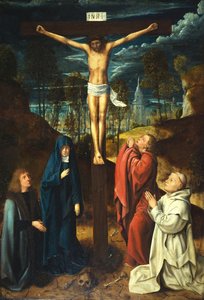
The Enigmatic Workshop of Quinten Massys: A Legacy in Antwerp Renaissance Painting
The name “Workshop of Quinten Massys” represents a fascinating, and often deliberately obscured, chapter in the history of 16th-century Netherlandish art. It’s not a single artist we speak of, but rather a collaborative enterprise centered around the prolific and highly influential Quinten Matsys (also spelled Massys), one of Antwerp's earliest masters. Understanding this workshop is crucial to appreciating the breadth and depth of artistic production in that burgeoning center of commerce and creativity. Born likely around 1465 or 1470, Matsys himself emerged from a background steeped not in traditional art training but in craftsmanship – he was initially a painter of playing cards and other decorative items. This unusual path would profoundly shape his aesthetic, imbuing his work with a meticulous attention to detail and a keen observation of everyday life that set him apart from many contemporaries. He rose quickly through the ranks of Antwerp’s Guild of Saint Luke, becoming guild master in 1509 and serving as its head multiple times, demonstrating both his artistic prowess and his standing within the community. While biographical details remain somewhat sparse, it is clear Matsys was a pivotal figure in establishing a new naturalism and psychological depth in Flemish painting.
A Hub of Artistic Production: The Workshop’s Structure and Style
Matsys' workshop wasn’t simply a place where apprentices mechanically copied his designs. It functioned as a complex system, with the master undertaking the most important commissions and often executing key elements of paintings himself – frequently the faces and hands of central figures. Assistants, each possessing varying degrees of skill, would be responsible for backgrounds, drapery, still lifes, and less prominent parts of compositions. This division of labor was common practice at the time, but Matsys’ workshop is particularly notable for the consistently high quality of its output, even in works largely executed by his followers. Identifying paintings definitively attributable to Matsys versus those produced *in* his workshop can be challenging, leading to ongoing scholarly debate. Generally, works displaying a particularly refined technique, complex symbolism, and psychological nuance are considered more likely to be directly from the master’s hand. However, even pieces with a greater degree of assistant involvement showcase the distinctive characteristics of the Matsys style: a remarkable realism, often combined with subtle humor and moralizing undertones. The workshop's production extended beyond panel paintings to include altarpieces, portraits, and smaller devotional works, catering to a diverse clientele that included merchants, religious institutions, and wealthy patrons.
Influences and Innovations: Bridging Tradition and Renaissance Ideals
Matsys’ artistic development was shaped by a confluence of influences. Early Flemish masters like Jan van Eyck and Rogier van der Weyden provided a foundation in meticulous detail and realistic representation. However, Matsys moved beyond the purely devotional focus of these earlier artists, embracing humanist ideals that were beginning to circulate throughout Europe. His travels to Italy – documented in guild records – exposed him to Renaissance art and likely inspired his interest in classical antiquity and idealized forms. This is evident in works like *The Virgin Mary with Saints*, where the figures exhibit a more sculptural quality and are set within architectural settings reminiscent of Italian palazzi. He was among the first Netherlandish painters to incorporate elements of Italian Renaissance painting into his work, but he did so selectively, adapting them to suit his own aesthetic sensibilities and the tastes of his patrons. His integration of classical motifs with Northern realism proved highly influential, paving the way for a new generation of Flemish artists who sought to reconcile tradition with contemporary trends. Furthermore, Matsys’ fascination with genre scenes – depictions of everyday life – was groundbreaking. His *The Money-Changer and his Wife* is considered one of the earliest examples of this type, offering a nuanced commentary on human greed and morality.
Major Achievements and Lasting Legacy
Among Matsys’ most celebrated works are his religious paintings, such as *The Descent from the Cross*, which showcases his mastery of composition, anatomy, and emotional expression. His portraits, including those of prominent Antwerp citizens, are renowned for their psychological insight and meticulous rendering of detail. However, it is perhaps his genre scenes that have had the most enduring impact on art history. These works not only demonstrate his technical skill but also reveal a deep understanding of human nature. The workshop’s output was prolific, ensuring Matsys' style permeated Antwerp painting for decades after his death in 1530. His influence can be seen in the work of his sons, Jan and Cornelis Matsys, who continued to operate the workshop after their father’s passing, as well as numerous other artists who trained within its walls. The legacy of the Workshop of Quinten Massys extends beyond specific paintings; it lies in the establishment of a new artistic standard – one that valued realism, psychological depth, and moralizing undertones. His work helped to define the character of Antwerp Renaissance painting and continues to captivate audiences today with its beauty, complexity, and enduring relevance.
Historical Significance: A Cornerstone of Northern Renaissance Art
The Workshop of Quinten Massys occupies a pivotal position in the development of Northern Renaissance art. It represents a crucial transition from the late Gothic traditions of Jan van Eyck to the more humanist-influenced styles of the later 16th century. Matsys’ success was instrumental in establishing Antwerp as a major artistic center, attracting artists and patrons from across Europe. His emphasis on realism, combined with his subtle moralizing themes, resonated deeply with the burgeoning merchant class of Antwerp – a society increasingly focused on worldly affairs and individual achievement. The workshop's collaborative structure also had a significant impact on the organization of art production in the Netherlands, paving the way for the development of specialized workshops that catered to a growing demand for paintings. While attributing specific works remains a complex undertaking, the collective output of the Workshop of Quinten Massys stands as a testament to the artistic innovation and cultural dynamism of Antwerp during the Renaissance. The enduring appeal of these paintings lies not only in their technical brilliance but also in their ability to capture the complexities of human life with remarkable sensitivity and insight.