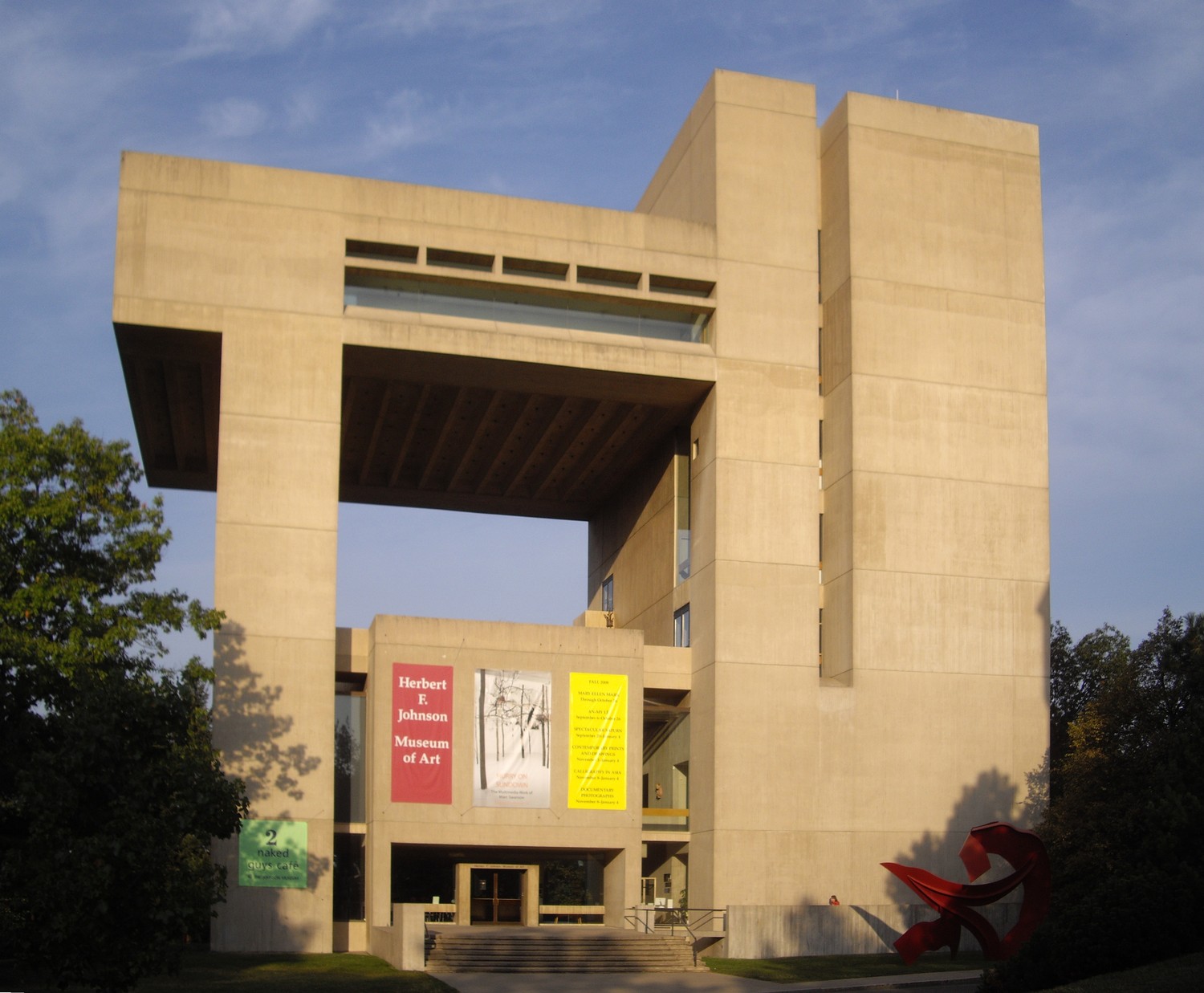


A Masterpiece of Form and Light
Perched majestically upon the verdant, rolling hills of Cornell University’s campus, the Herbert F. Johnson Museum of Art is far more than a mere sanctuary for antiquity; it is a breathtaking dialogue between the earth and the sky. Designed by the visionary architect I.M. Pei, the museum stands as a soaring modernist triumph, where sharp, geometric lines meet an intentional spatial openness that invites the Ithaca landscape to become part of the viewing experience. As one enters this architectural marvel, the interplay of light and shadow becomes a silent protagonist, filtering through Pei’s masterful glasswork to illuminate the galleries with a soft, contemplative glow. For the architecturally inclined or the interior designer seeking inspiration, the building itself serves as a profound lesson in how structure can elevate the spirit, creating a seamless transition between the rugged beauty of the outdoors and the refined elegance of the curated interior.
The soul of the museum resides within its vast and breathtakingly diverse collection, a global tapestry that spans centuries of human ingenuity. To wander through these halls is to embark on an epic journey across continents and eras. The museum’s magnificent Asian Art holdings offer a profound window into the spiritual and aesthetic depths of China, Japan, Korea, and Southeast Asia, where monumental sculptures and delicate textiles whisper tales of ancient dynasties and sacred traditions. This sense of historical continuity flows effortlessly into the European galleries, where the evolution of Western mastery is laid bare. Visitors may find themselves lost in the meticulous, luminous textures of a Vermeer or the transformative, atmospheric light of Monet’s Impressionist canvases, each piece acting as a portal to a different epoch of human perception.
As the narrative of the museum progresses, it shifts from the classical to the radical, embracing the vibrant and often provocative energy of the modern and contemporary eras. The collection celebrates the breaking of boundaries, featuring the transformative genius of titans such as Picasso, Warhol, Hockney, and Richter. These works do not merely sit on walls; they challenge the viewer to reconsider the very nature of reality and societal structure. This commitment to artistic evolution is further breathed into life through a dynamic program of rotating exhibitions that frequently spotlight emerging voices alongside established legends, ensuring that the museum remains a living, breathing epicenter of intellectual discourse. It is this constant tension between the historical weight of the past and the experimental pulse of the present that makes the Johnson Museum a vital site for understanding our contemporary world.
What truly distinguishes the Herbert F. Johnson Museum of Art, however, is its profound spirit of accessibility and its deep-rooted connection to the academic heart of Cornell University. Since its inception in 1973, the museum has championed a philosophy of democratization, offering free admission to ensure that the transformative power of art remains an open gift to all, unburdened by privilege. Whether one is finding solace in the quietude of a gallery or wandering through the lush Sculpture Garden at the building's base, there is a pervasive sense of discovery. For the discerning collector, the museum offers a masterclass in curation; for the art lover, it provides a sanctuary; and for the designer, it serves as an inexhaustible wellspring of aesthetic inspiration where architecture, history, and art converge into a single, unforgettable vision.