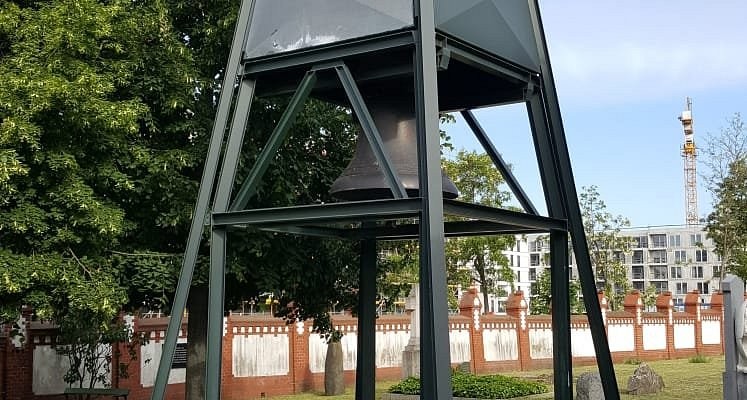


A Silent Witness to Berlin’s Turbulent Soul
In the heart of Berlin-Mitte, where the echoes of the past still linger in the shadows of modern reconstruction, lies the Invalidenfriedhof. This is not merely a cemetery; it is a profound, living chronicle of German history, a place where the soil itself seems to hold the weight of centuries. Established in 1748 by the decree of Frederick the Great, the site was originally conceived as a final resting place for the veterans of the Prussian army housed in the nearby Invalids' House. To walk through its gates is to step into a landscape of profound duality, where the grandeur of military tradition meets the haunting scars of twentieth-century division.
The architecture of the cemetery is defined by its poignant relationship with the city’s shifting borders. For decades, the Invalidenfriedhof stood as a fractured space, literally bisected by the "death strip" of the Berlin Wall. This proximity to the Cold War's most lethal frontier transformed the grounds into a site of immense tension and loss. Entire sections of the cemetery—Fields E, F, and G—were tragically cleared to make way for border fortifications, resulting in the erasure of countless graves and the destruction of historic vegetation. Today, the surviving remnants of the Berlin Wall within its boundaries serve as a somber architectural layer, reminding every visitor that this sacred ground was once a frontline of global conflict.
For the art lover and the historian alike, the true allure of the Invalidenfriedhof lies in its collection of monumental graves and commemorative markers. The cemetery serves as an open-air gallery of funerary art, ranging from the grandiose, neoclassical monuments of high-ranking Prussian officers to the more intimate, weathered headstones of the civilian community. One cannot help but feel a deep emotional resonance when standing before the memorials of figures like General von Scharnhorst, whose presence anchors the site in the era of the Wars of Liberation. These stone sentinels, though scarred by time and political upheaval, offer a glimpse into the shifting aesthetics of mourning and national identity.
What makes this site truly unique is its ability to transcend its role as a memorial for the fallen and become a sanctuary for reflection on the resilience of culture. It is a place where the heavy atmosphere of "dark tourism" meets the quiet beauty of a botanical retreat. For interior designers and curators of space, the cemetery offers a masterclass in the use of texture, patina, and historical layering. The interplay between the weathered stone, the ancient trees, and the stark, modern traces of the Wall creates a visual narrative that is both unsettling and deeply moving. It remains a vital, breathing part of Berlin’s identity—a place where the ghosts of the Prussian past and the scars of the Cold War coexist in a hauntingly beautiful equilibrium.