

A Sanctuary of Spirit and Stone: The Legacy of Dumbarton Oaks
Nestled within the verdant, historic embrace of Georgetown, Washington, D.C., Dumbarton Oaks stands as a profound testament to the transformative power of vision and devotion. What began as the private estate of Robert Woods Bliss and Mildred Barnes Bliss has blossomed into a world-renowned sanctuary where art, scholarship, and nature converge in a seamless, living tapestry. To wander through this estate is to step outside the frantic pace of modern life and enter a realm where the echoes of fallen empires and the whispers of ancient civilizations are preserved with meticulous care. The museum is not merely a repository for precious objects; it is an immersive experience that invites collectors, historians, and dreamers alike to contemplate the enduring beauty of human creativity across vastly different epochs and continents.
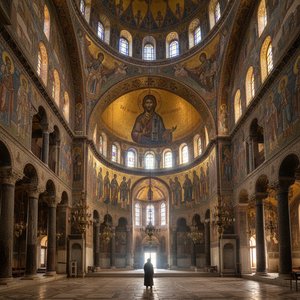
The heart of the museum’s allure lies in its breathtakingly diverse collections, which bridge the gap between the Mediterranean's spiritual splendor and the complex majesty of the Americas. In the galleries dedicated to Byzantine Art , visitors are transported to a world of ethereal light and profound religious fervor. Here, shimmering mosaics capture the divine, their tiny tesserae meticulously arranged to create an illusion of celestial depth and luminosity. Alongside these grand displays, delicate ivory panels and intricately illuminated manuscripts reveal the painstaking skill of medieval artisans, offering a window into the spiritual heart of an empire that once unified East and West. This collection serves as a luminous chronicle of faith, where every carved detail and golden pigment tells a story of devotion and imperial grandeur.
Beyond the Mediterranean horizon, the museum’s narrative shifts toward the vibrant and mysterious worlds of Pre-Columbian Art . This collection offers an unparalleled journey through the sophisticated societies of the Maya, Aztec, and Inca, showcasing the incredible ingenuity of indigenous peoples long before European contact. The galleries are filled with the quiet power of monumental stone sculptures, the rhythmic beauty of woven textiles, and the gleaming allure of ancient goldwork. Each artifact—from a jade pendant depicting a mythical deity to a ceramic vessel adorned with complex cosmological symbols—acts as a portal to a lost era of ritual and profound ecological connection. For the art lover, this collection provides a rare opportunity to witness the artistic prowess of civilizations that viewed the natural and supernatural worlds as an inseparable whole.
The architectural and landscape experience at Dumbarton Oaks is just as vital as the treasures housed within its walls. The estate’s gardens, a masterpiece of collaboration with the legendary landscape architect Beatrix Farrand , represent a pinnacle of American garden design. These are not static displays but evolving landscapes that blend formal structure with organic, naturalistic beauty. Terraced lawns cascade gracefully down the hillside, leading visitors through intimate woodland paths and hidden, sun-dappled clearings. Farrand’s vision of a "living tapestry" is realized through the strategic placement of native flora alongside classical specimens, creating a sense of profound harmony and tranquility. For interior designers and lovers of aesthetic balance, the gardens offer a masterclass in how structured design can enhance, rather than overpower, the natural environment.
Ultimately, what makes Dumbarton Oaks truly unique is its role as a crossroads of history and diplomacy. As the site of the pivotal 1944 conference that laid the groundwork for the United Nations, the estate has long been a stage for global dialogue. Today, it continues this legacy by serving as a premier center for scholarly research, where the study of Byzantine, Pre-Columbian, and landscape history fosters a deeper understanding of our shared human heritage. It remains a place where the past is not merely studied but felt—a destination where every stone, leaf, and artifact contributes to a grander narrative of cultural continuity and the eternal pursuit of beauty.