
- Inicio

- Reproducción al óleo
- Abū Al-Thanā’ Shihāb Ad-Dīn Sayyid Maḥmūd Ibn ‘Abd Allāh Al-Ḥusaynī Al-Ālūsī Al-Baghdādī
 Ver en contexto
 Enviar
 Compartir
 Detalles

 Descargar
 Similares
 Radiografía
 Presentación de diapositivas
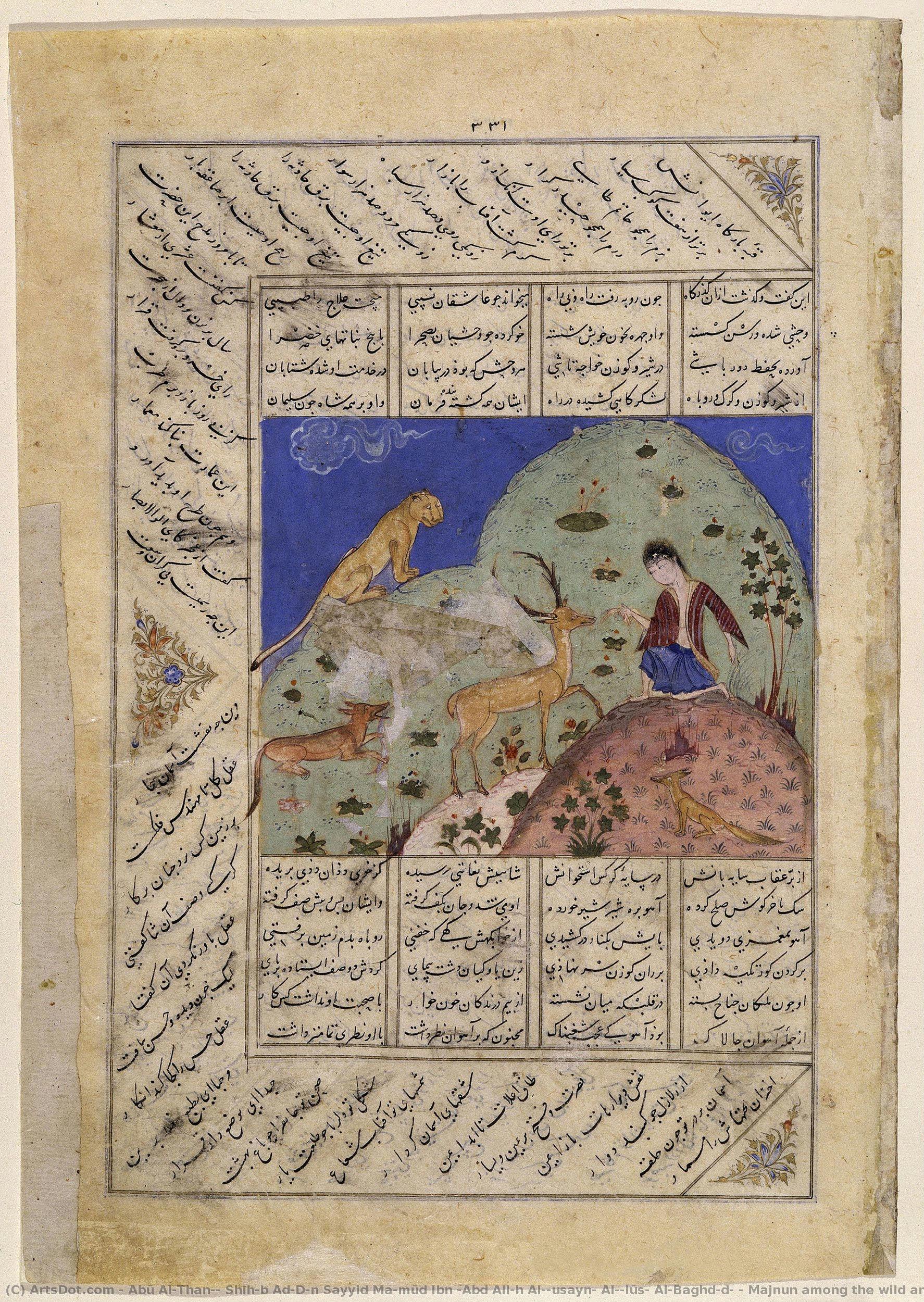
Majnun among the wild animals
 Manuscript
- Persian Miniature
 1420
1420- Late Medieval
 20.0 x 29.0 cm
 Pergamonmuseum
 Ver más
Reproducción al óleo hecha a mano
Óleo sobre lienzo pintado a mano en el tamaño y marco de su elección, realizado por encargo por nuestros artistas. ( Comprar impresión Comprar imagen)




P118B $10

P118H $10

P118W $10

P438Z $10

P508JH $12

P508YH $12

P805H $10

P805Z $10

P919BZ $10

P919G $10

P919XJ $10

P959ZH $10

P968JZ $12

W106C $8

W218G $10

W218JH $8

W218Y $10

W307PJ $10

W316G $10

W316PJ $8

W316Y $10

W398PJ $8

W4111J $10

W500HY $15

W500JH $15

W692G $12

W849H $8

W940BG $15

W953PJ $8




Elija entre nuestros tamaños predefinidos que respetan las proporciones originales de la obra.

Puede ingresar sus propias dimensiones para adaptarse a un marco o espacio específico. Si el tamaño seleccionado no coincide con las proporciones de la imagen original, recortaremos la obra o extenderemos la pintura con elementos adicionales pintados a mano. Se le enviará una maqueta digital para su aprobación antes de comenzar la producción.
Tenga en cuenta que la vista previa en pantalla no refleja el recorte o la extensión reales. Solo la maqueta mostrará con precisión la composición final.
Si bien existen tamaños personalizados, recomendamos seleccionar una dimensión de la lista predefinida para preservar las proporciones originales.
Tras realizar el pedido, el equipo de ArtsDot.com enviará un correo electrónico al cliente para solicitar instrucciones y proporcionarle una vista previa del boceto.
Envío a todo el mundo () en 3-4 semanas en lugar de las 5 semanas estándar. (1 septiembre). Sin comprometer la calidad.

Envío exprés gratuito a todo el mundo

Lienzo de lino de alta calidad

Seguro de envío total

Garantía de reembolso de impuestos aduaneros

Garantía de fidelidad cromática exacta

Política de devolución de 60 días (solo por defectos)

Garantía de devolución del 100% del dinero

Descuento por cantidad
 La opción de vidrio solo está disponible en tamaños inferiores a 110 cm.

Majnun among the wild animals
Técnica de reproducción
Dimensiones de la reproducción
-


Precio total final
$ 263
Obras relacionadas
Biografía del artista
The Luminary of Baghdad: Abū al-Thanā’ Shihāb ad-Dīn Sayyid Maḥmūd ibn ‘Abd Allāh al-Ḥusaynī al-Ālūsī
Abū al-Thanā’ Shihāb ad-Dīn Sayyid Maḥmūd ibn ‘Abd Allāh al-Ḥusaynī al-Ālūsī, often simply known as Al-Allusi, stands as a towering figure in 19th-century Islamic scholarship. Born in Baghdad on December 10, 1802, into a family of considerable religious standing, his life unfolded against the backdrop of a declining Ottoman Empire and burgeoning intellectual currents. Al-Allusi wasn’t merely an academic; he was a *mufti* – a legal expert empowered to deliver rulings on Islamic law – deeply involved in the socio-political fabric of his time. His lineage connected him to the esteemed ‘Alid family, descendants of Prophet Muhammad, lending further weight to his authority and influence within the Sunni Muslim community. He passed away on July 29th, 1854, leaving behind a legacy that continues to resonate through Islamic thought.A Life Dedicated to Interpretation: The Genesis of *Rūḥ al-Ma‘ānī*
Al-Allusi’s most enduring contribution is undoubtedly his monumental commentary on the Qur'an, titled *Rūḥ al-Ma‘ānī fī tafsīr al-Qur’ān al-‘aẓīm wa-al-sab‘ al-mathānī* – “The Spirit of the Meaning in Commentary upon the Mighty Qur’ān and the Seven Oft-Repeated Verses.” This work, spanning approximately thirty volumes, is a testament to his profound knowledge of Islamic theology, jurisprudence, Arabic language, literature, and history. It wasn't simply an exegesis; it was a comprehensive exploration of the Qur'anic text, drawing upon a vast array of sources and perspectives. Al-Allusi’s approach was characterized by its meticulous detail, intellectual honesty, and willingness to engage with diverse interpretations. He didn’t shy away from acknowledging differing viewpoints, often presenting them before offering his own reasoned analysis. The sheer scale of *Rūḥ al-Ma‘ānī* reflects a lifetime devoted to understanding the divine word, making it one of the largest and most respected tafsirs in existence.Intellectual Influences and Scholarly Positioning
Al-Allusi’s intellectual formation was deeply rooted in the traditions of Sunni Islam, particularly the Hanafi school of jurisprudence. However, he wasn't confined by rigid adherence to a single school of thought. He demonstrated a remarkable openness to other perspectives, including those from the Shafi'i school and even elements of Sufism. This eclecticism is evident in *Rūḥ al-Ma‘ānī*, where he frequently references scholars from various backgrounds. His connection to the Naqshbandi *tariqa* (Sufi order) further broadened his intellectual horizons, imbuing his work with a mystical sensibility and an appreciation for the inner dimensions of faith. He engaged with contemporary debates within Islamic scholarship, navigating complex theological issues with nuance and sophistication. He corresponded with figures like Sayyid Kāẓim Rashtī, a prominent Shaykhī leader, demonstrating his willingness to engage in dialogue even with those holding differing beliefs.Historical Significance and Enduring Legacy
Al-Allusi’s significance extends beyond the realm of purely theological scholarship. He lived during a period of significant upheaval, witnessing the decline of traditional power structures and the rise of new intellectual forces. His commentary on the Qur'an served not only as an interpretation of scripture but also as a reflection of the challenges facing the Muslim world at the time. His willingness to engage with diverse perspectives and his emphasis on reasoned analysis made him a respected figure among both scholars and laypeople. *Rūḥ al-Ma‘ānī* continues to be studied today, serving as a valuable resource for understanding the Qur'an and Islamic thought. His work has been reprinted numerous times, ensuring its accessibility to future generations of scholars. Furthermore, his engagement with contemporary issues, such as the Bābī movement, provides insights into the intellectual landscape of 19th-century Iraq.Beyond *Rūḥ al-Ma‘ānī*: A Broader Intellectual Contribution
While *Rūḥ al-Ma‘ānī* remains his most celebrated work, Al-Allusi’s contributions extended beyond Qur'anic exegesis. He was a prolific writer on various Islamic topics, including jurisprudence, theology, and Arabic grammar. His writings demonstrate a deep understanding of classical Islamic texts and a commitment to preserving the intellectual heritage of Islam. He also engaged in practical religious leadership as a *mufti*, providing guidance and rulings on matters of law for his community. He was known for his fairness, integrity, and dedication to upholding justice. The fact that he held the position of mufti while simultaneously producing such a monumental scholarly work speaks volumes about his intellectual capacity and unwavering commitment to both theory and practice. His legacy is one of profound scholarship, intellectual openness, and dedicated service to the Muslim community.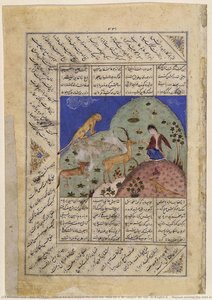
Datos clave
- Artistic Movement Or Style: Islamic scholarship
- Date Of Birth: December 10, 1802
- Date Of Death: July 29, 1854
- Full Name: Abū Al-Thanā’ Shihāb Ad-Dīn Sayyid Maḥmūd Ibn ‘Abd Allāh Al-Ḥusaynī Al-Ālūsī Al-Baghdādī
- Nationality: Iraqi
- Notable Artworks: ["Ruh al-Ma'ani"]
- Place Of Birth: Baghdad, Iraq
Artículos relacionados
Animalia: Explorando la Presencia Duradera de los Animales en el Arte y el Diseño de Interiores
Descubre la fascinante historia de los animales en el arte y cómo inspirar tu hogar con su simbolismo. Expertos en reproducciones y asesoramiento artístico.
Beastly Brushstrokes: A Historical Journey Through Animal Painting & Aesthetic Movements
Explore the rich history of animal painting across cultures & movements. Discover iconic artists, symbolism, collecting trends & expert art consultation at ArtsDot.com.
Del Papel al Lienzo: Explorando la Transmutación Estética del Manga en Arte de Calidad Museística
Descubre la fascinante transformación del manga en arte de calidad museística. Análisis experto, artistas clave y guías para coleccionistas exigentes. ¡Eleva tu colección con ArtsDot!
Jacques-Laurent Agasse: Pioneering Animalier Painting & Romantic Naturalism
Explore the captivating animal paintings of Jacques-Laurent Agasse (1767-1849). Discover his pioneering realism, Romantic influences & legacy in 19th-century art. Learn about this Swiss master's techniques and impact on wildlife art.

La Ola Creciente: Influencia del Anime y Manga en el Arte Contemporáneo y la Personalización
Descubre cómo el anime y manga revolucionan el arte contemporáneo. Reproducciones personalizadas, retratos a medida e inspiración para tu hogar con . ¡Explora las últimas tendencias!

