 Compartir
 Compartir
 Ver detalles

 Descargar
 Ver similares
 Presentación de diapositivas
Stories of St. Jerome


 Leer más
Reproducción al óleo hecha a mano
Óleo sobre lienzo pintado a mano en el tamaño y marco de su elección, realizado por encargo por nuestros artistas. ( Pedir impresión Comprar descarga)




































Elija entre nuestros tamaños predefinidos que respetan las proporciones originales de la obra.

Puede ingresar sus propias dimensiones para adaptarse a un marco o espacio específico. Si el tamaño seleccionado no coincide con las proporciones de la imagen original, recortaremos la obra o extenderemos la pintura con elementos adicionales pintados a mano. Se le enviará una maqueta digital para su aprobación antes de comenzar la producción.
Tenga en cuenta que la vista previa en pantalla no refleja el recorte o la extensión reales. Solo la maqueta mostrará con precisión la composición final.
Si bien existen tamaños personalizados, recomendamos seleccionar una dimensión de la lista predefinida para preservar las proporciones originales.
Tras realizar el pedido, el equipo de ArtsDot.com enviará un correo electrónico al cliente para solicitar instrucciones y proporcionarle una vista previa del boceto.
Envío a todo el mundo () en 3-4 semanas en lugar de las 5 semanas estándar. (22 agosto). Sin comprometer la calidad.

Envío exprés gratuito a todo el mundo

Lienzo de lino de alta calidad

Seguro de envío completo

Garantía de reembolso de aranceles aduaneros

Garantía de fidelidad cromática exacta

Política de devolución de 60 días (solo por defectos)

Garantía de devolución del 100% del dinero

Oferta por volumen
 La opción de vidrio solo está disponible en tamaños inferiores a 110 cm.

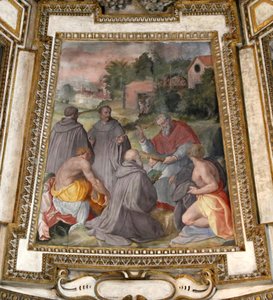
Stories of St. Jerome
Técnica de reproducción
Tamaño de la reproducción
-


Precio total
$ 363
Descripción de la obra
A Glimpse into Scholarly Reverie: Alessandro Allori’s “Stories of St. Jerome”
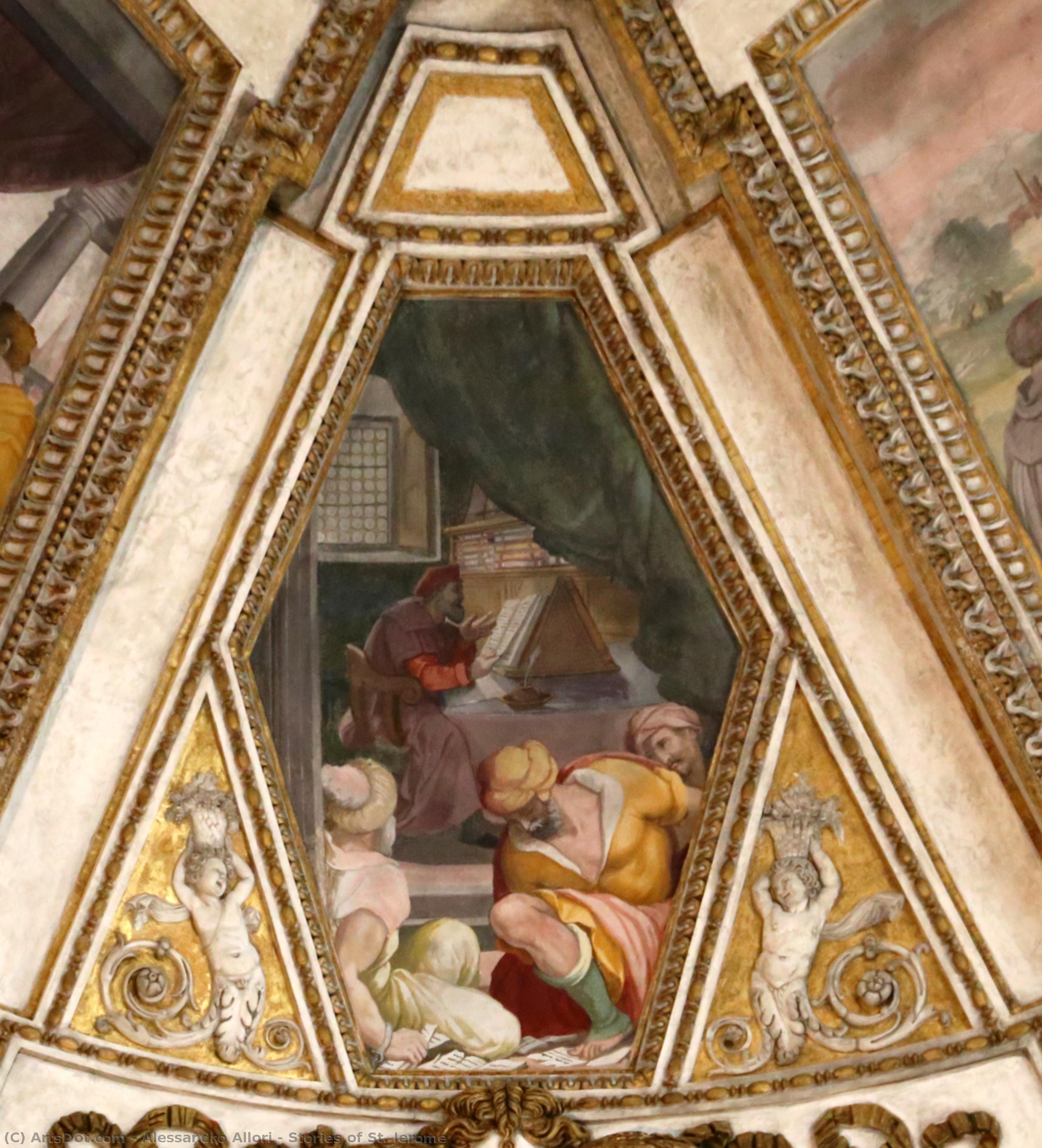
Alessandro Allori's "Stories of St. Jerome," painted in 1577, is more than just a decorative fresco; it’s a meticulously crafted window into the intellectual and spiritual heart of Renaissance Florence. This monumental work, originally adorning a ceiling within a grand church (though its precise location remains debated), transports the viewer to a realm of contemplative study and divine inspiration. The scene unfolds as a vibrant tableau vivant – a gathering of learned figures immersed in reading, writing, and philosophical discourse, all set against an architectural backdrop that speaks volumes about the era’s artistic ambitions.
The composition itself is a masterclass in Mannerist technique, drawing heavily on the principles established by Bronzino, Allori's formative mentor. A pyramidal structure anchors the scene, radiating outwards from a central group engaged in animated discussion. Linear perspective guides the eye through the space, creating an illusion of depth and recession that draws us into this intimate scholarly world. Geometric shapes – triangles, rectangles, and ovals – dominate both the figures themselves and the intricate decorative border, lending a sense of order and control to the dynamic activity within.
The Allori Manner: Polished Surfaces and Sculptural Forms
Allori’s distinctive style is immediately recognizable. He eschews the vibrant colors and dramatic lighting favored by his contemporaries, opting instead for a palette of cool, muted tones – predominantly earth hues accented with touches of gold leaf. This restrained approach contributes to the fresco's overall sense of serenity and intellectual gravity. The figures are rendered with an almost sculptural quality; their elongated forms and subtly exaggerated features convey a deliberate elegance and refinement. Notice how Allori meticulously details the folds of clothing, the textures of books, and the expressions on the faces of his subjects – each element contributing to a palpable sense of realism despite the overall stylized presentation.
The use of *fresco secco*, a technique involving painting directly onto dry plaster, is crucial to understanding the fresco’s enduring quality. This method, while demanding precision and skill, results in a surface that is remarkably durable and resistant to weathering – a testament to Allori's mastery of his craft. The subtle variations in texture—the smooth sheen of the painted figures contrasted with the slightly rougher quality of the gold leaf accents—add layers of visual interest and tactile appeal.
Symbolism and Spiritual Resonance
Beyond its technical brilliance, “Stories of St. Jerome” is rich in symbolic meaning. The central theme, naturally, revolves around the life and writings of Saint Jerome, a pivotal figure in Christian theology known for his translation of the Bible into Latin. The books scattered throughout the scene represent knowledge, wisdom, and divine inspiration – essential components of the intellectual pursuit depicted here. The architectural setting itself—a grand hall with bookshelves and windows—evokes the atmosphere of a medieval scriptorium, a place dedicated to scholarly work and religious devotion.
Furthermore, the figures themselves embody specific virtues: diligence, contemplation, and piety. Their engaged expressions and focused attention suggest a deep commitment to intellectual inquiry and spiritual understanding. The overall effect is one of profound reverence—a celebration of learning as a pathway to enlightenment and connection with the divine.
A Legacy in Reproduction – Bringing Allori’s Vision Home
Today, “Stories of St. Jerome” continues to captivate viewers through faithful reproductions. These meticulously crafted prints capture not only the visual splendor of the original fresco but also its underlying emotional resonance. Whether adorning a grand salon or a more intimate space, this artwork offers a timeless reminder of the enduring power of knowledge, contemplation, and the pursuit of spiritual understanding. The intricate details and masterful composition make it an ideal choice for discerning collectors and interior designers seeking to infuse their surroundings with a touch of Renaissance elegance and intellectual sophistication.
Obras relacionadas
Biografía del artista
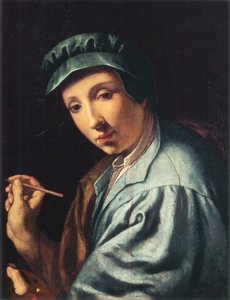
Alessandro Allori: Pintor Manierista Florentino
- Nacido: Florencia, Italia (31 de mayo de 1535)
- Fallecido: 22 de septiembre de 1607
Vida Temprana y Formación
Alessandro Allori nació en Florencia en 1535. Tras la muerte de su padre en 1540, fue criado y formado por Agnolo Bronzino, un renombrado pintor manierista y un amigo cercano de la familia. Esta tutoría moldeó profundamente el estilo artístico de Allori. La influencia de Bronzino es evidente en la preferencia de Allori por formas antinaturales, similares al mármol, y un enfoque en estatuas frías dentro de sus composiciones.
Estilo Artístico e Influencias
El trabajo de Allori a menudo se caracteriza como derivativo, con críticos que notan que parecía inspirarse principalmente en el arte preexistente. Su estilo se marca por la representación pulida de figuras que poseen una calidad antinatural, casi similar al mármol, lo que le da a sus pinturas una apariencia bidimensional y estatuaria. Esta estética se puede observar en sus colaboraciones con Giovanni Maria Butteri y su principal alumno, Giovanni Bizzelli. Otros alumnos notables incluyeron Cristoforo del Altissimo, Cesare Dandini, Aurelio Lomi, John Mosnier, Alessandro Pieroni, Giovanni Battista Vanni y Monanni.
- Características Clave: Formas similares al mármol antinaturales, estatuaria fría, figuras pulidas, calidad bidimensional.
- Influencias: Agnolo Bronzino, movimiento manierista.
Obras Principales y Legado
Las contribuciones artísticas de Alessandro Allori se pueden encontrar en varios museos de todo el mundo, incluido el Gemäldegalerie en Berlín. Un evento notable ocurrió en 2006 cuando una pintura de Allori, posiblemente un retrato de Eleonora (Dianora) di Toledo de' Medici, fue devuelta al Gemäldegalerie por el corresponsal extranjero de la BBC, Sir Charles Wheeler, quien la había recibido en Alemania en 1952.
- Obras Notables: "Alegoría de la Vida Humana", "Historias de San Jerónimo" (fresco), varios retratos.
- Legado: Su hijo, Cristofano Allori, también se convirtió en pintor, continuando la tradición artística familiar.
Significado Histórico
Alessandro Allori ocupa un lugar significativo en la historia del arte florentino como una figura clave dentro de la escuela manierista tardía. Si bien su estilo ha sido criticado por su naturaleza derivativa, jugó un papel importante en la transmisión y el desarrollo de la estética manierista. Su influencia se puede ver en las obras de sus alumnos, y sus pinturas continúan siendo estudiadas y admiradas por los entusiastas del arte en la actualidad. También estuvo involucrado en proyectos decorativos significativos para importantes mecenas como la familia Medici, lo que demuestra su importancia dentro de los círculos artísticos de Florencia.
Alessandro Allori
1535 - 1607 , Italia
Datos clave
- Artistas Influenciados:
- Cristofano Allori
- Alessandro Pieroni
- Artistas Que Influyeron:
- Agnolo Bronzino
- Miguel Ángel
- Fecha De Fallecimiento: 22 de septiembre de 1607
- Fecha De Nacimiento: 31 de mayo de 1535
- Lugar De Nacimiento: Florencia, Italia
- Movimiento Artístico: Manierismo tardío
- Nacionalidad: Italiana
- Nombre Completo: Alessandro Allori
- Obras Notables:
- Alegoría de la vida humana
- Historias de San Jerónimo
Artículos relacionados

Legado en las Paredes: Frescos Familiares que Trascienden el Tiempo
Descubre el arte del fresco muralístico para inmortalizar tu historia familiar. Expertos en frescos personalizados y técnicas ancestrales. Crea un legado visual único con .

The Enduring Legacy of Fresco Painting: Techniques, History & Contemporary Relevance
Explore the rich history & enduring artistry of fresco painting – from Giotto to Michelangelo! Discover techniques, conservation efforts, & modern applications. Learn how ArtsDot brings this timeless art form to your home.

The Enduring Legacy of Fresco: Technique, History & Artistic Expression Across Cultures
Explore the rich history & enduring legacy of fresco painting! Discover ancient techniques, Giotto's masterpieces, and modern applications. Expert insights for art lovers & professionals.

¿El Arte que Habita Contigo: El Poder Emocional de un Fresco Interior Personalizado?
Descubre el poder emocional de un fresco interior personalizado. Expertos en arte te guían para crear una obra única que refleje tu estilo y valore tu hogar. : calidad, confianza y diseño excepcional.
El Fresco a Través de los Siglos: Técnica, Historia y Expresión Artística Duradera
Descubre la historia y técnica del fresco, desde sus orígenes en la antigüedad hasta los maestros renacentistas. Guía completa sobre conservación, restauración y el legado artístico de este arte milenario.