 Enviar
 Compartir
 Detalles

 Descargar
 Similares
 Presentación de diapositivas
Stories of St. Jerome


 Ver más
Reproducción al óleo hecha a mano
Óleo sobre lienzo pintado a mano en el tamaño y marco de su elección, realizado por encargo por nuestros artistas. ( Comprar impresión Comprar imagen)




































Elija entre nuestros tamaños predefinidos que respetan las proporciones originales de la obra.

Puede ingresar sus propias dimensiones para adaptarse a un marco o espacio específico. Si el tamaño seleccionado no coincide con las proporciones de la imagen original, recortaremos la obra o extenderemos la pintura con elementos adicionales pintados a mano. Se le enviará una maqueta digital para su aprobación antes de comenzar la producción.
Tenga en cuenta que la vista previa en pantalla no refleja el recorte o la extensión reales. Solo la maqueta mostrará con precisión la composición final.
Si bien existen tamaños personalizados, recomendamos seleccionar una dimensión de la lista predefinida para preservar las proporciones originales.
Tras realizar el pedido, el equipo de ArtsDot.com enviará un correo electrónico al cliente para solicitar instrucciones y proporcionarle una vista previa del boceto.
Envío a todo el mundo () en 3-4 semanas en lugar de las 5 semanas estándar. (24 agosto). Sin comprometer la calidad.

Envío exprés gratuito a todo el mundo

Lienzo de lino de alta calidad

Seguro de envío total

Garantía de reembolso de impuestos aduaneros

Garantía de fidelidad cromática exacta

Política de devolución de 60 días (solo por defectos)

Garantía de devolución del 100% del dinero

Descuento por cantidad
 La opción de vidrio solo está disponible en tamaños inferiores a 110 cm.

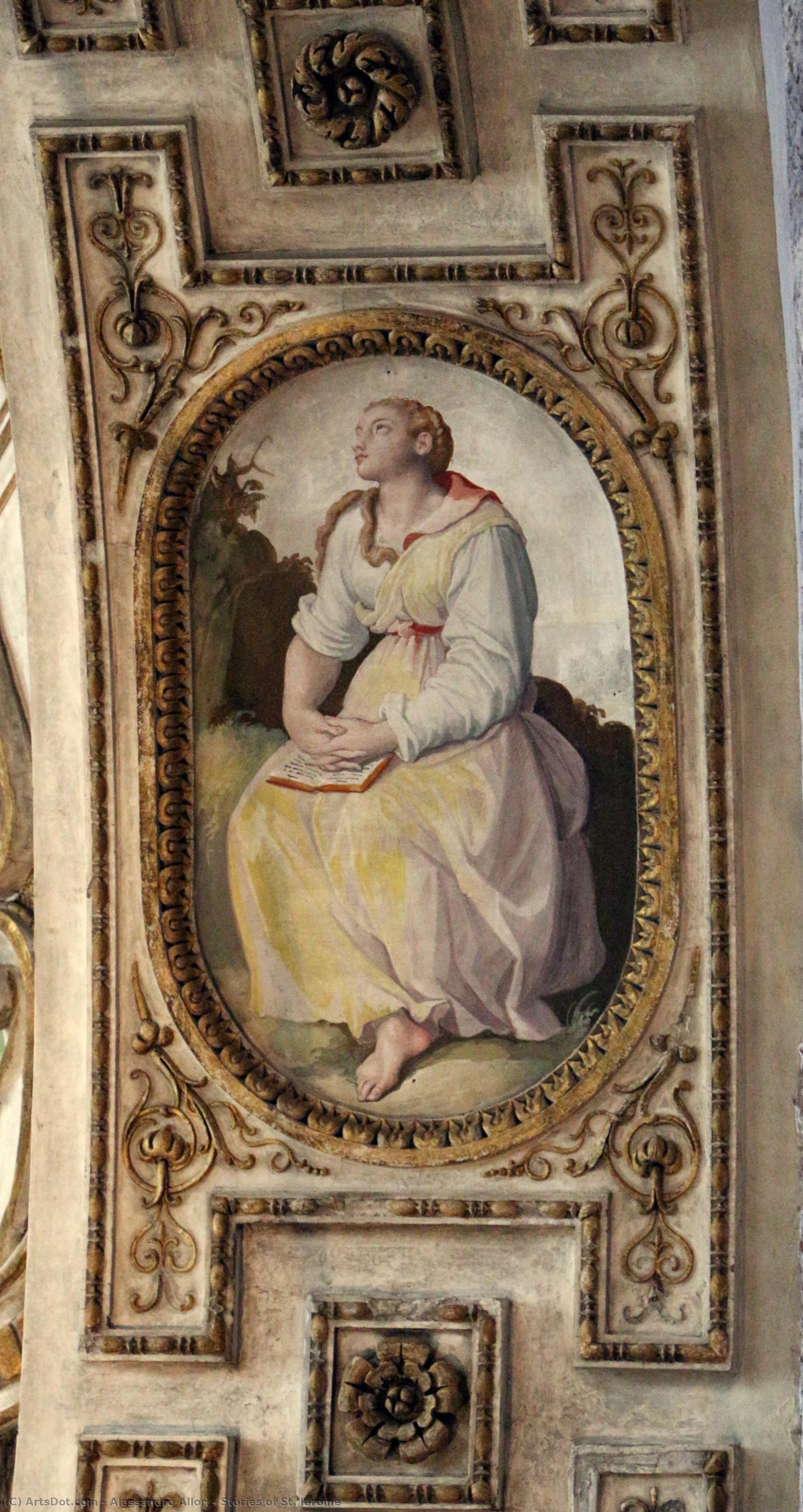
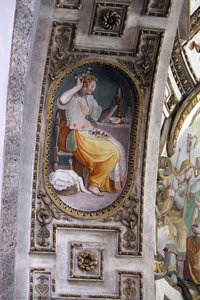
Stories of St. Jerome
Técnica de reproducción
Dimensiones de la reproducción
-


Precio total final
$ 263
Descripción de la obra
A Vision of Devotion: The Mannerist Mastery of Alessandro Allori
In the grand tapestry of the late Italian Renaissance, few works capture the intersection of scholarly pursuit and spiritual intensity quite like Alessandro Allori’s "Stories of St. Jerome". Painted in 1577, this masterpiece serves as a profound window into the Mannerist era, a period defined by its departure from the balanced harmony of the High Renaissance toward a more complex, stylized, and emotionally charged aesthetic. At first glance, the viewer is drawn into an intimate scene of quiet contemplation; a figure sits poised in a moment of deep intellectual and spiritual engagement, lost within the pages of a sacred text. The painting does not merely depict a person reading; it captures the very essence of the vita contemplativa—the contemplative life—where the boundaries between the physical world and divine wisdom begin to blur.
The technique employed by Allori is nothing short of breathtaking, showcasing the refined Florentine tradition he inherited from his mentor, the legendary Agnolo Bronzino. The surface of the work possesses a polished, almost porcelain-like quality, where light dances across smooth textures and elegant, elongated forms. This sculptural approach to painting gives the figures a statuesque presence, making them feel both ethereal and tangibly present within their environment. Allori utilizes an illusionistic sense of space, a hallmark of his fresco-inspired style, which invites the observer to step beyond the frame and into the vibrant, scholarly atmosphere of the scene. Every brushstroke serves to enhance the clarity of the narrative, guiding the eye through a carefully orchestrated composition of light and shadow.
Symbolism and the Weight of History
Beyond its aesthetic splendor, "Stories of St. Jerome" is rich with symbolic depth that would have been immediately legible to the Renaissance mind. The presence of the book is central; it represents more than mere literacy—it is a symbol of the arduous labor of translation and the preservation of divine truth. As St. Jerome was famously tasked with translating the Bible into Latin, the act of reading depicted here becomes a metaphor for the intellectual struggle to grasp the infinite. The ornate borders and the structured composition reflect the order and discipline required in such a monumental spiritual undertaking. There is a palpable sense of gravity in the figure's posture, suggesting that the knowledge contained within those pages carries the weight of eternity.
For the discerning collector or interior designer, this artwork offers much more than visual beauty; it provides a focal point of profound intellectual character. The piece possesses an emotional resonance that can transform a space, lending an air of sophistication, tranquility, and historical depth to any gallery or curated room. Whether placed in a library, a study, or a grand salon, a high-quality reproduction of this Allori masterpiece acts as a conversation piece that celebrates the enduring human quest for knowledge and the timeless beauty of the Florentine Mannerist tradition.
Obras relacionadas
Biografía del artista
Alessandro Allori: Pintor Manierista Florentino
- Nacido: Florencia, Italia (31 de mayo de 1535)
- Fallecido: 22 de septiembre de 1607
Vida Temprana y Formación
Alessandro Allori nació en Florencia en 1535. Tras la muerte de su padre en 1540, fue criado y formado por Agnolo Bronzino, un renombrado pintor manierista y un amigo cercano de la familia. Esta tutoría moldeó profundamente el estilo artístico de Allori. La influencia de Bronzino es evidente en la preferencia de Allori por formas antinaturales, similares al mármol, y un enfoque en estatuas frías dentro de sus composiciones.
Estilo Artístico e Influencias
El trabajo de Allori a menudo se caracteriza como derivativo, con críticos que notan que parecía inspirarse principalmente en el arte preexistente. Su estilo se marca por la representación pulida de figuras que poseen una calidad antinatural, casi similar al mármol, lo que le da a sus pinturas una apariencia bidimensional y estatuaria. Esta estética se puede observar en sus colaboraciones con Giovanni Maria Butteri y su principal alumno, Giovanni Bizzelli. Otros alumnos notables incluyeron Cristoforo del Altissimo, Cesare Dandini, Aurelio Lomi, John Mosnier, Alessandro Pieroni, Giovanni Battista Vanni y Monanni.
- Características Clave: Formas similares al mármol antinaturales, estatuaria fría, figuras pulidas, calidad bidimensional.
- Influencias: Agnolo Bronzino, movimiento manierista.
Obras Principales y Legado
Las contribuciones artísticas de Alessandro Allori se pueden encontrar en varios museos de todo el mundo, incluido el Gemäldegalerie en Berlín. Un evento notable ocurrió en 2006 cuando una pintura de Allori, posiblemente un retrato de Eleonora (Dianora) di Toledo de' Medici, fue devuelta al Gemäldegalerie por el corresponsal extranjero de la BBC, Sir Charles Wheeler, quien la había recibido en Alemania en 1952.
- Obras Notables: "Alegoría de la Vida Humana", "Historias de San Jerónimo" (fresco), varios retratos.
- Legado: Su hijo, Cristofano Allori, también se convirtió en pintor, continuando la tradición artística familiar.
Significado Histórico
Alessandro Allori ocupa un lugar significativo en la historia del arte florentino como una figura clave dentro de la escuela manierista tardía. Si bien su estilo ha sido criticado por su naturaleza derivativa, jugó un papel importante en la transmisión y el desarrollo de la estética manierista. Su influencia se puede ver en las obras de sus alumnos, y sus pinturas continúan siendo estudiadas y admiradas por los entusiastas del arte en la actualidad. También estuvo involucrado en proyectos decorativos significativos para importantes mecenas como la familia Medici, lo que demuestra su importancia dentro de los círculos artísticos de Florencia.

Alessandro Allori
1535 - 1607 , Italia
Datos clave
- Artistas Influenciados:
- Cristofano Allori
- Alessandro Pieroni
- Artistas Que Influyeron:
- Agnolo Bronzino
- Miguel Ángel
- Fecha De Fallecimiento: 22 de septiembre de 1607
- Fecha De Nacimiento: 31 de mayo de 1535
- Lugar De Nacimiento: Florencia, Italia
- Movimiento Artístico: Manierismo tardío
- Nacionalidad: Italiana
- Nombre Completo: Alessandro Allori
- Obras Notables:
- Alegoría de la vida humana
- Historias de San Jerónimo
Artículos relacionados

Legado en las Paredes: Frescos Familiares que Trascienden el Tiempo
Descubre el arte del fresco muralístico para inmortalizar tu historia familiar. Expertos en frescos personalizados y técnicas ancestrales. Crea un legado visual único con .

The Enduring Legacy of Fresco Painting: Techniques, History & Contemporary Relevance
Explore the rich history & enduring artistry of fresco painting – from Giotto to Michelangelo! Discover techniques, conservation efforts, & modern applications. Learn how ArtsDot brings this timeless art form to your home.

The Enduring Legacy of Fresco: Technique, History & Artistic Expression Across Cultures
Explore the rich history & enduring legacy of fresco painting! Discover ancient techniques, Giotto's masterpieces, and modern applications. Expert insights for art lovers & professionals.

¿El Arte que Habita Contigo: El Poder Emocional de un Fresco Interior Personalizado?
Descubre el poder emocional de un fresco interior personalizado. Expertos en arte te guían para crear una obra única que refleje tu estilo y valore tu hogar. : calidad, confianza y diseño excepcional.
El Fresco a Través de los Siglos: Técnica, Historia y Expresión Artística Duradera
Descubre la historia y técnica del fresco, desde sus orígenes en la antigüedad hasta los maestros renacentistas. Guía completa sobre conservación, restauración y el legado artístico de este arte milenario.