 Ver en contexto
 Enviar
 Compartir
 Detalles

 Descargar
 Similares
 Radiografía
 Presentación de diapositivas
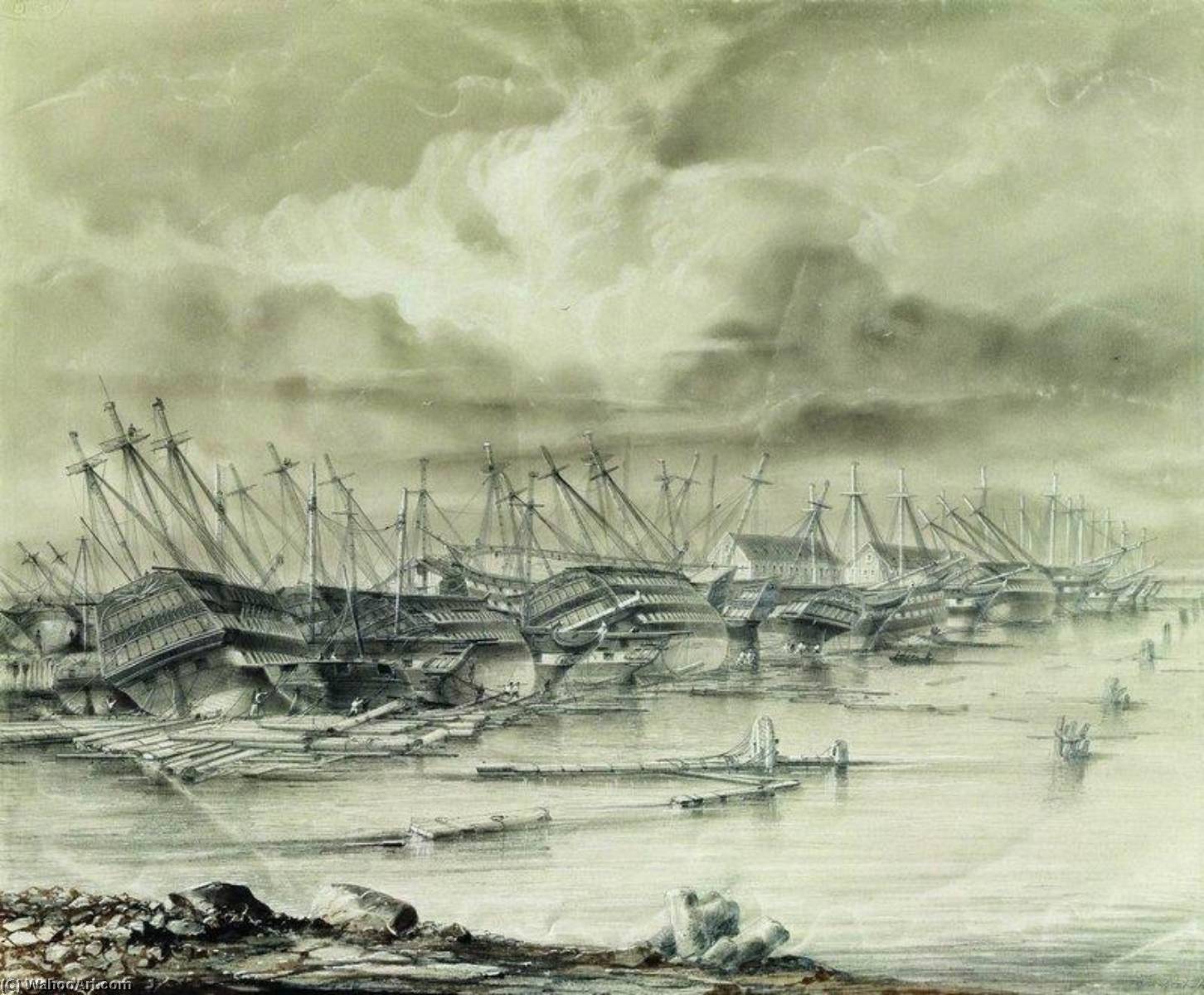
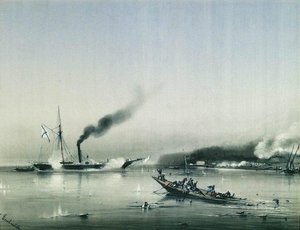
Kronstadt Harbour after the Flooding


 Ver más
Giclée / Impresión de arte
Impresiones giclée o en lienzo de calidad de museo con producción rápida y opciones de acabado flexibles. ( Comprar pintura hecha a mano Comprar imagen)




P118B $10

P118H $10

P118W $10

P438Z $10

P508JH $12

P508YH $12

P805H $10

P805Z $10

P919BZ $10

P919G $10

P919XJ $10

P959ZH $10

P968JZ $12

W106C $8

W218G $10

W218JH $8

W218Y $10

W307PJ $10

W316G $10

W316PJ $8

W316Y $10

W398PJ $8

W4111J $10

W500HY $15

W500JH $15

W692G $12

W849H $8

W940BG $15

W953PJ $8




Elija entre nuestros tamaños predefinidos que respetan las proporciones originales de la obra.

Puede introducir sus propias dimensiones para adaptarse a un marco o espacio específico. Si el tamaño seleccionado no coincide con las proporciones de la imagen original, recortaremos la obra de arte o extenderemos la imagen con un borde con efecto espejo o de color sólido. Se enviará una maqueta digital para su aprobación antes de que comience la producción.
Tenga en cuenta que la vista previa en pantalla no refleja el recorte o la extensión real. Solo la maqueta mostrará con precisión la composición final.
Aunque existen tamaños personalizados, recomendamos seleccionar una dimensión de la lista predefinida para preservar las proporciones originales.
Envío a todo el mundo () en 2 semanas en lugar de las 4/5 semanas estándar. (1 septiembre)

Envío exprés gratuito a todo el mundo

Lienzo de lino de alta calidad

Seguro de envío total

Garantía de reembolso de impuestos aduaneros

Garantía de fidelidad cromática exacta

Política de devolución de 60 días (solo por defectos)

Garantía de devolución del 100% del dinero

Descuento por cantidad
 La opción de vidrio solo está disponible en tamaños inferiores a 110 cm.

Kronstadt Harbour after the Flooding
Giclée / Impresión de arte
Dimensiones de la reproducción
-


Precio total final
$ 62
Alexei Petrovich Bogoliubov: Bridging Romanticism and Realism Through Turbulent Seas
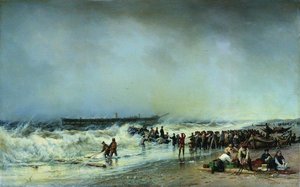
Alexei Petrovich Bogoliubov (1824-1896), a name synonymous with the grandeur of 19th-century Russian landscape painting, wasn’t merely an artist; he was a conduit for capturing the raw emotion of his era. Born in Novgorod Gubernia, Russia, into a lineage steeped in military valor and intellectual discourse – his father a retired colonel, his maternal grandfather Alexander Radishchev—Bogoliubov's formative years instilled within him a dual appreciation for discipline and boundless imagination. This inherent balance would become the bedrock upon which he built his artistic legacy, propelling him to synthesize Romantic idealism with meticulous observation of the natural world. His early education at military school honed his analytical skills alongside fostering an inquisitive spirit, preparing him for service in the Imperial Russian Navy. These voyages weren’t simply expeditions across oceans; they were transformative experiences that exposed him to diverse cultures and landscapes—influences undeniably woven into the fabric of his artistic vision. The ceaseless windswept expanse of the Baltic Sea, particularly, served as a constant muse, inspiring canvases brimming with dramatic skies and turbulent waters. Bogoliubov’s fascination with maritime subjects stemmed from a deep respect for the power of nature and its ability to evoke profound feelings within the human soul—a sentiment powerfully conveyed in his oeuvre. Bogoliubov's artistic style leaned heavily toward Realism, albeit infused with Romantic sensibilities. He meticulously rendered textures – the cresting waves, the weathered timbers of ships – achieving astonishing accuracy while simultaneously channeling the emotive force characteristic of Romantic painters like Ivan Ayvazovsky and Charles-François Daubigny. Unlike Impressionists who sought to capture fleeting moments of light, Bogoliubov aimed for a more enduring portrayal of atmospheric conditions, meticulously depicting the interplay between sunlight and shadow to convey the drama of impending storms. This technique—characterized by layered brushstrokes and subtle gradations of color—allowed him to imbue his paintings with palpable energy and psychological depth. “Kronstadt Harbour after the Flooding,” painted in 1850, exemplifies Bogoliubov’s masterful command of this style. The scene depicts a harbor engulfed by a violent storm; boats bob precariously amidst towering waves, their masts straining against the gale-force winds. Dark clouds dominate the horizon, casting an ominous pall over the turbulent sea—a deliberate compositional choice designed to heighten the sense of unease and impending danger. Yet, amidst this chaos, Bogoliubov’s brushstrokes reveal a remarkable sensitivity to light and texture. The artist skillfully captures the glistening spray of seawater on the hulls of vessels and the churning foam of crashing waves, creating an illusion of movement that draws the viewer into the heart of the storm. The painting's symbolism resonates deeply with Romantic ideals—a preoccupation with sublime beauty intertwined with apprehension about mortality. Bogoliubov’s depiction of a tempestuous sea serves as a metaphor for the unpredictable forces shaping human destiny, mirroring the anxieties prevalent during his time. However, it is not merely fear that dominates the canvas; there’s also an undeniable sense of awe and wonder at the majesty of nature—a testament to Bogoliubov's belief in art’s capacity to inspire contemplation and elevate the spirit. “Kronstadt Harbour after the Flooding” remains a captivating masterpiece, embodying both Romantic passion and artistic precision—a timeless portrayal of the sublime rendered with unwavering dedication to realism.Obras relacionadas
Biografía del artista
Primeros años y educación
Alexei Petrovich Bogoliubov fue un pintor de paisajes ruso, nacido el 16 de marzo de 1824 en la aldea de Pomerania en la gobernación de Novgorod. Su padre, Piotr Gavrilovich Bogoliubov, era un coronel retirado, y su abuelo materno, Alexander Radishchev, era un filósofo y crítico social muy conocido. En 1841, Alexei se graduó del colegio militar y sirvió en la armada rusa, viajando a muchos países. Comenzó a asistir a clases en la Academia de Artes de San Petersburgo en 1849, donde estudió bajo Maxim Vorobiev.Carrera e influencias
Bogoliubov estuvo muy influenciado por Ivan Aivazovsky, un pintor marino ruso. En 1853, finalizó la academia con una medalla de oro importante. Se retiró como oficial de marina y fue nombrado artista del cuartel general de la armada. De 1854 a 1860, viajó por Europa, trabajando prolíficamente. En Roma, conoció a Alexander Ivanov, quien lo convenció de centrarse más en el dibujo. En Düsseldorf, tomó clases de Andreas Achenbach. En París, admiró a los artistas de la Escuela Barbizon, incluyendo a Camille Corot y Charles-François Daubigny.Obras notables y exposiciones
Las pinturas de Bogoliubov se caracterizan por su realismo y romanticismo. Es conocido por sus numerosos paisajes y marinas, particularmente sus escenas de batallas navales. Algunas de sus obras notables se pueden encontrar en ArtsDot.com. Exhibió sus obras en la Academia Imperial de Artes y recibió el título de profesor. En 1871, fue elegido para la Academia Imperial de Artes.Legado y vida posterior
Bogoliubov se acercó al movimiento artístico de los Errantes (Peredvizhniki), participando en todas sus exposiciones. Se convirtió en miembro de su junta directiva pero tenía reservas sobre sus ideas sociales. En 1873, abandonó la academia en solidaridad con sus compañeros itinerantes. Después de 1873, Bogoliubov vivió principalmente en París debido a su afección cardíaca. Su casa era como una colonia rusa, con frecuentes visitantes que incluían a Ivan Turgenev, Ilia Repin y Vasily Polenov. Para obtener más información sobre la vida y las obras de Bogoliubov, visite su página en ArtsDot.com o su página de Wikipedia.Importancia histórica
Alexei Petrovich Bogoliubov fue un artista que sirvió como puente entre el Romanticismo y el Realismo en la pintura rusa. Su formación académica, combinada con sus viajes por Europa y su contacto con movimientos artísticos innovadores como la Escuela Barbizon, le permitieron desarrollar un estilo único que se caracterizaba por una observación precisa de la naturaleza y una sensibilidad romántica. Su participación en los Errantes (Peredvizhniki) reflejó su compromiso con el arte socialmente relevante y su deseo de acercar el arte al pueblo ruso. Su legado perdura como un testimonio de su talento artístico, su espíritu viajero y su contribución a la rica tradición del arte ruso.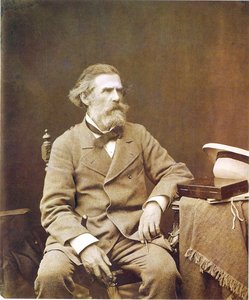
Alexei Petrovich Bogoliubov
1824 - 1896 , Rusia
Datos clave
- Artistas Que Influyeron:
- Iván Aivazovski
- Camille Corot
- Estilo Artístico: Romanticismo y Realismo
- Nacionalidad: Ruso
- Nombre Completo: Alexei Petrovich Bogoliubov
- Obras Notables:
- Paisajes marinos
- Escenas de batalla naval
Artículos relacionados
The Allure of the Horizon: A Comprehensive Exploration of Seascape Art Through History & Emotion
Explore the captivating world of seascape art! Discover its history, key artists & movements – from Dutch Masters to Impressionism. Expert insights for collectors and enthusiasts at ArtsDot.
Ivan Bilibin: A Synthesis of Folklore, Modernism & National Identity in Russian Illustration
Explore the enchanting world of Ivan Bilibin, a master Russian illustrator who synthesized folklore, Art Nouveau & national identity. Discover his iconic fairy tale illustrations and legacy with ArtsDot.
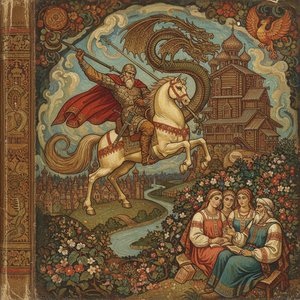
Victor Vasnetsov: Myth, Nationalism & the Revival of Russian Fairy Tale Painting
Explore the captivating world of Victor Vasnetsov, a co-founder of Russian folklorist painting. Discover his iconic works, influence on national identity, and lasting legacy in this expert guide.
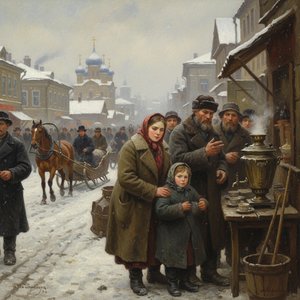
Vladimir Makovsky: Realism, Social Commentary & Russian Life in Late 19th-Century Painting
Explore the captivating world of Vladimir Makovsky, a leading Russian realist painter. Discover his insightful depictions of 19th-century life, social commentary & legacy with ArtsDot.
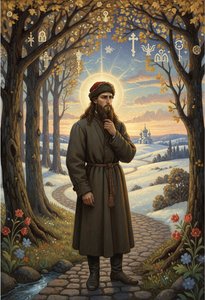
Mikhail Nesterov: Spiritual Quests & Symbolic Landscapes of Russian Symbolism
Explore the captivating world of Mikhail Nesterov, a pioneer of Russian Symbolism. Discover his spiritual themes, iconic paintings like 'The Hermit,' and lasting influence on Russian art history. Learn more at ArtsDot.