 Ver en contexto
 Enviar
 Compartir
 Detalles

 Descargar
 Similares
 Radiografía
 Presentación de diapositivas
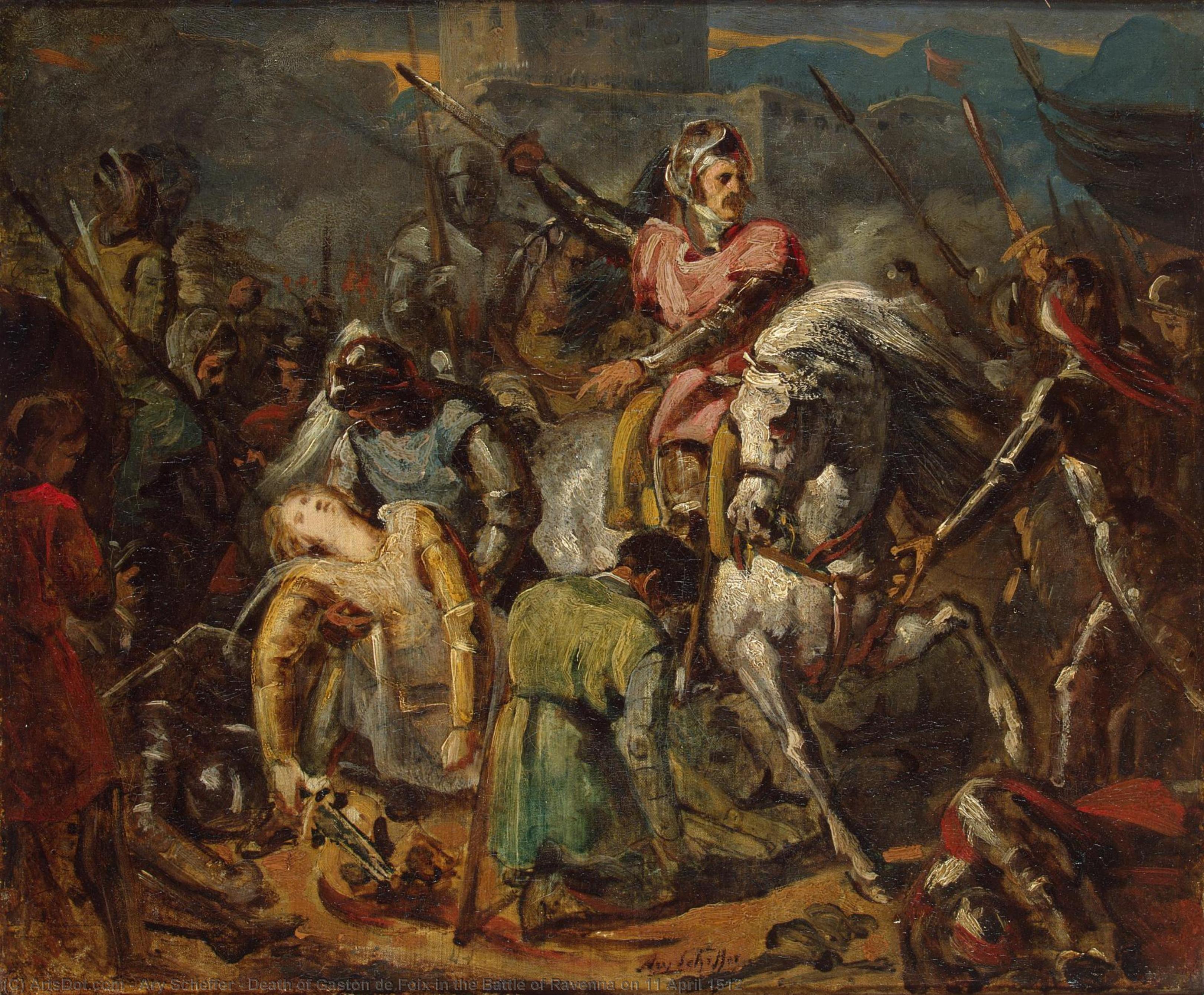
Death of Gaston de Foix in the Battle of Ravenna on 11 April 1512
 Oil On Canvas
- WallArt
- Romanticism
 1824
1824- 19th Century
 38.0 x 46.0 cm
 Museo del Hermitage
 Ver más
Reproducción al óleo hecha a mano
Óleo sobre lienzo pintado a mano en el tamaño y marco de su elección, realizado por encargo por nuestros artistas. ( Comprar impresión Comprar imagen)




P118B $10

P118H $10

P118W $10

P438Z $10

P508JH $12

P508YH $12

P805H $10

P805Z $10

P919BZ $10

P919G $10

P919XJ $10

P959ZH $10

P968JZ $12

W106C $8

W218G $10

W218JH $8

W218Y $10

W307PJ $10

W316G $10

W316PJ $8

W316Y $10

W398PJ $8

W4111J $10

W500HY $15

W500JH $15

W692G $12

W849H $8

W940BG $15

W953PJ $8




Elija entre nuestros tamaños predefinidos que respetan las proporciones originales de la obra.

Puede ingresar sus propias dimensiones para adaptarse a un marco o espacio específico. Si el tamaño seleccionado no coincide con las proporciones de la imagen original, recortaremos la obra o extenderemos la pintura con elementos adicionales pintados a mano. Se le enviará una maqueta digital para su aprobación antes de comenzar la producción.
Tenga en cuenta que la vista previa en pantalla no refleja el recorte o la extensión reales. Solo la maqueta mostrará con precisión la composición final.
Si bien existen tamaños personalizados, recomendamos seleccionar una dimensión de la lista predefinida para preservar las proporciones originales.
Tras realizar el pedido, el equipo de ArtsDot.com enviará un correo electrónico al cliente para solicitar instrucciones y proporcionarle una vista previa del boceto.
Envío a todo el mundo () en 3-4 semanas en lugar de las 5 semanas estándar. (1 septiembre). Sin comprometer la calidad.

Envío exprés gratuito a todo el mundo

Lienzo de lino de alta calidad

Seguro de envío total

Garantía de reembolso de impuestos aduaneros

Garantía de fidelidad cromática exacta

Política de devolución de 60 días (solo por defectos)

Garantía de devolución del 100% del dinero

Descuento por cantidad
 La opción de vidrio solo está disponible en tamaños inferiores a 110 cm.

Death of Gaston de Foix in the Battle of Ravenna on 11 April 1512
Técnica de reproducción
Dimensiones de la reproducción
-


Precio total final
$ 263
Ary Scheffer’s “Death of Gaston de Foix in the Battle of Ravenna on 11 April 1512” – A Dramatic Echo of Renaissance Tragedy
Ary Scheffer's "Death of Gaston de Foix in the Battle of Ravenna on 11 April 1512" stands as a cornerstone of Romantic painting, capturing not merely an historical event but also the profound emotional currents that defined its era. Created in 1824, this monumental canvas—measuring 38 x 46 cm and housed at The Hermitage Museum in St. Petersburg—captures the tragic demise of Gaston de Foix, Duke of Nemours, during the Battle of Ravenna on April 11th, 1512, a pivotal moment in the Italian Wars and a cornerstone of Romantic art history. Ary Scheffer’s sketch for a monumental painting embodies the spirit of his era—a fervent embrace of dramatic narrative and emotional expression—marking a decisive departure from the neoclassical preoccupation with idealized form and rational order.The Subject Matter: Gaston de Foix and the Battle of Ravenna
Ary Scheffer's depiction centers on Gaston de Foix, Duke of Nemours – a figure whose military prowess captivated the imagination of his contemporaries and whose untimely demise resonated throughout Europe. The artist meticulously portrays him astride a horse, wielding a sword with unwavering resolve, embodying the heroic spirit emblematic of the Renaissance era. Surrounding him are fellow soldiers clad in armor, reflecting the grandeur and solemnity of medieval warfare. Two swords dominate the composition—one held by Gaston de Foix himself, symbolizing courage and leadership, and another positioned centrally, representing the decisive confrontation between opposing forces. The painting’s stylistic approach aligns seamlessly with the Romantic movement's emphasis on dramatic emotion and expressive brushwork. Ary Scheffer skillfully employs loose, swirling strokes to convey the urgency of the battlefield scene—a deliberate departure from the precise realism favored by Neoclassical painters. The artist’s palette is dominated by muted browns, ochres, and reds, reflecting the grim realities of war while simultaneously capturing the grandeur of historical narrative.The Artist: Ary Scheffer
Ary Scheffer (1795-1858) stands as a pivotal figure in Romantic art—a movement characterized by fervent emotion, individualism, and an embrace of imagination over strict academic conventions. Born in Dordrecht, Netherlands, he inherited artistic talent from his parents, Johan Bernard Scheffer and Cornelia Lamme, both accomplished portraitists. This early exposure instilled in him a meticulous attention to detail and a profound understanding of visual representation—qualities that would characterize his entire oeuvre. His father’s influence was particularly notable; John Bernard Scheffer practiced the art of portraiture with unwavering precision, capturing likenesses with remarkable accuracy while simultaneously conveying subtle nuances of character. This dedication to realism would become a cornerstone of Ary Scheffer's artistic vision.The Birth of Romantic Painting: Gaston de Foix and Ary Scheffer’s Dramatic Vision
Ary Scheffer’s “Death of Gaston de Foix in the Battle of Ravenna on 11 April 1512” stands as a pivotal artwork, marking a decisive shift away from the rigid formalism of Neoclassicism toward the expressive fervor of Romanticism. Ary Scheffer's depiction captures not merely a historical event—the final confrontation between France and Spain during the War of the League of Cambrai—but also embodies the psychological complexities inherent in portraying mortality and heroism.The Scene: Ravenna, 1512 – A Moment Frozen in Time
Scheffer’s canvas portrays Gaston de Foix, Duke of Nemours, a young French military leader at the height of his ambition, facing imminent defeat during the Battle of Ravenna. The painting depicts him astride a horse, clutching a sword—a posture symbolizing courage and defiance—but with his head bowed in sorrow or resignation. Surrounding him are fellow soldiers clad in armor, creating a dramatic tableau that captures the tension and peril of warfare. Two swords dominate the composition: one held by Gaston de Foix himself, representing leadership and martial prowess, and another positioned prominently near the center, symbolizing victory and perhaps impending doom. The artist’s meticulous attention to detail—the textures of armor, the expressions on the faces of the figures—contributes to a dramatic portrayal of the event. Ary Scheffer's masterful brushstrokes convey both the physicality of battle and the psychological intensity of the moment.The Battle of Ravenna: A Pivotal Moment in Renaissance History
The painting “Death of Gaston de Foix in the Battle of Ravenna on 11 April 1512” by Ary Scheffer isn’t merely a depiction of a military event; it's a profound meditation on mortality and heroism within the turbulent backdrop of the Italian Wars. Created in 1824, this monumental canvas—measuring approximately 38 x 46 centimeters—holds its place prominently at The Hermitage Museum in St. Petersburg, Russia, cementing its status as an iconic representation of Romantic artistic expression.The Subject Matter: Gaston de Foix and the Battle of Ravenna
Ary Scheffer’s “Death of Gaston de Foix in the Battle of Ravenna on 11 April 1512” isn't merely a depiction of a military event; it’s an embodiment of Romantic drama. The painting portrays Gaston de Foix, Duke of Nemours—a young French commander who spearheaded a daring campaign against the Holy League during the Italian Wars—in his final moments. Captured in a dynamic pose atop a horse, he holds aloft a sword, symbolizing courage and leadership, while his head bows downwards, conveying defeat and sorrow. The scene unfolds amidst a backdrop of armored figures representing the opposing forces, emphasizing the drama of battle and highlighting the artist's masterful depiction of human emotion.The Battle of Ravenna: A Moment Frozen in Time
Ary Scheffer’s “Death of Gaston de Foix in the Battle of Ravenna on 11 April 1512” isn’t merely a historical painting; it’s an embodiment of the Romantic spirit—a visceral reaction to tragedy and a celebration of human emotion. Ary Scheffer, commissioned by Louis XIV for Versailles, captured not just a battlefield scene but also the profound sorrow of loss against a backdrop of political upheaval.The Battle of Ravenna: A Moment Frozen in Time
Scheffer’s “Death of Gaston de Foix in the Battle of Ravenna on 11 April 1512” isn't merely a depiction of a military event; it’s an encapsulation of Renaissance drama and aristocratic tragedy. The painting captures the final moments of Gaston de Foix, Duke of Nemours—a young commander who had ignited the Italian Wars with his audacious campaigns—as he succumbed to a fatal wound during the Battle of Ravenna on April 11th, 1512. Ary Scheffer’s sketch for this monumental composition encapsulates not merely a historical event but also embodies the spirit of Romantic art, marking a pivotal moment in European artistic history.The Scene: A Moment Frozen in Time
Ary Scheffer's "Death of Gaston de Foix in the Battle of Ravenna on 11 April 1512" depicts a dramatic confrontation between French and Spanish forces during the tumultuous Wars of Religion. The painting captures a pivotal moment—the fatal wounding of Gaston de Foix, Duke of Nemours—a young military leader who had spearheaded France’s ambitious campaign against Spain in Italy. Ary Scheffer's masterful depiction transcends mere historical record; it embodies the Romantic spirit, prioritizing emotional resonance over strict realism.The Scene: Drama and Symbolism Embodied
Scheffer captures a pivotal moment – the death of Gaston de Foix at Ravenna on April 11th, 1512 – not as a clinical recounting of battle but as a dramatic tableau brimming with emotion. The painting depicts Gaston riding his horse, sword in hand, head bowed in defeat, surrounded by fellow soldiers. This posture immediately conveys vulnerability and tragedy, reflecting the Romantic preoccupation with human suffering and mortality—a stark contrast to the idealized figures favored by Neoclassical artists. Scheffer’s masterful use of chiaroscuro – dramatic contrasts between light and dark – amplifies the emotional intensity of the scene, mirroring the turbulent spirit of the era. The composition itself is carefully balanced, guiding the viewer's eye towards Gaston de Foix, positioned centrally on horseback, conveying both nobility and vulnerability. His posture embodies courage yet also foreshadows his tragic fate—a poignant reminder of mortality amidst grandeur.The Artist’s Vision: Ary Scheffer and Romantic Expression
Ary Scheffer (1795-1858) stands as a pivotal figure in the transition from Neoclassicism to Romanticism, embodying the spirit of artistic innovation that characterized the early 19th century. Unlike his predecessors who prioritized rational idealism and formal precision—traits prevalent in the dominant aesthetic sensibilities of the time—Scheffer championed emotional expression and dramatic realism, marking a decisive break with neoclassical conventions. His canvases pulsated with palpable energy, conveying not merely visual information but profound psychological depth. This approach resonated powerfully with audiences eager for art that mirrored the complexities of human experience.The Birth of Romantic Painting: Ary Scheffer's Vision
Ary Scheffer’s “Death of Gaston de Foix in the Battle of Ravenna on 11 April 1512” stands as a pivotal moment in artistic history—the undisputed herald of French Romantic painting. Emerging from the shadow of NeObras relacionadas

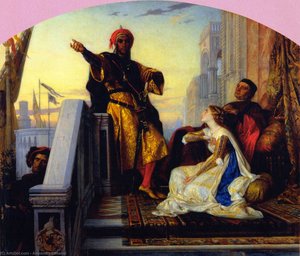
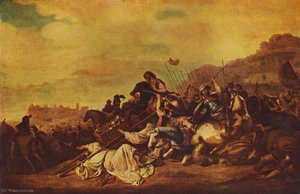
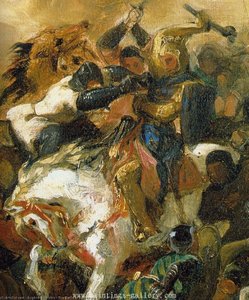
Biografía del artista
Ary Scheffer: Un Pintor Romántico Neerlandés-Francés
- Nacido: 10 de febrero de 1795, Dordrecht, Países Bajos
- Fallecido: 15 de junio de 1858
- Origen: ArtsDot
Vida Temprana y Formación
- Ary Scheffer nació en una familia artística; su padre, Johan Bernard Scheffer, era retratista, y su madre, Cornelia Lamme, pintaba miniaturas.
- Comenzó su formación artística formal a los 11 años en la Academia de Dibujo de Ámsterdam.
- Tras la muerte de su padre en 1809, se mudó a París con su madre.
- En París, estudió en la École des Beaux-Arts bajo Pierre-Narcisse Guérin, una influencia significativa en su desarrollo artístico. Este período coincidió con el auge del Romanticismo en Francia.
- Influencias incluyeron Xavier Sigalon, Eugène Delacroix y Théodore Géricault, aunque Scheffer desarrolló un estilo distintivo a menudo descrito como "clásico glacial".
Carrera Artística y Obras Notables
- La carrera de Scheffer abarcó varias décadas, produciendo numerosas pinturas caracterizadas por su mezcla única de Romanticismo y Classicismo.
- Obras Notables:
- Francesca da Rimini (varias versiones) - Un tema recurrente que explora la trágica historia de amor del Infierno de Dante.
- Mignon – Pinturas que representan personajes de Wilhelm Meister de Goethe, centrándose particularmente en el anhelo de Mignon por su patria y el cielo.
- Christus Consolator - Demuestra la exploración de temas religiosos de Scheffer con un sentido de misticismo.
- Los Pastores Guiados por la Estrella (1837) – Una representación de la historia de la Natividad.
- Sus pinturas frecuentemente se inspiraron en fuentes literarias, incluyendo obras de Dante, Byron y Goethe, mostrando su habilidad para traducir la intensidad emocional en forma visual.
- Scheffer fue un retratista popular en Francia, pintando a miembros de la realeza y otras figuras prominentes.
Temas y Estilo
- Temas Recurrentes: Literatura (Dante, Byron, Goethe), Mitología, Temas religiosos, Retrato.
- Estilo: El estilo de Scheffer a menudo se describe como una mezcla de Romanticismo y Classicismo. Si bien influenciado por la intensidad emocional del movimiento Romántico, sus obras conservan cierta formalidad y estructura clásica. Sus pinturas son conocidas por su composición detallada, técnica refinada y evocador uso de la luz y la sombra.
- Características Distintivas: Una tendencia hacia representaciones sentimentales y melodramáticas de temas literarios y religiosos; meticulosa atención al detalle en los trajes y escenarios; una preferencia por paletas de colores apagadas.
Legado e Influencia
- El estilo único de Ary Scheffer influyó en generaciones posteriores de artistas, aunque su popularidad disminuyó algo en el siglo XX.
- Sus obras se conservan en museos de todo el mundo, incluyendo el Museo de Dordrecht y el Museo de Bellas Artes de Boston.
- El Musée de la Vie Romantique en París alberga una colección dedicada a Scheffer y George Sand, reflejando su importancia dentro de la era Romántica.
- ArtsDot ofrece réplicas al óleo hechas a mano de las obras maestras de Scheffer, haciendo que su arte sea accesible para un público más amplio.
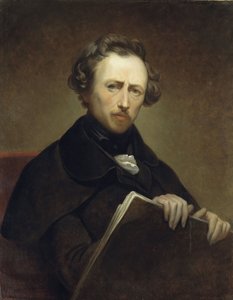
Ary Scheffer
1795 - 1858 , Países Bajos
Datos clave
- Artistas Que Influyeron:
- Xavier Sigalon
- Eugène Delacroix
- Théodore Géricault
- Fecha De Fallecimiento: 15 de junio de 1858
- Fecha De Nacimiento: 10 de febrero de 1795
- Lugar De Nacimiento: Dordrecht, Países Bajos
- Movimiento Artístico: Romanticismo
- Nacionalidad: Neerlandés-Francés
- Nombre Completo: Ary Scheffer
- Obras Notables:
- Francesca da Rimini
- Mignon
- Christus Consolator
- Los pastores guiados por la estrella
Artículos relacionados

Goya: Las 25 Obras Maestras del Genio Español | Reproducciones de Arte en ArtsDot
Descubre las 25 obras maestras de Goya, el genio español. Explora retratos icónicos, 'Los Caprichos' y 'Las Pinturas Negras'. Reproducciones de arte en lienzo de alta calidad para decorar tu hogar con estilo. ¡Encuentra tu obra favorita en ArtsDot.com!

Acerca de nosotros
Descubre nuestra historia! Llevamos el arte de clase mundial a tu vida gracias a una selección experta, creaciones personalizadas y vistas previas gratuitas. Aprobado por particulares y empresas desde el año 2000.
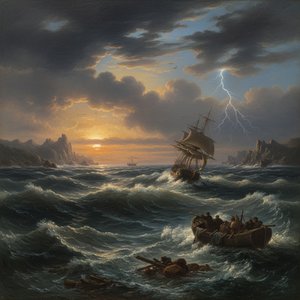
Philip James de Loutherbourg: Romantic Visions of Maritime Life & the Sublime
Explore the dramatic naval scenes & landscapes of Philip James de Loutherbourg (1740-1812), a key figure in Romantic painting. Discover his legacy, theatrical innovations & iconic works like 'The Battle of the Nile' at ArtsDot.
Romantic Realism's Finest: 10 Masterpieces for Your Home | ArtsDot
Explore 10 defining masterpieces of Romantic Realism! Discover Courbet, Millet & Daumier's powerful paintings—capturing emotion and social realities. Find museum-quality reproductions for your home at ArtsDot.com.

Águeda Ruiz de la Prada: A Study of Eclecticism & Emotional Resonance in Contemporary Spanish Painting
Discover the vibrant world of Ágatha Ruiz de la Prada, a leading figure in contemporary Spanish art. Explore her eclectic style, emotional depth & legacy – a must-read for discerning collectors.