 Enviar
 Compartir
 Detalles

 Descargar
 Similares
 Presentación de diapositivas
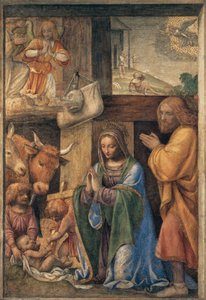
LA NATIVITE DE JESUS ET L'ANNONCE AUX BERGERS


 Ver más
Giclée / Impresión de arte
Impresiones giclée o en lienzo de calidad de museo con producción rápida y opciones de acabado flexibles. ( Comprar pintura hecha a mano Comprar imagen)




































Elija entre nuestros tamaños predefinidos que respetan las proporciones originales de la obra.

Puede introducir sus propias dimensiones para adaptarse a un marco o espacio específico. Si el tamaño seleccionado no coincide con las proporciones de la imagen original, recortaremos la obra de arte o extenderemos la imagen con un borde con efecto espejo o de color sólido. Se enviará una maqueta digital para su aprobación antes de que comience la producción.
Tenga en cuenta que la vista previa en pantalla no refleja el recorte o la extensión real. Solo la maqueta mostrará con precisión la composición final.
Aunque existen tamaños personalizados, recomendamos seleccionar una dimensión de la lista predefinida para preservar las proporciones originales.
Envío a todo el mundo () en 2 semanas en lugar de las 4/5 semanas estándar. (29 agosto)

Envío exprés gratuito a todo el mundo

Lienzo de lino de alta calidad

Seguro de envío total

Garantía de reembolso de impuestos aduaneros

Garantía de fidelidad cromática exacta

Política de devolución de 60 días (solo por defectos)

Garantía de devolución del 100% del dinero

Descuento por cantidad
 La opción de vidrio solo está disponible en tamaños inferiores a 110 cm.

LA NATIVITE DE JESUS ET L'ANNONCE AUX BERGERS
Giclée / Impresión de arte
Dimensiones de la reproducción
-


Precio total final
$ 62
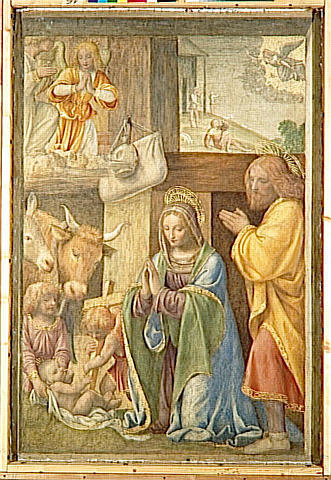
Bernardino Luini’s “La Nativité de Jésus et l'Annonce aux Bergers”: A Symphony of Serenity in Lombard Renaissance
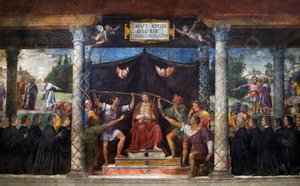
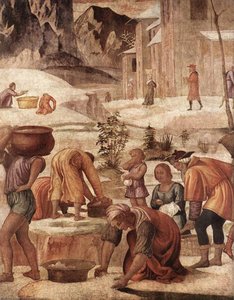
Bernardino Luini’s “La Nativité de Jésus et l'Annonce aux Bergers,” a masterpiece housed within the Louvre Museum, offers more than just a depiction of a biblical scene; it’s an immersive experience of quiet reverence and profound human emotion. Painted around 1520-25 during the twilight years of his career, this fresco embodies the distinctive style that cemented Luini's reputation as one of the most graceful and emotionally sensitive artists of the Milanese Renaissance – a legacy deeply influenced by the master Leonardo da Vinci.
The painting immediately draws the viewer into a humble stable setting, rendered with an almost tactile realism. The architecture, constructed from sturdy, dark-toned wood, provides a grounding presence, while the soft, diffused lighting—seemingly emanating from an unseen source—creates an atmosphere of gentle warmth and tranquility. Luini’s meticulous attention to detail is evident in every element: the rough texture of the manger, the folds of Mary's robes, and the simple yet expressive faces of the shepherds. Unlike many of his contemporaries who favored dramatic poses and bold colors, Luini opted for a restrained palette dominated by muted earth tones – browns, greens, and ochres— punctuated by subtle blues and hints of gold, contributing to the overall sense of serenity.
The Language of Grace: Composition and Technique
Luini’s compositional genius lies in his ability to balance the central figures – Mary and the infant Jesus – with the surrounding activity. The scene unfolds organically, drawing the eye from the intimate moment of the Nativity to the distant observation of the shepherds. The use of overlapping forms and shallow perspective creates a believable depth without resorting to dramatic vanishing points, characteristic of earlier Renaissance styles. A key element is Luini’s masterful technique: he employed thin glazes of oil paint applied in multiple layers, building up color gradually to achieve a luminous effect—a hallmark of his style. This layering process not only created rich colors but also allowed for subtle gradations of tone and texture, lending the figures an almost ethereal quality.
Notably, Luini’s approach to depicting human forms is remarkably gentle and idealized. The faces are serene, with elongated eyes that convey a sense of profound contemplation. There's a deliberate avoidance of sharp outlines; instead, colors blend seamlessly, softening the edges of figures and objects. This technique contributes significantly to the painting’s overall feeling of harmony and peace.
Symbolism and Emotional Resonance
Beyond its technical brilliance, “La Nativité de Jésus et l'Annonce aux Bergers” is rich in symbolic meaning. The presence of the angels, depicted with delicate wings and serene expressions, signifies divine intervention and the miraculous nature of Christ’s birth. The shepherds themselves represent the humble beginnings of Christianity—a reminder that grace can be found in unexpected places. Mary’s posture – kneeling in prayerful devotion – embodies humility and maternal love. The entire scene evokes a powerful sense of wonder and reverence, inviting viewers to contemplate the profound significance of this pivotal moment in Christian history.
A Legacy of Lombardian Elegance
Bernardino Luini's work stands as a testament to the enduring power of the Renaissance spirit—a blend of classical ideals and humanistic emotion. His “La Nativité de Jésus et l'Annonce aux Bergers” is not merely a religious painting; it’s a meditation on faith, humility, and the beauty of the ordinary. Luini’s legacy continues to inspire artists today, and reproductions of this exquisite work offer a window into a world of serene grace and timeless artistry.
Obras relacionadas
Biografía del artista
Vida temprana y formación
Bernardino Luini, un destacado pintor del norte de Italia, nació en Runo, cerca del lago Maggiore, alrededor de 1480. Su vida temprana no está bien documentada, pero se sabe que se mudó a Milán con su padre en 1500. Según algunas fuentes, Luini fue aprendiz de Giovan Stefano Scotto, mientras que otros sugieren que fue alumno de Ambrogio Bergognone.Estilo artístico e influencias
La obra de Luini estuvo fuertemente influenciada por Leonardo da Vinci, con quien se cree que trabajó directamente. Esta influencia se puede observar en su uso del *sfumato*, una técnica que crea un efecto suave y brumoso mediante la aplicación de finas capas de pintura. El estilo de Luini también refleja el movimiento manierista, caracterizado por sus cualidades dramáticas y emocionales.Obras notables
- Adoración de los Magos (c. 1505) en San Pietro, Luino.
- San Antonio de Padua (década de 1510) en el Museo Poldi Pezzoli, influenciado por el políptico Cantù de Bernardino Zenale.
- Frescos para Villa Pelucca (1509-1514), ahora en la Pinacoteca di Brera, Milán.
Colecciones de museos y recursos en línea
- Pinacoteca di Brera, Milán: cuenta con varias obras de Luini, incluidos sus frescos para Villa Pelucca.
- ArtsDot.com: Bernardino Luini: ofrece una colección completa de las obras de arte de Luini, incluidas reproducciones de alta calidad e información detallada.
Legado
Las contribuciones de Luini a la pintura del norte de Italia son innegables. Su obra, marcada por sus elegantes figuras femeninas con ojos alargados, conocidas como "luinescas", ha sido ampliamente admirada e imitada. El hijo de Luini, Aurelio, también se convirtió en un pintor consumado, continuando con el legado artístico familiar. Fechas importantes:- Nacido: c. 1480, Runo, Italia
- Fallecido: junio de 1532, Milán, Italia

Bernardino Luini
1480 - 1532 , Italia
Datos clave
- Artistas Influenciados: ['Aurelio Luini']
- Artistas Que Influyeron: ['Leonardo da Vinci']
- Fecha De Fallecimiento: Junio 1532
- Fecha De Nacimiento: c. 1480
- Lugar De Nacimiento: Runo, Italia
- Movimiento Artístico: Renacimiento italiano
- Nacionalidad: Italiana
- Nombre Completo: Bernardino Luini
- Obras Notables:
- Adoración de los Magos
- San Antonio de Padua
- Frescos Villa Pelucca
Artículos relacionados

Fra Angelico: Las 25 Obras Maestras del Renacimiento para Decorar con Arte y Fe
Descubre las 25 obras maestras de Fra Angelico, el pintor renacentista que llenó el arte sacro de luz y fe. Explora su técnica, simbolismo y belleza en frescos e iconos. Encuentra reproducciones de alta calidad para decorar tu hogar con ArtsDot.com.
Jacob Henricus Maris: A Master of Dutch Atmospheric Realism & the Intimate Landscape
Explore the captivating world of Jacob Henricus Maris, a leading figure of the Dutch Hague School. Discover his atmospheric landscapes, signature brushstrokes & lasting influence on 19th-century art. Learn more at ArtsDot.

Joseph Henry Sharp: Capturing the Spirit of the Plains – Life, Art & Legacy
Explore the life & art of Joseph Henry Sharp, a founding member of the Taos Society of Artists renowned for his realistic depictions of Native American culture and Western landscapes. Discover his legacy with ArtsDot.
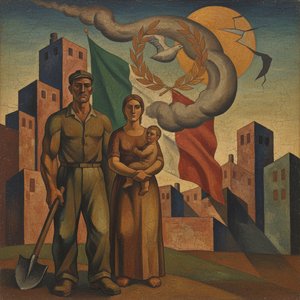
Mario Sironi: A Poetic of Modern Italian Identity Through Symbolism & Social Commentary
Explore the profound works of Mario Sironi, a key figure in Italian Modernism. Discover his evolution from Futurism to Metaphysical painting and his powerful social commentary. Learn about his legacy at ArtsDot.

Mary Vaux Walcott: Botanical Precision & Artistic Vision in American Conservation
Discover the exquisite botanical watercolors of Mary Vaux Walcott, celebrated as the 'Audubon of Botany.' Explore her life, art, and lasting impact on American conservation through detailed illustrations & Smithsonian contributions.