 Ver en contexto
 Enviar
 Compartir
 Detalles

 Descargar
 Similares
 Radiografía
 Presentación de diapositivas
 Estadísticas
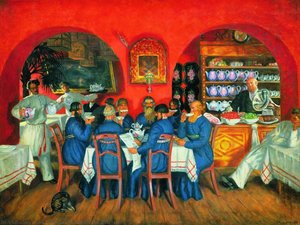
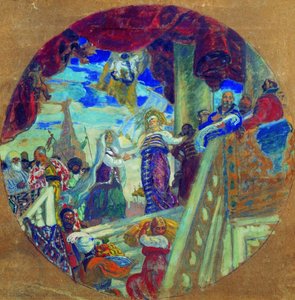
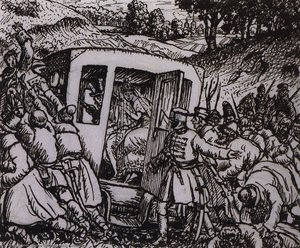
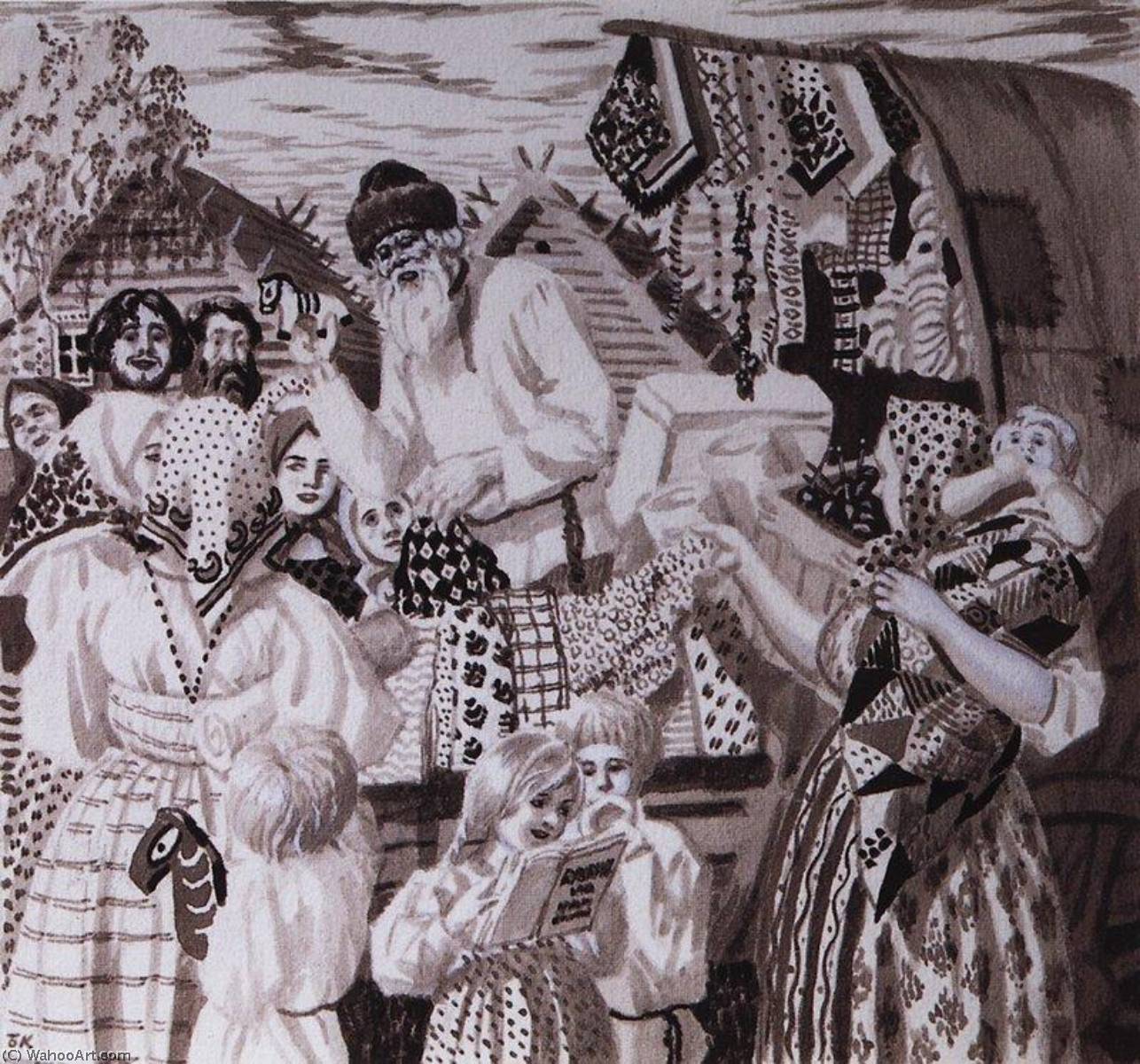
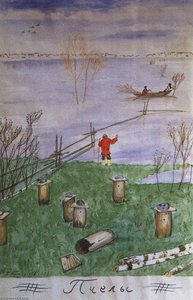
An Illustration for Nikolai Nekrasov's Poem Uncle Yakov


 Ver más
Giclée / Impresión de arte
Impresiones giclée o en lienzo de calidad de museo con producción rápida y opciones de acabado flexibles. ( Comprar pintura hecha a mano Cambiar a imagen digital)




P118B $10

P118H $10

P118W $10

P438Z $10

P508JH $12

P508YH $12

P805H $10

P805Z $10

P919BZ $10

P919G $10

P919XJ $10

P959ZH $10

P968JZ $12

W106C $8

W218G $10

W218JH $8

W218Y $10

W307PJ $10

W316G $10

W316PJ $8

W316Y $10

W398PJ $8

W4111J $10

W500HY $15

W500JH $15

W692G $12

W849H $8

W940BG $15

W953PJ $8




Elija entre nuestros tamaños predefinidos que respetan las proporciones originales de la obra.

Puede introducir sus propias dimensiones para adaptarse a un marco o espacio específico. Si el tamaño seleccionado no coincide con las proporciones de la imagen original, recortaremos la obra de arte o extenderemos la imagen con un borde con efecto espejo o de color sólido. Se enviará una maqueta digital para su aprobación antes de que comience la producción.
Tenga en cuenta que la vista previa en pantalla no refleja el recorte o la extensión real. Solo la maqueta mostrará con precisión la composición final.
Aunque existen tamaños personalizados, recomendamos seleccionar una dimensión de la lista predefinida para preservar las proporciones originales.
Envío a todo el mundo () en 2 semanas en lugar de las 4/5 semanas estándar. (9 septiembre)

Envío exprés gratuito a todo el mundo

Lienzo de lino de alta calidad

Seguro de envío total

Garantía de reembolso de impuestos aduaneros

Garantía de fidelidad cromática exacta

Política de devolución de 100 días (solo por defectos)

Garantía de devolución del 100% del dinero

Descuento por cantidad
 La opción de vidrio solo está disponible en tamaños inferiores a 110 cm.

An Illustration for Nikolai Nekrasov's Poem Uncle Yakov
Giclée / Impresión de arte
Dimensiones de la reproducción
-


Precio total final
$ 62
An Illustration for Nikolai Nekrasov’s Poem “Uncle Yakov” – A Window into Russian Soul
Boris Mikhailovich Kustodiev's 1921 illustration for Nikolai Nekrasov’s poem "Uncle Yakov" isn’t merely a depiction of a rural scene; it’s a meticulously crafted window into the heart of late Tsarist Russia, brimming with social commentary and imbued with a poignant sense of melancholy. Painted during a turbulent period of societal upheaval, this work transcends its literal subject matter to become a powerful meditation on tradition, poverty, and the enduring spirit of an aging patriarch. Kustodiev, already establishing his signature style – characterized by rich, saturated colors, theatrical poses, and a penchant for depicting provincial life with both warmth and a subtle critique – here masterfully employs his distinctive technique to capture the essence of Nekrasov’s narrative. The painting is rendered in oil on canvas, utilizing broad brushstrokes that create a sense of texture and movement, particularly evident in the folds of the clothing and the weathered faces of the figures. Notice the deliberate use of light and shadow, guiding the viewer's eye through the composition and emphasizing key elements within the scene.- The Scene: The illustration unfolds within a humble village setting – a small, sparsely furnished room dominated by a large stove. A group of villagers gathers around an elderly man, Uncle Yakov, who sits in a rocking chair, seemingly lost in thought.
- Characters: The figures are rendered with remarkable detail and psychological depth. Each individual embodies a specific aspect of rural life – the young woman tending to a spinning wheel, the children playing, the older men engaged in conversation. Their faces tell stories of hardship, resilience, and quiet dignity.
- The Stove: The central stove is not just a source of warmth; it’s a symbol of family, tradition, and the enduring connection to the past. It represents the heart of the household and the continuity of generations.
Kustodiev's Style and Technique – A Symphony of Color and Emotion
Kustodiev’s artistic style is instantly recognizable—a vibrant blend of realism, theatricality, and a touch of romanticism. He was deeply influenced by the “World of Art” movement, which sought to break away from academic traditions and embrace a more expressive and emotionally charged approach to painting. In "Uncle Yakov," this influence is evident in the exaggerated poses, the dramatic lighting, and the intense colors. The palette is rich and warm—deep reds, browns, and yellows dominate the scene, creating a sense of intimacy and warmth. However, there’s also an underlying note of sadness and resignation, reflected in the muted tones of the background and the weary expressions on the faces of the villagers. Kustodiev's masterful use of color isn't merely decorative; it serves to convey mood and emotion, drawing the viewer into the heart of the scene. The brushwork is loose and expressive, contributing to the painting’s overall sense of dynamism and vitality.Historical Context – A Nation in Transition
Created in 1921, this illustration emerges from a Russia grappling with profound social and political change. The early 20th century witnessed the decline of the Tsarist regime, followed by the Russian Revolution of 1905 and the subsequent Civil War. Nekrasov’s poem itself addressed themes of poverty, social injustice, and the plight of the peasantry – issues that resonated deeply with a population struggling to survive in the face of economic hardship and political turmoil. Kustodiev's depiction of rural life reflects this atmosphere of uncertainty and change, capturing both the beauty and the hardships of a nation on the cusp of transformation. The painting can be interpreted as a poignant commentary on the traditional values of rural Russia—values that were being challenged by the forces of modernization and industrialization.Symbolism and Emotional Impact – A Portrait of Resilience
Beyond its literal depiction, "Uncle Yakov" is rich in symbolism. Uncle Yakov himself represents the wisdom and experience of generations past, a link to a bygone era. His quiet contemplation suggests a deep understanding of life’s complexities and a acceptance of fate. The children playing symbolize hope for the future, while the women represent the continuation of family traditions. The painting evokes a powerful sense of nostalgia—a longing for simpler times and a recognition of the enduring strength of the human spirit. Despite the hardships depicted, there's also an underlying feeling of warmth and community, suggesting that even in the face of adversity, people find solace in each other’s company. It is a testament to Kustodiev’s ability to capture not just a scene, but the very soul of Russia.Obras relacionadas
Biografía del artista
Primeros años y educación
Boris Mikhailovich Kustodiev, un renombrado pintor ruso y diseñador de teatro, nació el 7 de marzo de 1878 en Astracán, Rusia. Su padre, un profesor de filosofía, historia de la literatura y lógica en el seminario teológico local, falleció cuando Boris era joven, dejando a su madre con las cargas financieras. Esta temprana exposición a las dificultades de la clase mercantil provincial más tarde influiría en los temas artísticos de Kustodiev. Entre 1893 y 1896, Kustodiev estudió en el seminario teológico de Astracán, tomando lecciones de arte privadas de Pavel Vlasov, un alumno de Vasily Perov. Luego asistió al estudio de Ilya Repin en la Academia Imperial de Artes de San Petersburgo desde 1896 hasta 1903.Carrera artística y obras notables
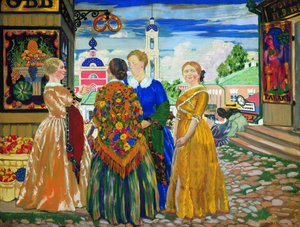
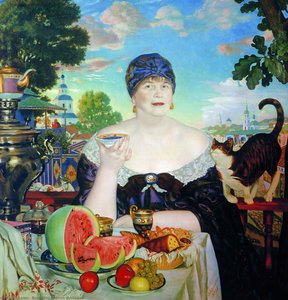
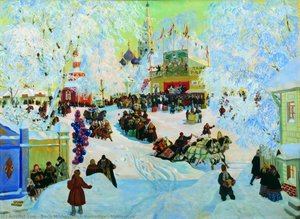
La carrera artística de Kustodiev se caracterizó por sus contribuciones a varios géneros, incluyendo retratos, escenas de género e ilustraciones de libros. Su obra "La esposa de un mercader", pintada en 1918, es considerada una de sus obras más famosas. "Fontanka" (1916) y "Martes de Panqueques/Maslenitsa" (1916) son notables por su vívida descripción de la vida rusa. Los retratos de Kustodiev, como los de Ivan Bilibin (1901), Moldovtsev (1901) y el grabador Mate (1902), demuestran su habilidad para capturar la esencia de sus sujetos.Desarrollo artístico y influencias
Kustodiev inicialmente se inspiró en los realistas rusos como Ilya Repin y Vasily Perov, quienes retrataron la vida cotidiana del pueblo ruso con gran detalle y empatía. Sin embargo, a medida que su carrera avanzaba, Kustodiev desarrolló un estilo más distintivo, caracterizado por colores vibrantes, formas redondeadas y una sensación general de alegría y optimismo. Su obra se relaciona con el movimiento Art Nouveau, aunque mantiene elementos del realismo ruso tradicional. La influencia de la cultura popular rusa, las festividades tradicionales y los mercados bulliciosos son evidentes en muchas de sus pinturas.Últimos años y legado
En 1916, Kustodiev se volvió parapléjico, pero su producción artística siguió siendo prolífica. Sus obras posteriores, caracterizadas por su naturaleza alegre y colorida, contradicen el sufrimiento físico que soportó. "El mercado", una pintura de Alexey Petrovich Bogolyubov, es un testimonio de la influencia duradera del estilo de Kustodiev. Kustodiev dejó un legado como uno de los pintores rusos más queridos y reconocibles, conocido por su capacidad para capturar el espíritu vibrante y festivo de la vida rusa. Su obra continúa siendo celebrada por su colorido, optimismo y representación auténtica de la cultura popular rusa.Museos y colecciones
- La esposa de un mercader (1918) - una obra fundamental que muestra la maestría de Kustodiev en el realismo ruso.
- Fontanka (1916) - una vívida descripción de la vida rusa, característica del estilo posterior de Kustodiev.
- Martes de Panqueques/Maslenitsa (1916) - otro ejemplo de la capacidad de Kustodiev para capturar la esencia de la cultura rusa.
- "El mercado" de Alexey Petrovich Bogolyubov - un testimonio de la influencia duradera del estilo de Kustodiev.
- Museo de Bellas Artes Kramskoi (Voronezh, Rusia) – alberga una impresionante colección de arte ruso, incluyendo obras de Vasily Maksimov e Isaak Ilyich Levitan.
- Museo de Arte de Járkov (Ucrania) - posee una vasta colección de obras de arte, incluyendo pinturas de Sergei Arsenievich Vinogradov y Nikolai Pimonenko.
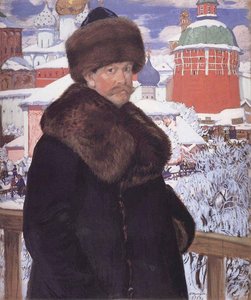
Boris Mikhailovich Kustodiev
1878 - 1927 , Rusia
Datos clave
- Artistas Que Influyeron:
- Ilya Repin
- Vasily Perov
- Estilo Artístico: Realismo, Impresionismo
- Fecha De Nacimiento: 7 de marzo de 1878
- Lugar De Nacimiento: Astrájan, Rusia
- Nacionalidad: Ruso
- Nombre Completo: Boris Mikhailovich Kustodiev
- Obras Notables:
- Esposa de un Mercader
- Retrato de K.B. Kustodiev
- Recogí fresas
- Chimenea (Noche)
- Maslenitsa
Artículos relacionados
La Estética Refinada de la Ilustración Victoriana: Narrativa y Técnica en el Arte del Siglo XIX
Descubra la estética refinada de la ilustración victoriana y el impacto revolucionario de los Prerrafaelitas. Análisis profundo de técnicas, narrativa y simbolismo en el arte del siglo XIX.
Kay Rasmus Nielsen: A Golden Age Illustrator's Enchanting Legacy of Symbolism & Narrative
Explore the captivating world of Kay Rasmus Nielsen, a celebrated Golden Age illustrator renowned for his Art Nouveau fairy tale art & Disney contributions. Discover his unique style, enduring legacy, and how to collect his enchanting works.
Angelo Chiacchio: A Mid-Century American Illustration Master & the Rise of Commercial Art
Explore the captivating world of Angelo Chiacchio, a master of mid-century American illustration. Discover his evolution, signature style, and lasting impact on commercial art & design. Learn about his legacy at the Museum of American Illustration.
Ivan Bilibin: A Synthesis of Folklore, Modernism & National Identity in Russian Illustration
Explore the enchanting world of Ivan Bilibin, a master Russian illustrator who synthesized folklore, Art Nouveau & national identity. Discover his iconic fairy tale illustrations and legacy with ArtsDot.
Victor Vasnetsov: Myth, Nationalism & the Revival of Russian Fairy Tale Painting
Explore the captivating world of Victor Vasnetsov, a co-founder of Russian folklorist painting. Discover his iconic works, influence on national identity, and lasting legacy in this expert guide.