

 Ver en contexto
 Enviar
 Compartir
 Detalles

 Descargar
 Similares
 Radiografía
 Presentación de diapositivas
Funeral Pomp of the Dauphine, Marie-Thérèse of Spain


 Ver más
Giclée / Impresión de arte
Impresiones giclée o en lienzo de calidad de museo con producción rápida y opciones de acabado flexibles. ( Comprar pintura hecha a mano Comprar imagen)




P118B $10

P118H $10

P118W $10

P438Z $10

P508JH $12

P508YH $12

P805H $10

P805Z $10

P919BZ $10

P919G $10

P919XJ $10

P959ZH $10

P968JZ $12

W106C $8

W218G $10

W218JH $8

W218Y $10

W307PJ $10

W316G $10

W316PJ $8

W316Y $10

W398PJ $8

W4111J $10

W500HY $15

W500JH $15

W692G $12

W849H $8

W940BG $15

W953PJ $8




Elija entre nuestros tamaños predefinidos que respetan las proporciones originales de la obra.

Puede introducir sus propias dimensiones para adaptarse a un marco o espacio específico. Si el tamaño seleccionado no coincide con las proporciones de la imagen original, recortaremos la obra de arte o extenderemos la imagen con un borde con efecto espejo o de color sólido. Se enviará una maqueta digital para su aprobación antes de que comience la producción.
Tenga en cuenta que la vista previa en pantalla no refleja el recorte o la extensión real. Solo la maqueta mostrará con precisión la composición final.
Aunque existen tamaños personalizados, recomendamos seleccionar una dimensión de la lista predefinida para preservar las proporciones originales.
Envío a todo el mundo () en 2 semanas en lugar de las 4/5 semanas estándar. (5 septiembre)

Envío exprés gratuito a todo el mundo

Lienzo de lino de alta calidad

Seguro de envío total

Garantía de reembolso de impuestos aduaneros

Garantía de fidelidad cromática exacta

Política de devolución de 60 días (solo por defectos)

Garantía de devolución del 100% del dinero

Descuento por cantidad
 La opción de vidrio solo está disponible en tamaños inferiores a 110 cm.

Funeral Pomp of the Dauphine, Marie-Thérèse of Spain
Giclée / Impresión de arte
Dimensiones de la reproducción
-


Precio total final
$ 62
Funeral Pomp of the Dauphine, Marie-Thérèse of Spain
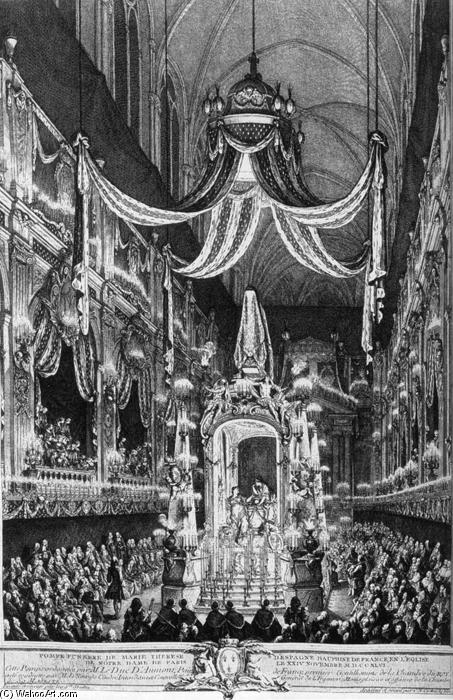
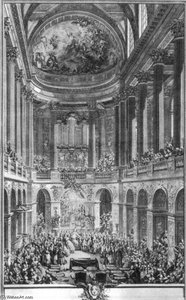
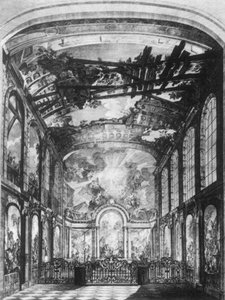
Charles Nicolas Cochin II’s engraving, “Funeral Pomp of the Dauphine,” offers a breathtaking glimpse into the opulent grandeur of 18th-century Parisian ceremonial art. Executed in November 1746, this masterful print captures the solemn magnificence surrounding the funeral procession honoring Marie-Thérèse of Spain, Louis XV's beloved daughter and wife, who tragically succumbed to childbirth complications. Cochin’s depiction transcends mere documentation; it embodies a profound artistic vision that reflects the era’s fascination with theatrical spectacle and religious devotion.A Symphony of Detail: Composition and Technique
The engraving’s central focus is an elaborate altar adorned with a canopy—a hallmark of Rococo style—dominated by towering columns and statues representing saints, symbolizing piety and remembrance. Above hangs a colossal chandelier, casting shimmering light upon the scene and emphasizing its vertical scale, drawing the viewer's gaze upwards towards divine grace. Rows of pews flank the aisle leading to the altar, populated by figures draped in sumptuous fabrics – testament to the lavishness of the occasion. Cochin’s meticulous technique—primarily hatching and cross-hatching—is instrumental in conveying depth and tonal variation. Fine lines delineate architectural elements with precision, while textured surfaces mimic stone walls and drapery folds, creating a palpable sense of realism that transports the viewer into the cathedral's sacred space. The artist skillfully employs linear perspective to establish spatial depth, reinforcing the grandeur of Notre Dame Cathedral and immersing the audience in its solemn atmosphere.Historical Context: Royal Mourning and Artistic Patronage
The engraving’s creation coincided with a period of intense royal mourning following Marie-Thérèse's death—a poignant reminder of mortality within the gilded halls of Versailles. Louis XV, deeply affected by his daughter’s passing, commissioned Cochin to produce this monumental artwork as part of a broader effort to commemorate her life and honor her memory. Such commissions were commonplace during the Rococo era, where artists served as official draftsmen for the monarchy, tasked with documenting royal events and elevating their prestige through artistic representations. The engraving reflects the prevailing aesthetic sensibilities of the time—characterized by ornate decoration, idealized figures, and a preoccupation with emotional expression—demonstrating Cochin’s commitment to capturing both visual beauty and spiritual significance.Symbolism: Light, Darkness, and Divine Presence
The monochromatic palette—primarily shades of gray—contributes significantly to the engraving's emotive impact, fostering an atmosphere of solemn reverence and conveying the gravity of the funeral rites. The chandelier’s radiant light symbolizes divine illumination, guiding the viewer’s eye towards the altar and highlighting the sacred iconography depicted within. Conversely, shadows deepen the sense of melancholy and underscore the theme of loss—a deliberate artistic choice designed to evoke contemplation and honor the departed princess. Cochin's masterful rendering of sculptural figures embodies Christian symbolism, representing saints who intercede for Marie-Thérèse’s soul as she ascends into heaven. The overall composition reinforces this spiritual narrative, inviting viewers to contemplate themes of faith, grief, and eternal life.Emotional Resonance: A Moment Frozen in Time
“Funeral Pomp” transcends its historical context, resonating with audiences today through its ability to convey profound emotion—specifically sorrow and respect for the deceased. Cochin’s meticulous attention to detail captures not only the visual splendor of the cathedral but also the palpable atmosphere of mourning—a testament to his artistic skill in translating complex feelings into a timeless image. This engraving serves as an enduring symbol of royal piety and artistic excellence, inviting contemplation on themes of mortality and remembrance while showcasing the remarkable artistry of Charles Nicolas Cochin II.Obras relacionadas
Biografía del artista
Primeros años y formación
Charles-Nicolas Cochin, un renombrado grabador, diseñador, escritor y crítico de arte francés, nació el 22 de febrero de 1715 en París, Francia. Fue hijo de Charles-Nicolas el mayor, de quien aprendió el arte del grabado. La formación temprana de Cochin tuvo lugar en el taller familiar, donde perfeccionó sus habilidades junto con su madre, Louise-Magdeleine Horthemels, también una grabadora consumada.Carrera artística y obras notables
La carrera artística de Cochin abarcó más de cinco décadas, durante las cuales produjo numerosas obras notables. Algunos de sus grabados más famosos incluyen ilustraciones para las fábulas de La Fontaine, así como viñetas y retratos que mostraban su dominio del oficio. Su trabajo no se limitó al grabado; Cochin también destacó en la pintura, como lo demuestra su Viaje a Italia (1758), un testimonio de su versatilidad.Afiliaciones académicas e influencia
En 1751, Cochin fue oficialmente admitido en la Académie Royale de Peinture et de Sculpture, lo que consolidó su posición dentro de la comunidad artística francesa. Como guardián de los dibujos del rey, un cargo que asumió en 1752, Cochin jugó un papel fundamental en la configuración del gusto artístico de su época.Fechas clave y legado
- 22 de febrero de 1715: Nació en París, Francia
- 1751: Admitido en la Académie Royale de Peinture et de Sculpture
- 29 de abril de 1790: Falleció en París, marcando el fin de una ilustre carrera
- Las fábulas de La Fontaine (grabados)
- Viaje a Italia (1758) (pintura)
- Parte de la colección del Musée des Beaux-Arts de Carcassonne
Contexto Histórico y Evolución Artística
Cochin vivió en una época de transición entre el Rococó y el Neoclasicismo. Inicialmente influenciado por el estilo rococó, con su énfasis en la elegancia y la ornamentación, Cochin gradualmente se inclinó hacia un enfoque más clásico, inspirado en las excavaciones de Herculano y Pompeya. Sus escritos sobre arte reflejaron esta evolución, promoviendo una vuelta a los principios del arte clásico y criticando lo que consideraba excesos decorativos del Rococó. Su papel como guardián de los dibujos reales le permitió influir en el gusto artístico de la corte y promover las nuevas tendencias neoclásicas.Legado e Influencia
Charles-Nicolas Cochin dejó un legado significativo tanto como artista como crítico de arte. Sus grabados son apreciados por su precisión técnica y su capacidad para capturar la esencia de los temas que representaba. Su obra, especialmente sus ilustraciones de las fábulas de La Fontaine, se convirtió en parte integral del patrimonio cultural francés. Además, sus escritos sobre arte contribuyeron a la difusión de las ideas neoclásicas y ayudaron a moldear el gusto artístico de su época. Cochin es recordado como una figura clave en la transición del Rococó al Neoclasicismo y como un defensor del rigor técnico y la inspiración clásica en el arte.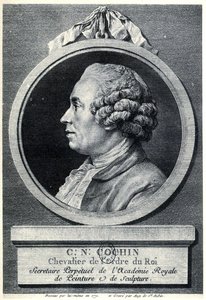
charles nicolas cochin
1715 - 1790 , Francia
Datos clave
- Fecha De Fallecimiento: 29 de abril de 1790
- Fecha De Nacimiento: 22 de febrero de 1715
- Lugar De Nacimiento: París, Francia
- Movimiento Artístico: Rococó
- Nacionalidad: Francés
- Nombre Completo: Charles-Nicolas Cochin
- Obras Notables:
- Fábulas de La Fontaine
- Viaje a Italia (1758)
Artículos relacionados
Jacob Henricus Maris: A Master of Dutch Atmospheric Realism & the Intimate Landscape
Explore the captivating world of Jacob Henricus Maris, a leading figure of the Dutch Hague School. Discover his atmospheric landscapes, signature brushstrokes & lasting influence on 19th-century art. Learn more at ArtsDot.

Mary Vaux Walcott: Botanical Precision & Artistic Vision in American Conservation
Discover the exquisite botanical watercolors of Mary Vaux Walcott, celebrated as the 'Audubon of Botany.' Explore her life, art, and lasting impact on American conservation through detailed illustrations & Smithsonian contributions.
Charles-André van Loo: A Study in Rococo Portraiture & the French Court's Artistic Dynamics
Explore the elegant world of Charles-André van Loo, a master of Rococo portraiture at the French court. Discover his life, techniques, and enduring influence on 18th-century art. Hand-painted reproductions available.
Charles Martin Hardie: A Pioneer of Colour Woodcut & British Printmaking Revival
Discover Charles Martin Hardie (1858-1916), a pivotal Scottish artist renowned for his evocative portraits and pioneering colour woodcut technique. Explore his life, work, and lasting influence on British printmaking.

Charles Fraser: A Life Immersed in Light and Landscape – Exploring the Scottish Colourist's Vision
Discover the captivating world of Charles Fraser (1782-1860), a leading American artist renowned for his serene landscapes and detailed portraits of Southern life. Explore his legacy & find museum-quality reproductions at ArtsDot.

