 Ver en contexto
 Enviar
 Compartir
 Detalles

 Descargar
 Similares
 Radiografía
 Presentación de diapositivas
The sofa Sun


 Ver más
Giclée / Impresión de arte
Impresiones giclée o en lienzo de calidad de museo con producción rápida y opciones de acabado flexibles. ( Comprar pintura hecha a mano Comprar imagen)




P118B $10

P118H $10

P118W $10

P438Z $10

P508JH $12

P508YH $12

P805H $10

P805Z $10

P919BZ $10

P919G $10

P919XJ $10

P959ZH $10

P968JZ $12

W106C $8

W218G $10

W218JH $8

W218Y $10

W307PJ $10

W316G $10

W316PJ $8

W316Y $10

W398PJ $8

W4111J $10

W500HY $15

W500JH $15

W692G $12

W849H $8

W940BG $15

W953PJ $8




Elija entre nuestros tamaños predefinidos que respetan las proporciones originales de la obra.

Puede introducir sus propias dimensiones para adaptarse a un marco o espacio específico. Si el tamaño seleccionado no coincide con las proporciones de la imagen original, recortaremos la obra de arte o extenderemos la imagen con un borde con efecto espejo o de color sólido. Se enviará una maqueta digital para su aprobación antes de que comience la producción.
Tenga en cuenta que la vista previa en pantalla no refleja el recorte o la extensión real. Solo la maqueta mostrará con precisión la composición final.
Aunque existen tamaños personalizados, recomendamos seleccionar una dimensión de la lista predefinida para preservar las proporciones originales.
Envío a todo el mundo () en 2 semanas en lugar de las 4/5 semanas estándar. (3 septiembre)

Envío exprés gratuito a todo el mundo

Lienzo de lino de alta calidad

Seguro de envío total

Garantía de reembolso de impuestos aduaneros

Garantía de fidelidad cromática exacta

Política de devolución de 60 días (solo por defectos)

Garantía de devolución del 100% del dinero

Descuento por cantidad
 La opción de vidrio solo está disponible en tamaños inferiores a 110 cm.

The sofa Sun
Giclée / Impresión de arte
Dimensiones de la reproducción
-


Precio total final
$ 62
A Moment of Intimacy – The Essence of Lautrec’s Montmartre
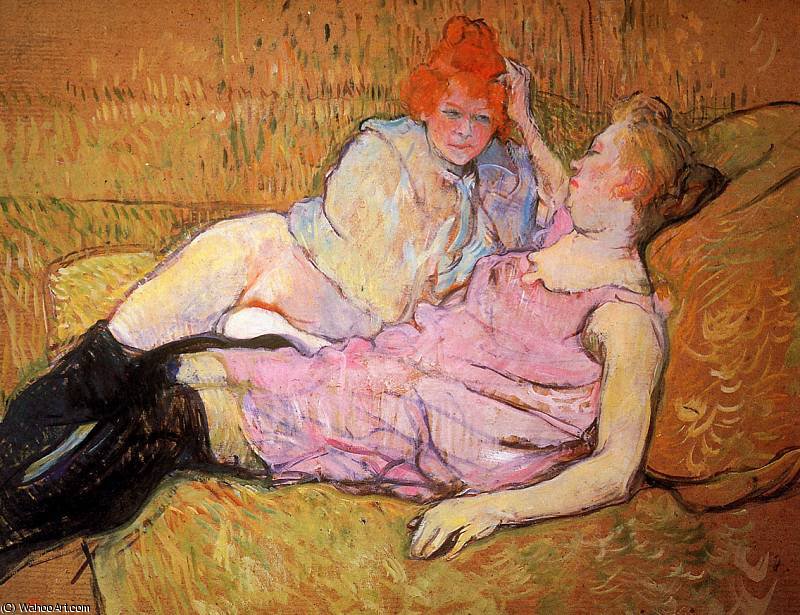
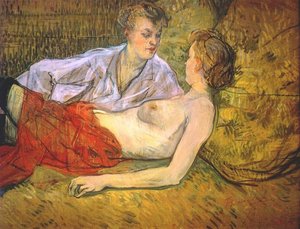
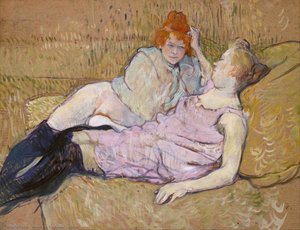
Henri de Toulouse-Lautrec's "The Sofa" isn't merely a depiction of two women reclining; it’s a meticulously crafted snapshot of Parisian life at the turn of the 20th century. Painted in 1892, during his most prolific period, this work exemplifies Lautrec’s unique ability to capture not just appearances but the very soul of Montmartre – its vibrant energy, its hidden corners, and the transient beauty of its inhabitants. The scene unfolds within a richly furnished room, dominated by a substantial sofa that anchors the composition, drawing the viewer's eye into the intimate tableau.
(Image: Henri de Toulouse-Lautrec, "The Sofa," 1892)
A Study in Contrast and Observation
Lautrec’s style is immediately recognizable – a masterful blend of realism and impressionism. He meticulously renders the textures of the fabrics, the subtle play of light on the women's skin, and the worn details of the room with an almost photographic precision. Yet, he avoids a purely objective portrayal. The figures are not idealized; they possess a certain vulnerability and quietness that speaks to Lautrec’s deep empathy for the marginalized individuals who populated his world. Notice the careful arrangement of the smaller figures – a man on the left, seemingly observing, and another near the top right – adding layers of narrative and suggesting a hidden drama within this simple scene.
The Artist's World: Montmartre and its Subjects
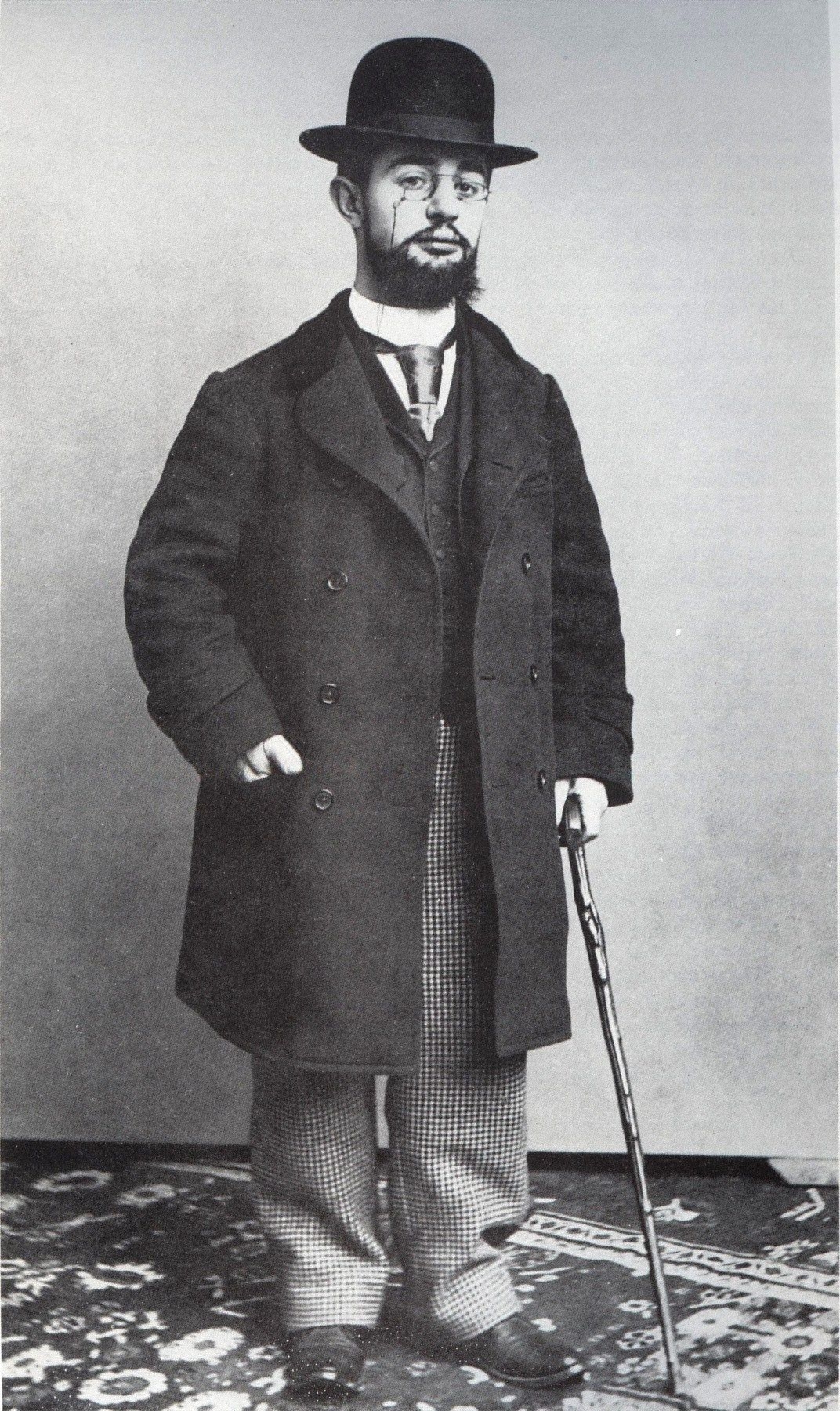
Born with a physical deformity that profoundly shaped his perspective, Toulouse-Lautrec developed an unparalleled understanding of human character. He spent years documenting the lives of artists, prostitutes, musicians, and café patrons in Montmartre – a district teeming with bohemian energy and social unrest. “The Sofa” reflects this immersion; it’s not a romanticized depiction but a grounded observation of everyday life. Lautrec was fascinated by the contrast between the aristocratic world he inherited and the raw realities of the streets, and this duality is powerfully conveyed in his work.
Symbolism and Emotional Resonance
The sofa itself acts as a central symbol – a place of rest, intimacy, and perhaps even contemplation. The two women, dressed in contrasting pink and red, represent different facets of human connection. Their relaxed postures suggest a comfortable familiarity, inviting the viewer to share in their quiet moment. Lautrec’s ability to evoke such a palpable sense of atmosphere and emotion is what elevates “The Sofa” beyond a simple portrait; it's a poignant meditation on love, companionship, and the fleeting beauty of human experience – a timeless theme that continues to resonate with audiences today.
Obras relacionadas
Biografía del artista
Henri de Toulouse-Lautrec: A Parisian Visionary
Henri Marie Raymond de Toulouse-Lautrec-Monfa, universally known as Toulouse-Lautrec (1864 – 1901), stands as one of the most distinctive voices in late nineteenth-century French art. Born into a noble lineage descended from the Counts of Toulouse and Odet de Foix, Vicomte de Lautrec, his childhood was marked by both privilege and profound physical adversity—a condition suspected to be pycnodysostosis that stunted his growth after adolescence. This physical difference wasn’t merely an impediment; it became a catalyst for artistic exploration, shaping his perspective and fueling his fascination with the marginalized figures inhabiting the vibrant streets of Montmartre. Rejecting academic conventions, Toulouse-Lautrec embraced a bold aesthetic rooted in Japanese woodblock prints—a burgeoning trend that captivated European artists—characterized by flattened perspectives and dynamic compositions.Early Artistic Training and Influences
His formal artistic education began in Paris under the tutelage of Léon Bonnat and Fernand Cormon, equipping him with foundational skills in drawing and painting. However, it was his encounter with Auguste Rodin that proved transformative. Rodin recognized Toulouse-Lautrec’s talent and invited him to join his studio as a draftsman, providing invaluable experience in studying the human form—a rare opportunity for a young man burdened by physical limitations. This mentorship profoundly impacted his artistic sensibilities, fostering an appreciation for anatomical accuracy combined with expressive gesture. Early influences included Eugène Delacroix and Gustave Courbet, whose emphasis on capturing fleeting moments of emotion resonated deeply within Toulouse-Lautrec’s creative spirit. He absorbed the Impressionist techniques championed by Claude Monet and Pierre-Auguste Renoir, adapting them to his own distinctive vision—a synthesis that would define his artistic style.The Montmartre Aesthetic: Capturing Parisian Life
Toulouse-Lautrec's artistic breakthrough occurred in Montmartre, a bohemian enclave teeming with artists, performers, and intellectuals. He abandoned the grand narratives of academic painting for the immediacy of everyday life—the Moulin Rouge cabaret, the cafes frequented by writers and musicians, the prostitutes of Rue Lepic—subjects that captivated him with their sensual energy and social complexities. Unlike many Impressionists who sought to capture idealized beauty, Toulouse-Lautrec unflinchingly portrayed his subjects with honesty and compassion, revealing both their allure and vulnerability. He employed a masterful technique of line drawing—characterized by bold contours and expressive hatching—to convey movement and emotion, capturing the dynamism of Montmartre’s nightlife with unparalleled precision. His lithographs—particularly those depicting scenes from the Moulin Rouge—became iconic images of the era, disseminating his vision far beyond the confines of Parisian studios.Technique and Style: Line, Color, and Lithography
Toulouse-Lautrec's artistic style is instantly recognizable for its distinctive characteristics. He prioritized line drawing above all else, utilizing it not merely to delineate form but to imbue his compositions with energy and rhythm. His color palette—often muted yet infused with vibrant hues—served as a counterpoint to the dominant black and white of lithography, enhancing the visual impact of his prints. He skillfully manipulated tonal values—creating dramatic contrasts between light and dark—to heighten emotional intensity and sculpt form. Toulouse-Lautrec’s mastery of lithography was particularly noteworthy; he recognized its potential for mass reproduction and artistic expression, elevating it beyond mere commercial printing. This medium allowed him to disseminate his vision widely, solidifying his reputation as a pioneer of modern graphic art. His prints are notable for their bold compositions and flattened perspectives—a stylistic innovation that foreshadowed developments in Cubism and Futurism.Legacy and Influence: A Lasting Impression
Toulouse-Lautrec died tragically young at the age of 36 from complications stemming from alcoholism and syphilis, leaving behind a legacy of remarkable artistic achievement. Despite his brief career, he exerted an indelible influence on subsequent generations of artists—particularly those exploring themes of psychological depth and subjective experience. He stands as one of the pivotal figures in bridging the gap between Impressionism and Modern Art, establishing himself as a champion of expressive line and color. His unflinching portrayal of human vulnerability continues to resonate today, reminding us that art can illuminate the complexities of human emotion and perception. Toulouse-Lautrec’s work remains celebrated for its stylistic innovation, its evocative imagery, and its enduring fascination with the spirit of Montmartre—a testament to his singular vision and artistic genius.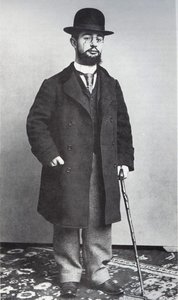
comte henri marie raymond de toulouse-lautrec-monfa
1864 - 1901 , Francia
Datos clave
- Artistic Movement Or Style: Post-Impressionismo
- Artists Or Movements Influenced By This Artist: ['Arte Nouveau']
- Artists Who Influenced This Artist: ['Léon Bonnat']
- Date Of Birth: 24 noviembre 1864
- Date Of Death: 9 septiembre 1901
- Full Name: Henri Marie Raymond de Toulouse-Lautrec Montfa
- Nationality: Francés
- Notable Artworks:
- La Blanchisseuse
- En las alas al circo
- Mujer acostada — Despertándose
- Place Of Birth: Albi, Francia
Artículos relacionados
Los 10 Cuadros Más Famosos en Tonos Rosa Pastel: Arte y Decoración
Descubre los 10 cuadros más icónicos en tonos rosa pastel. Explora la historia de Monet, Renoir y otros maestros del impresionismo y el arte moderno. Encuentra reproducciones de alta calidad para decorar tu hogar con .
Crimson Threads of Narrative: Exploring Symbolism & Representation in Artworks Featuring the Red Dress
Explore the rich symbolism of the red dress in art history! From ancient power displays to iconic portraits like Cézanne’s 'Madame Cezanne', discover the cultural and artistic significance behind this captivating color. Expert analysis & insights.
Maurice Utrillo: A Poetic Vision of Parisian Solitude – Life, Style & Legacy
Explore the poignant world of Maurice Utrillo, the master of Parisian cityscapes. Discover his life, distinctive style, and enduring legacy with ArtsDot – handmade oil reproductions & expert art insights.
Azure Visions: Exploring Representations of the Blue Dress in Western Art History
Explore the rich history of the blue dress in Western art! Discover its symbolism, from Renaissance masterpieces to modern interpretations by artists like Martin & Schiele. Uncover cultural meanings and artistic techniques.
Echoes of 1883: A Cultural & Artistic Reflection on a Pivotal Year
Explore the vibrant art & culture of 1883! Discover Post-Impressionist masters like Toulouse-Lautrec and Van Rysselberghe. Expert insights for collectors & enthusiasts at ArtsDot.