

 Ver en contexto
 Enviar
 Compartir
 Detalles

 Descargar
 Similares
 Radiografía
 Presentación de diapositivas
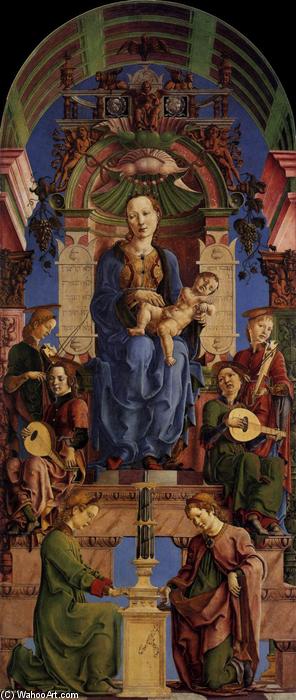
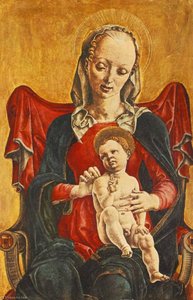
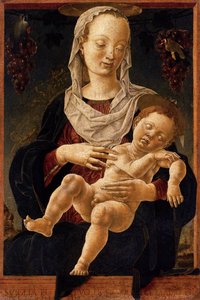
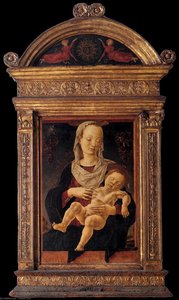
Madonna with the Child Enthroned (panel from the Roverella Polyptych)
 Oil On Panel
- Early Renaissance
 1474
1474 239.0 x 102.0 cm
 Galería Nacional
 Ver más
Adquiera una imagen digital de alta resolución y optimizada, muy superior a la vista previa en línea.
Cada archivo es preparado meticulosamente por nuestros especialistas internos mediante el uso de herramientas avanzadas y un experto retoque manual. Nos aseguramos de que cada imagen posea una claridad excepcional, una precisión cromática impecable y un detalle minucioso.
El archivo final se entrega por correo electrónico en un plazo de 72 horas, optimizado para su uso inmediato en entornos profesionales, editoriales y de impresión. Esta es la misma calidad en la que confían los estudios de diseño, las editoriales y las galerías de primer nivel.
Imagen Digital
Descarga un archivo de alta resolución para exhibición personal, impresión y proyectos creativos. ( Comprar impresión Comprar pintura hecha a mano)
Incluido en cada pedido de imágenes digitales
Entrega digital experta, garantizada.
Al elegir ArtsDot.com, no solo está adquiriendo una imagen; está recibiendo una obra de arte digital mejorada profesionalmente, elaborada con precisión y respaldada por una garantía de satisfacción. Esto es todo lo que incluye su pedido, automáticamente:

Entrega rápida por email
Recibirá su archivo de imagen digital en alta resolución por correo electrónico en un plazo de 72 horas tras realizar su pedido, listo para su uso inmediato.

Archivo digital optimizado por IA
Su obra de arte se optimiza profesionalmente mediante herramientas avanzadas de IA y edición manual, garantizando el máximo detalle, claridad y precisión cromática.

Reenvío gratuito de por vida
¿Has borrado o perdido tu archivo por error? No te preocupes: te lo volveremos a enviar en cualquier momento, sin coste adicional.

Sin gastos de importación, siempre
Disfrute de su obra de arte al instante sin aduanas, aranceles ni gastos de envío; las descargas digitales siempre están libres de impuestos.

Garantía de fidelidad de color
Garantizamos que su imagen digital refleje los colores originales con la mayor fidelidad posible, mediante el uso de herramientas profesionales y gestión del color.

Garantía de satisfacción de 60 días
Si no está satisfecho con su imagen digital, la revisaremos o le reembolsaremos el 100% en un plazo de 60 días, sin preguntas.

100% Garantía de devolución de dinero
¿No está satisfecho? Obtenga un reembolso completo dentro de los 60 días posteriores a la recepción de su archivo digital, sin necesidad de explicaciones.

Descuentos por pedidos grandes
Compra 3 imágenes, ahorra 10% - Compra 5, ahorra 15% - Compra 10+, ahorra 20%. Ideal para proyectos creativos, galerías y agencias.
Descripción del coleccionable
The Enigmatic Beauty of Cosmè Tura’s “Madonna with the Child Enthroned”
Cosmè Tura's "Madonna with the Child Enthroned," a panel from the magnificent Roverella Polyptych, is not merely a religious depiction; it’s a vibrant window into the burgeoning artistic landscape of 15th-century Ferrara. Painted in 1474, this work transcends simple iconography to become a testament to Tura's unique vision – a synthesis of Tuscan elegance, Paduan dynamism, and the nascent spirit of the Italian Renaissance. The painting immediately captivates with its rich palette dominated by deep blues and shimmering golds, creating an atmosphere both serene and profoundly opulent. The composition itself is remarkably complex, layering figures within a meticulously constructed architectural setting that draws the eye into a world of divine grace.
Tura’s genius lies in his masterful manipulation of perspective and form. Unlike the increasingly rigid adherence to linear perspective favored by some of his contemporaries, Tura employs a more fluid, almost calligraphic approach. Lines flow and curve with an organic quality, lending the scene a sense of movement and vitality. The throne itself is not simply a static platform but appears to be sculpted from luminous marble, its intricate details hinting at classical influences while retaining a distinctly Italian sensibility. The figures are rendered with a remarkable attention to detail – the folds of Mary’s robe, the delicate features of Christ, even the subtle textures of the angels' garments—all contribute to an overwhelming sense of realism and immediacy.
A Ferrarese Visionary: Context and Influences
Born in Ferrara around 1430 into a shoemaker’s family, Cosmè Tura’s rise to prominence is a remarkable story of artistic transformation. While the precise details of his early training remain somewhat shrouded in mystery – speculation points to an apprenticeship with Galasso Galassi, a shadowy figure linked to Piero della Francesca – it was his time in Padua that truly ignited his creative fire. The bustling workshop of Francesco Squarcione, a pivotal center for Renaissance innovation, exposed Tura to the revolutionary techniques of linear perspective and the study of classical antiquity. This exposure, combined with influences from Flemish artists who had settled in Ferrara, shaped Tura’s distinctive style – characterized by its rich color palettes, dynamic compositions, and a masterful use of detail.
Crucially, Tura's work reflects the artistic patronage of the Este family, Dukes of Ferrara. The Roverella Polyptych was commissioned by Lorenzo Roverella, bishop of Ferrara and physician to Pope Julius V, demonstrating the significant role art played in asserting social status and religious authority within the city. The polyptych itself – originally a monumental altarpiece – served as a powerful statement of faith and family prestige, intended to adorn the church of San Giorgio fuori le Mura and proclaim the Roverella’s piety.
Symbolism and Narrative Depth
Beyond its aesthetic beauty, “Madonna with the Child Enthroned” is rich in symbolic meaning. The throne itself represents Mary's divine authority and her role as Queen of Heaven. The surrounding angels, playing musical instruments, evoke a sense of celestial harmony and celebration. The presence of the clock on the wall subtly introduces an element of temporal awareness, reminding viewers of the fleeting nature of earthly life and the eternal promise of salvation. The inclusion of figures like St George and Niccolò Roverella further enriches the narrative, connecting the sacred with the secular realm.
The use of color is particularly significant. The dominant blue symbolizes Mary’s purity and divinity, while the gold accents represent her royal status and the wealth of heaven. The carefully orchestrated interplay of light and shadow creates a dramatic effect, drawing attention to key figures and enhancing the overall sense of grandeur. Even seemingly minor details – such as the intricate patterns on the angels' robes or the delicate folds of Mary’s garment—contribute to the painting’s complex visual vocabulary.
A Timeless Masterpiece: Reproduction Possibilities
ArtsDot is proud to offer meticulously hand-painted reproductions of Cosmè Tura’s “Madonna with the Child Enthroned.” Our artists recreate the original's vibrant colors, intricate details, and dynamic composition with unparalleled skill. Whether you seek a stunning addition to your home or office, or are an art collector seeking a faithful representation of this Renaissance masterpiece, our reproductions provide an authentic and captivating experience. Each reproduction is created on high-quality canvas using archival pigments, ensuring that it will retain its beauty and vibrancy for generations to come. Explore the available sizes and options today and bring the enigmatic beauty of Tura’s “Madonna with the Child Enthroned” into your world.
Obras relacionadas
Biografía del artista
Cosmè Tura: Un Pionero de la Escuela Ferraresa
- Nacido: c. 1430 en Ferrera, Italia
- Fallecido: 1495
- Conocido por: Pintor del primer Renacimiento y fundador de la Escuela Ferraresa
Primeros Años y Formación
- Cosmè Tura nació alrededor de 1430 en Ferrara, Italia, hijo de un zapatero. Los detalles sobre su vida temprana son escasos.
- Su formación artística no está bien documentada, pero se cree que pudo haber sido influenciado por artistas como Fra Angelico, Piero della Francesca y Andrea Mantegna.
- Existe la especulación de que podría haber tenido un aprendizaje bajo Galasso Galassi, un artista algo misterioso vinculado a Piero della Francesca.
- De 1452 a 1456, la presencia de Tura en Ferrara no está documentada, lo que lleva a algunos historiadores a creer que pudo haber viajado, posiblemente a Venecia o Padua.
- Un posible viaje a Padua le expuso al taller de Francesco Squarcione, un importante centro para el arte del Renacimiento, y artistas como Carlo Crivelli, Michael Pacher y Andrea Mantegna. Esta exposición probablemente influyó en su estilo.
Estilo Artístico e Influencias
- El estilo artístico de Tura se caracteriza por líneas claras y nítidas, exuberancia decorativa y referencias a la antigüedad clásica.
- Fue un adoptante temprano de la pintura al óleo, utilizándola hábilmente para representar diferentes texturas en sus obras.
- Las influencias incluyen innovaciones toscanas traídas a Padua por Donatello, evidentes en su uso de la perspectiva lineal y las formas fuertes.
- Su estilo también muestra el impacto de los artistas flamencos que trabajaban en Ferrara.
Obras Principales y Logros
- Tura trabajó extensamente para la familia Este, Duques de Ferrara, creando decoraciones para torneos, diseñando muebles y contribuyendo a la moda.
- Entre sus obras notables se incluyen los frescos en el Palazzo Schifanoia en Ferrara, que representan escenas alegóricas.
- Pintó retratos, paneles religiosos (como "San Antonio de Padua Leyendo") y otras obras de arte que muestran su estilo único.
- Su “Pietà” es un ejemplo notable del arte gótico tardío con influencias renacentistas.
Significado Histórico
- Cosmè Tura es considerado uno de los artistas más importantes del primer Renacimiento, particularmente en el norte de Italia.
- Fundó y lideró la Escuela Ferraresa, influyendo en artistas posteriores como Giovanni Andrea Ghirardoni.
- Su innovador uso de la pintura al óleo y su estilo distintivo contribuyeron significativamente al desarrollo del arte italiano.
- El legado de Tura se conserva a través de obras expuestas en museos como el Museo di Ferrara.
Cosmè Tura
1430 - 1495 , Italia
Breves datos
- Artistas Influenciados: ['Giovanni Andrea Ghirardoni']
- Artistas Que Influyeron:
- Fra Angelico
- Piero della Francesca
- Andrea Mantegna
- Fecha De Muerte: 1495
- Fecha De Nacimiento: c. 1430
- Lugar De Nacimiento: Ferrara, Italia
- Movimiento Artístico: Primer Renacimiento
- Nacionalidad: Italiana
- Nombre Completo: Cosmè Tura
- Obras Notables:
- St. Anthony of Padua Reading
- Pietà
- A Muse (detail)

