 Vista previa
 Compartir
 Compartir
 Ver detalles

 Descargar
 Ver similares
 Radiografía
 Presentación de diapositivas
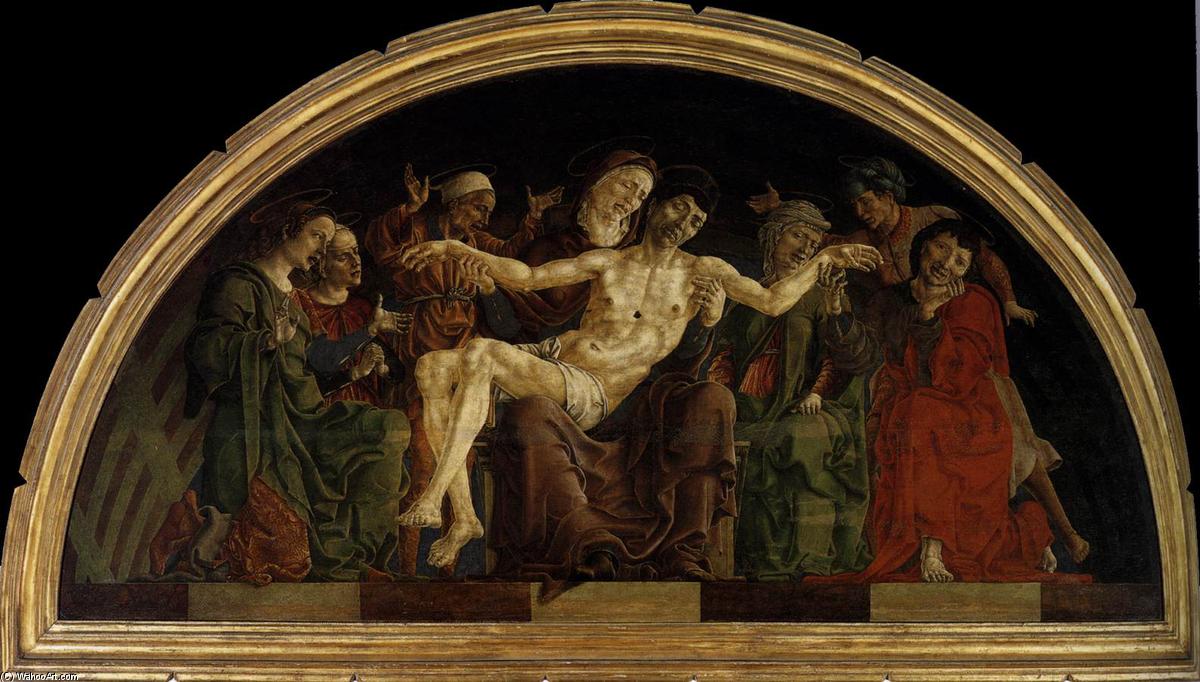
Pietà (panel from the Roverella Polyptych)
 Oil On Panel
- WallArt
- Early Renaissance
 1474
1474- Renaissance
 132.0 x 267.0 cm
 Museo del Louvre
 Leer más
Reproducción al óleo hecha a mano
Óleo sobre lienzo pintado a mano en el tamaño y marco de su elección, realizado por encargo por nuestros artistas. ( Pedir impresión Comprar descarga)




P118B $10

P118H $10

P118W $10

P438Z $10

P508JH $12

P508YH $12

P805H $10

P805Z $10

P919BZ $10

P919G $10

P919XJ $10

P959ZH $10

P968JZ $12

W106C $8

W218G $10

W218JH $8

W218Y $10

W307PJ $10

W316G $10

W316PJ $8

W316Y $10

W398PJ $8

W4111J $10

W500HY $15

W500JH $15

W692G $12

W849H $8

W940BG $15

W953PJ $8




Elija entre nuestros tamaños predefinidos que respetan las proporciones originales de la obra.

Puede ingresar sus propias dimensiones para adaptarse a un marco o espacio específico. Si el tamaño seleccionado no coincide con las proporciones de la imagen original, recortaremos la obra o extenderemos la pintura con elementos adicionales pintados a mano. Se le enviará una maqueta digital para su aprobación antes de comenzar la producción.
Tenga en cuenta que la vista previa en pantalla no refleja el recorte o la extensión reales. Solo la maqueta mostrará con precisión la composición final.
Si bien existen tamaños personalizados, recomendamos seleccionar una dimensión de la lista predefinida para preservar las proporciones originales.
Tras realizar el pedido, el equipo de ArtsDot.com enviará un correo electrónico al cliente para solicitar instrucciones y proporcionarle una vista previa del boceto.
Envío a todo el mundo () en 3-4 semanas en lugar de las 5 semanas estándar. (22 agosto). Sin comprometer la calidad.

Envío exprés gratuito a todo el mundo

Lienzo de lino de alta calidad

Seguro de envío completo

Garantía de reembolso de aranceles aduaneros

Garantía de fidelidad cromática exacta

Política de devolución de 60 días (solo por defectos)

Garantía de devolución del 100% del dinero

Oferta por volumen
 La opción de vidrio solo está disponible en tamaños inferiores a 110 cm.

Pietà (panel from the Roverella Polyptych)
Técnica de reproducción
Tamaño de la reproducción
-


Precio total
$ 438
Descripción de la obra
A Renaissance Vision of Sorrow
In the quiet, hallowed halls of art history, few images resonate with the profound emotional gravity found in Cosmè Tura’s Pietà. As a pivotal panel from the monumental Roverella Polyptych, this masterpiece serves as a breathtaking window into the soul of the Early Renaissance. The scene captures the devastating moment of the deposition of Christ, where the Virgin Mary cradles the lifeless body of her son—a motif that has long served as the ultimate icon of maternal grief and divine compassion. To gaze upon this work is to enter a space of spiritual contemplation, where the weight of human suffering meets the luminous promise of grace.
The composition is a masterclass in structured emotion. Tura utilizes a highly symmetrical arrangement, centering Christ’s broken form upon a stone slab to draw the viewer’s eye into the heart of the tragedy. The figures are arranged with a deliberate, architectural precision that evokes the grandeur of an arched cathedral. While the background remains dark and somber, focusing all attention on the central drama, the use of light is nothing short of transformative. A dramatic light source illuminates the pale, sculptural flesh of Christ, highlighting the intricate textures of the drapery and the sorrowful expressions of the surrounding onlookers, creating a sense of depth and volume that feels almost tactile.
The Mastery of the Ferrarese School
Created between 1470 and 1474, this panel is a definitive example of the Ferrarese style, a period characterized by a unique blend of humanist intellect and intense, sometimes eccentric, emotional expression. Tura, a founder of the School of Ferrara, moved away from the strict realism of his contemporaries to embrace a more stylized, linear approach. His technique—a meticulous application of oil and egg-tempera on wood—allows for a remarkable level of detail. The smooth surfaces and luminous colors achieve a jewel-like quality, where every fold of fabric and every shadow cast across a face contributes to the narrative's solemnity.
For the discerning collector or interior designer, this artwork offers more than mere decoration; it provides a focal point of profound intellectual and aesthetic depth. The interplay of geometric shapes and sharp, defining lines creates a sense of solidity and permanence, making it an ideal centerpiece for spaces that demand a sense of history and gravitas. Whether placed in a curated gallery setting or as a statement piece in a sophisticated study, the Pietà invites conversation, prompting reflections on the enduring themes of sacrifice, devotion, and the beauty found within melancholy.
Symbolism and Lasting Legacy
Beyond its technical brilliance, the painting is steeped in the religious symbolism of the Quattrocento. The halos encircling the heads of the holy figures serve as silent testaments to their divinity, while the very structure of the polyptych reflects the fervent piety of its patron, Cardinal Bartolomeo Roverella. Every element, from the heavy, sculptural drapery to the somber palette, is designed to sublimate pain into a higher state of spiritual reverence. It is an art form that does not merely depict a story but seeks to evoke a visceral response from the viewer.
Owning a high-quality reproduction of such a significant work allows one to bring this Renaissance spirit into the modern era. It is an opportunity to surround oneself with the legacy of Cosmè Tura—a painter who could transform wood and pigment into a timeless meditation on the human condition. This Pietà remains a testament to the power of art to bridge the gap between the earthly and the divine, offering a sense of peace and profound beauty to any environment it inhabits.
Obras relacionadas
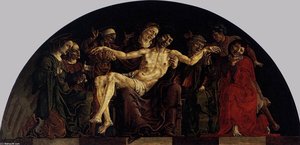
Biografía del artista
Cosmè Tura: Un Pionero de la Escuela Ferraresa
- Nacido: c. 1430 en Ferrera, Italia
- Fallecido: 1495
- Conocido por: Pintor del primer Renacimiento y fundador de la Escuela Ferraresa
Primeros Años y Formación
- Cosmè Tura nació alrededor de 1430 en Ferrara, Italia, hijo de un zapatero. Los detalles sobre su vida temprana son escasos.
- Su formación artística no está bien documentada, pero se cree que pudo haber sido influenciado por artistas como Fra Angelico, Piero della Francesca y Andrea Mantegna.
- Existe la especulación de que podría haber tenido un aprendizaje bajo Galasso Galassi, un artista algo misterioso vinculado a Piero della Francesca.
- De 1452 a 1456, la presencia de Tura en Ferrara no está documentada, lo que lleva a algunos historiadores a creer que pudo haber viajado, posiblemente a Venecia o Padua.
- Un posible viaje a Padua le expuso al taller de Francesco Squarcione, un importante centro para el arte del Renacimiento, y artistas como Carlo Crivelli, Michael Pacher y Andrea Mantegna. Esta exposición probablemente influyó en su estilo.
Estilo Artístico e Influencias
- El estilo artístico de Tura se caracteriza por líneas claras y nítidas, exuberancia decorativa y referencias a la antigüedad clásica.
- Fue un adoptante temprano de la pintura al óleo, utilizándola hábilmente para representar diferentes texturas en sus obras.
- Las influencias incluyen innovaciones toscanas traídas a Padua por Donatello, evidentes en su uso de la perspectiva lineal y las formas fuertes.
- Su estilo también muestra el impacto de los artistas flamencos que trabajaban en Ferrara.
Obras Principales y Logros
- Tura trabajó extensamente para la familia Este, Duques de Ferrara, creando decoraciones para torneos, diseñando muebles y contribuyendo a la moda.
- Entre sus obras notables se incluyen los frescos en el Palazzo Schifanoia en Ferrara, que representan escenas alegóricas.
- Pintó retratos, paneles religiosos (como "San Antonio de Padua Leyendo") y otras obras de arte que muestran su estilo único.
- Su “Pietà” es un ejemplo notable del arte gótico tardío con influencias renacentistas.
Significado Histórico
- Cosmè Tura es considerado uno de los artistas más importantes del primer Renacimiento, particularmente en el norte de Italia.
- Fundó y lideró la Escuela Ferraresa, influyendo en artistas posteriores como Giovanni Andrea Ghirardoni.
- Su innovador uso de la pintura al óleo y su estilo distintivo contribuyeron significativamente al desarrollo del arte italiano.
- El legado de Tura se conserva a través de obras expuestas en museos como el Museo di Ferrara.
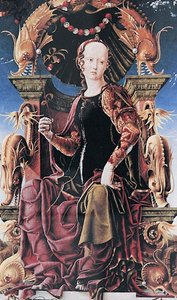
Cosmè Tura
1430 - 1495 , Italia
Datos clave
- Artistas Influenciados: ['Giovanni Andrea Ghirardoni']
- Artistas Que Influyeron:
- Fra Angelico
- Piero della Francesca
- Andrea Mantegna
- Fecha De Muerte: 1495
- Fecha De Nacimiento: c. 1430
- Lugar De Nacimiento: Ferrara, Italia
- Movimiento Artístico: Primer Renacimiento
- Nacionalidad: Italiana
- Nombre Completo: Cosmè Tura
- Obras Notables:
- St. Anthony of Padua Reading
- Pietà
- A Muse (detail)
Artículos relacionados
Cosmè Tura: Rediscovering the Ferrarese Master & His Distinctive Style
Discover Cosmè Tura (1430-1495), founder of the Ferrara School. Explore his unique style, key artworks & lasting influence. Expert insights for collectors.

Fra Angelico: Las 25 Obras Maestras del Renacimiento para Decorar con Arte y Fe
Descubre las 25 obras maestras de Fra Angelico, el pintor renacentista que llenó el arte sacro de luz y fe. Explora su técnica, simbolismo y belleza en frescos e iconos. Encuentra reproducciones de alta calidad para decorar tu hogar con ArtsDot.com.
Mario Sironi: A Poetic of Modern Italian Identity Through Symbolism & Social Commentary
Explore the profound works of Mario Sironi, a key figure in Italian Modernism. Discover his evolution from Futurism to Metaphysical painting and his powerful social commentary. Learn about his legacy at ArtsDot.
Carlo Carrà: Futurist Visions & Metaphysical Transformations in Early 20th-Century Italian Painting
Explore the artistic journey of Carlo Carrà, a pivotal figure in Italian Futurism & Metaphysical painting. Discover his dynamic compositions, collaborations with de Chirico, and lasting influence on modern art history.
Giovanni Fattori: Realism, Identity & the Tuscan Landscape – A Macchiaioli Master
Explore the life & art of Giovanni Fattori, a leading figure of the Macchiaioli movement. Discover his revolutionary realism, captivating Tuscan landscapes, and lasting impact on Italian painting. Learn more at ArtsDot.