

 Vista previa
 Compartir
 Compartir
 Ver detalles

 Descargar
 Ver similares
 Radiografía
 Presentación de diapositivas
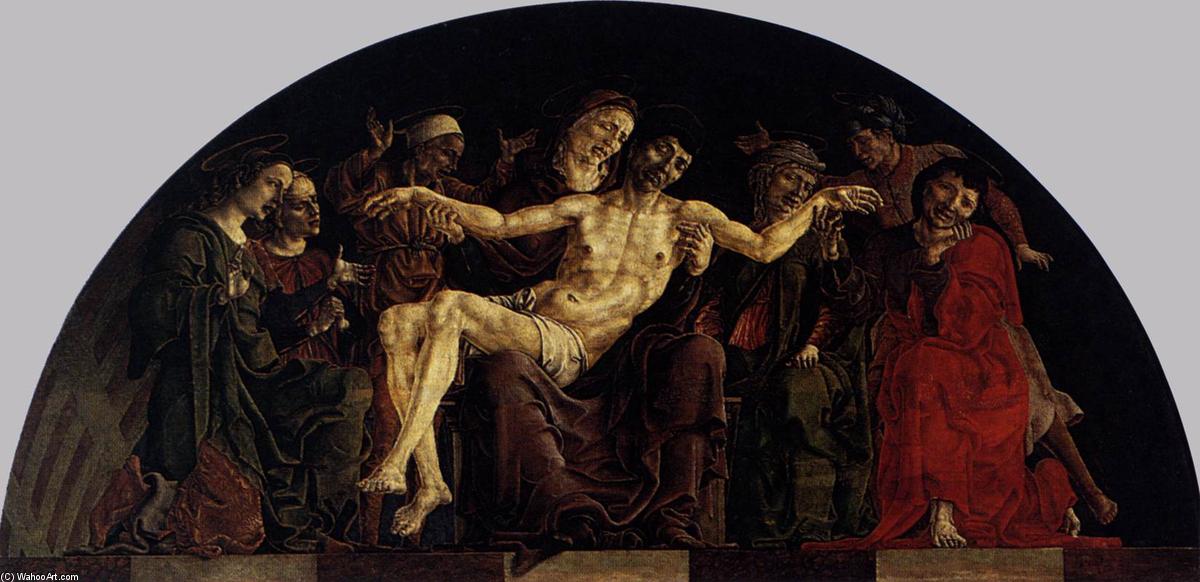
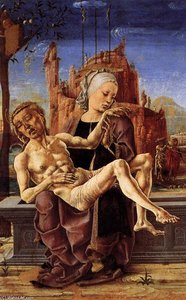
Pietà (panel from the Roverella Polyptych)
 Oil
Oil- WallArt
- Late Gothic Renaissance
 1474
1474 132.0 x 267.0 cm
 Museo del Louvre
 Leer más
Adquiera una imagen digital de alta resolución y optimizada, muy superior a la vista previa en línea.
Cada archivo es preparado meticulosamente por nuestros especialistas internos mediante el uso de herramientas avanzadas y un experto retoque manual. Nos aseguramos de que cada imagen posea una claridad excepcional, una precisión cromática impecable y un detalle minucioso.
El archivo final se entrega por correo electrónico en un plazo de 72 horas, optimizado para su uso inmediato en entornos profesionales, editoriales y de impresión. Esta es la misma calidad en la que confían los estudios de diseño, las editoriales y las galerías de primer nivel.
Imagen Digital
Descarga un archivo de alta resolución para exhibición personal, impresión y proyectos creativos. ( Pedir impresión Encargar reproducción pintada a mano)
Incluido en cada compra de imágenes digitales
Entrega digital experta, garantizada.
Al elegir ArtsDot.com, no solo está adquiriendo una imagen; está recibiendo una obra de arte digital mejorada profesionalmente, elaborada con precisión y respaldada por una garantía de satisfacción. Esto es todo lo que incluye su pedido, automáticamente:

Entrega rápida por email
Recibirá su archivo de imagen digital en alta resolución por correo electrónico en un plazo de 72 horas tras realizar su pedido, listo para su uso inmediato.

Archivo digital optimizado por IA
Su obra de arte se optimiza profesionalmente mediante herramientas avanzadas de IA y edición manual, garantizando el máximo detalle, claridad y precisión cromática.

Reenvío gratuito de por vida
¿Has borrado o perdido tu archivo por error? No te preocupes: te lo volveremos a enviar en cualquier momento, sin coste adicional.

Sin gastos de importación, siempre
Disfrute de su obra de arte al instante sin aduanas, aranceles ni gastos de envío; las descargas digitales siempre están libres de impuestos.

Garantía de precisión de color
Garantizamos que su imagen digital refleje los colores originales con la mayor fidelidad posible, mediante el uso de herramientas profesionales y gestión del color.

Garantía de satisfacción de 60 días
Si no está satisfecho con su imagen digital, la revisaremos o le reembolsaremos el 100% en un plazo de 60 días, sin preguntas.

100% Garantía de devolución de dinero
¿No está satisfecho? Obtenga un reembolso completo dentro de los 60 días posteriores a la recepción de su archivo digital, sin necesidad de explicaciones.

Descuentos por volumen
Compra 3 imágenes, ahorra 10% - Compra 5, ahorra 15% - Compra 10+, ahorra 20%. Ideal para proyectos creativos, galerías y agencias.
Descripción del coleccionable
The Pietà by Cosmè Tura: A Window into Late Gothic Devotion
Cosmè Tura’s “Pietà,” part of the magnificent Roverella Polyptych, is more than just a depiction of sorrow; it's a profound meditation on faith, loss, and the enduring power of maternal love. Created in 1474 during the vibrant artistic milieu of Ferrara, Italy – a city then at the heart of the burgeoning Renaissance – this panel offers a captivating glimpse into the sensibilities of the late Gothic period while simultaneously foreshadowing the stylistic innovations to come. Housed now within the esteemed Musée du Louvre in Paris, the “Pietà” remains a testament to Tura’s skill and his ability to imbue religious imagery with an intensely human quality.
The painting immediately draws the viewer into its dramatic space. Measuring 132 x 267 cm, it's a substantial work, commanding attention through its scale and meticulous detail. Executed in oil on panel – a relatively new technique at the time – Tura masterfully utilizes light and shadow to sculpt the figures and create a palpable sense of depth. The dark background, punctuated by strategically placed highlights, directs our gaze directly to Christ’s lifeless body and his grieving mother. This masterful use of chiaroscuro wasn't merely aesthetic; it served to heighten the emotional intensity of the scene, mirroring the spiritual weight of the subject matter.
A Study in Late Gothic Style
Tura’s “Pietà” is firmly rooted in the traditions of late Gothic art, yet it possesses a unique character that distinguishes it from its contemporaries. The composition adheres to the established conventions of the Pietà motif – the Virgin Mary cradling the dead Christ – but Tura infuses it with a remarkable degree of naturalism and emotional complexity. Notice the careful rendering of Christ’s anatomy, reflecting an awareness of human form honed through observation and study. The drapery is richly detailed, suggesting both the weight of grief and the luxurious fabrics associated with royalty and piety. The clothing worn by Mary is equally impressive, featuring intricate patterns and rich colors that speak to her elevated status as the Mother of God.
Furthermore, Tura’s use of perspective, though not fully developed in the manner of later Renaissance masters, demonstrates a growing understanding of spatial relationships. The figures are arranged within a shallow space, creating a sense of immediacy and drawing the viewer into the scene. The attendants surrounding the pair – likely representing John the Evangelist and other mourners – contribute to the overall feeling of communal grief and reverence.
Symbolism and Emotional Resonance
Beyond its technical brilliance, the “Pietà” is laden with symbolic meaning. The image itself—the Virgin Mary mourning over her son’s body—is a potent symbol of compassion, sacrifice, and redemption. Christ's limp form represents his suffering and death on the cross, while Mary’s sorrow embodies humanity’s grief at the loss of its savior. The overall mood is one of profound sadness, yet there’s also an undercurrent of hope – the promise of resurrection and eternal life.
Tura's choice to depict Christ in such a vulnerable state—bare-torsoed and lifeless—is particularly striking. It emphasizes his humanity and invites viewers to connect with him on a deeply personal level. The Virgin Mary’s expression is one of overwhelming sorrow, yet her face retains a trace of dignity and acceptance. Her gaze is fixed upon her son, suggesting a profound love that transcends even death.
Owning a Piece of History
Handmade oil paintings reproductions of Cosmè Tura's “Pietà” are now available through ArtsDot.com, offering art lovers the opportunity to bring this masterpiece into their homes or offices. These meticulously crafted reproductions capture not only the visual details of the original but also its emotional power and historical significance. Consider how this evocative image could enrich your interior space, serving as a constant reminder of faith, compassion, and the enduring beauty of human connection. For further information on the Musée du Louvre and related resources, please visit ArtsDot.com.
Obras relacionadas
Biografía del artista
Cosmè Tura: Un Pionero de la Escuela Ferraresa
- Nacido: c. 1430 en Ferrera, Italia
- Fallecido: 1495
- Conocido por: Pintor del primer Renacimiento y fundador de la Escuela Ferraresa
Primeros Años y Formación
- Cosmè Tura nació alrededor de 1430 en Ferrara, Italia, hijo de un zapatero. Los detalles sobre su vida temprana son escasos.
- Su formación artística no está bien documentada, pero se cree que pudo haber sido influenciado por artistas como Fra Angelico, Piero della Francesca y Andrea Mantegna.
- Existe la especulación de que podría haber tenido un aprendizaje bajo Galasso Galassi, un artista algo misterioso vinculado a Piero della Francesca.
- De 1452 a 1456, la presencia de Tura en Ferrara no está documentada, lo que lleva a algunos historiadores a creer que pudo haber viajado, posiblemente a Venecia o Padua.
- Un posible viaje a Padua le expuso al taller de Francesco Squarcione, un importante centro para el arte del Renacimiento, y artistas como Carlo Crivelli, Michael Pacher y Andrea Mantegna. Esta exposición probablemente influyó en su estilo.
Estilo Artístico e Influencias
- El estilo artístico de Tura se caracteriza por líneas claras y nítidas, exuberancia decorativa y referencias a la antigüedad clásica.
- Fue un adoptante temprano de la pintura al óleo, utilizándola hábilmente para representar diferentes texturas en sus obras.
- Las influencias incluyen innovaciones toscanas traídas a Padua por Donatello, evidentes en su uso de la perspectiva lineal y las formas fuertes.
- Su estilo también muestra el impacto de los artistas flamencos que trabajaban en Ferrara.
Obras Principales y Logros
- Tura trabajó extensamente para la familia Este, Duques de Ferrara, creando decoraciones para torneos, diseñando muebles y contribuyendo a la moda.
- Entre sus obras notables se incluyen los frescos en el Palazzo Schifanoia en Ferrara, que representan escenas alegóricas.
- Pintó retratos, paneles religiosos (como "San Antonio de Padua Leyendo") y otras obras de arte que muestran su estilo único.
- Su “Pietà” es un ejemplo notable del arte gótico tardío con influencias renacentistas.
Significado Histórico
- Cosmè Tura es considerado uno de los artistas más importantes del primer Renacimiento, particularmente en el norte de Italia.
- Fundó y lideró la Escuela Ferraresa, influyendo en artistas posteriores como Giovanni Andrea Ghirardoni.
- Su innovador uso de la pintura al óleo y su estilo distintivo contribuyeron significativamente al desarrollo del arte italiano.
- El legado de Tura se conserva a través de obras expuestas en museos como el Museo di Ferrara.
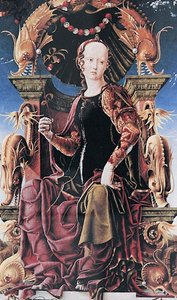
Cosmè Tura
1430 - 1495 , Italia
Datos clave
- Artistas Influenciados: ['Giovanni Andrea Ghirardoni']
- Artistas Que Influyeron:
- Fra Angelico
- Piero della Francesca
- Andrea Mantegna
- Fecha De Muerte: 1495
- Fecha De Nacimiento: c. 1430
- Lugar De Nacimiento: Ferrara, Italia
- Movimiento Artístico: Primer Renacimiento
- Nacionalidad: Italiana
- Nombre Completo: Cosmè Tura
- Obras Notables:
- St. Anthony of Padua Reading
- Pietà
- A Muse (detail)

