

 Ver en contexto
 Enviar
 Compartir
 Detalles

 Descargar
 Similares
 Radiografía
 Presentación de diapositivas
 Stats
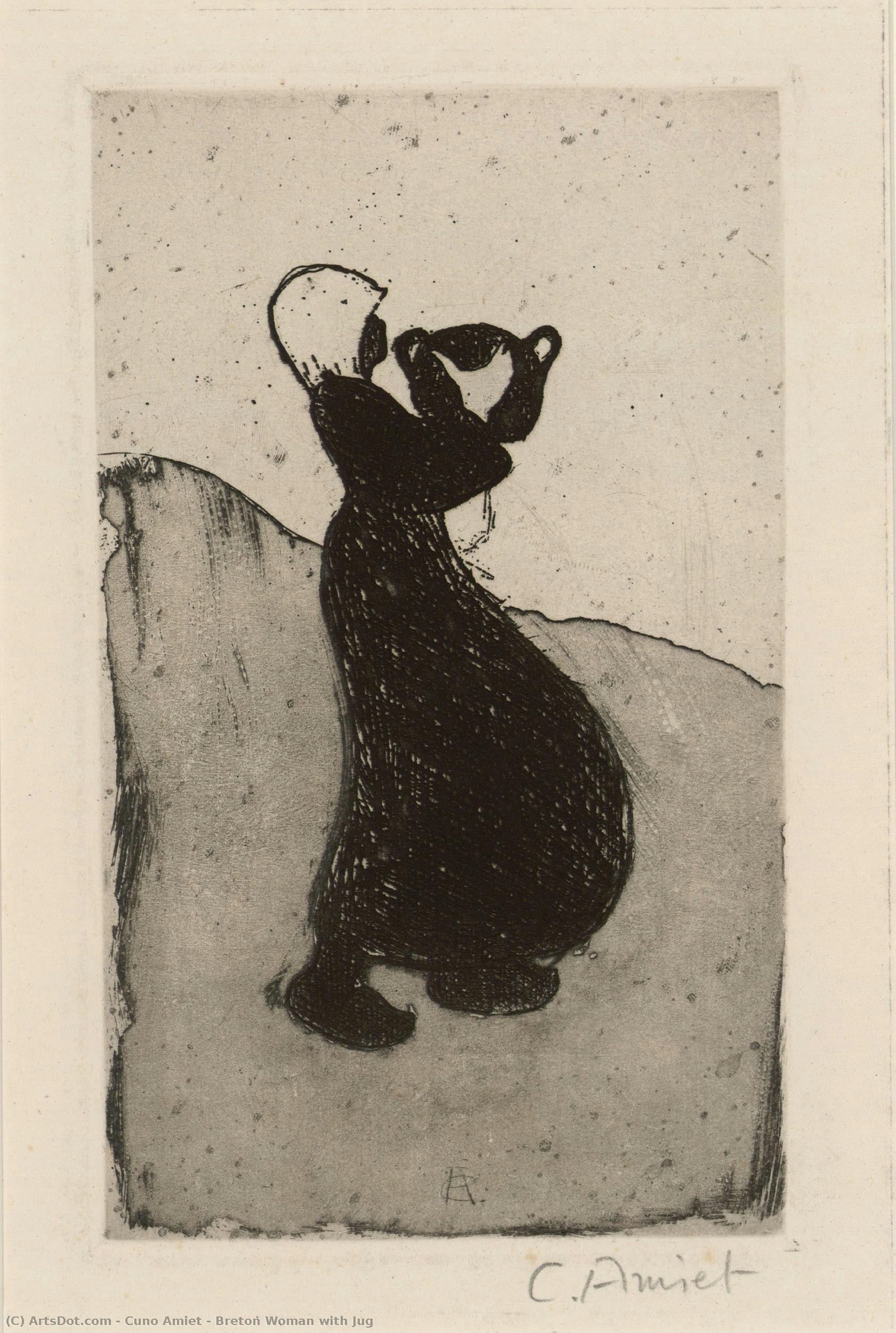
StatsBreton Woman with Jug
 Etching
- Symbolism
 1893
1893- 19th Century
 18.0 x 11.0 cm
 Museo de Pont-Aven
 Ver más
Adquiera una imagen digital de alta resolución y optimizada, muy superior a la vista previa en línea.
Cada archivo es preparado meticulosamente por nuestros especialistas internos mediante el uso de herramientas avanzadas y un experto retoque manual. Nos aseguramos de que cada imagen posea una claridad excepcional, una precisión cromática impecable y un detalle minucioso.
El archivo final se entrega por correo electrónico en un plazo de 72 horas, optimizado para su uso inmediato en entornos profesionales, editoriales y de impresión. Esta es la misma calidad en la que confían los estudios de diseño, las editoriales y las galerías de primer nivel.
Imagen Digital
Descarga un archivo de alta resolución para exhibición personal, impresión y proyectos creativos. ( Switch to Print Comprar pintura hecha a mano)
Incluido en cada pedido de imágenes digitales
Entrega digital experta, garantizada.
Al elegir ArtsDot.com, no solo está adquiriendo una imagen; está recibiendo una obra de arte digital mejorada profesionalmente, elaborada con precisión y respaldada por una garantía de satisfacción. Esto es todo lo que incluye su pedido, automáticamente:

Entrega rápida por email
Recibirá su archivo de imagen digital en alta resolución por correo electrónico en un plazo de 72 horas tras realizar su pedido, listo para su uso inmediato.

Archivo digital optimizado por IA
Su obra de arte se optimiza profesionalmente mediante herramientas avanzadas de IA y edición manual, garantizando el máximo detalle, claridad y precisión cromática.

Reenvío gratuito de por vida
¿Has borrado o perdido tu archivo por error? No te preocupes: te lo volveremos a enviar en cualquier momento, sin coste adicional.

Sin gastos de importación, siempre
Disfrute de su obra de arte al instante sin aduanas, aranceles ni gastos de envío; las descargas digitales siempre están libres de impuestos.

Garantía de fidelidad de color
Garantizamos que su imagen digital refleje los colores originales con la mayor fidelidad posible, mediante el uso de herramientas profesionales y gestión del color.

Garantía de satisfacción de 100 días
Si no está satisfecho con su imagen digital, la revisaremos o le reembolsaremos el 100% en un plazo de 100 días, sin preguntas.

100% Garantía de devolución de dinero
¿No está satisfecho? Obtenga un reembolso completo dentro de los 100 días posteriores a la recepción de su archivo digital, sin preguntas.

Descuentos por pedidos grandes
Compra 3 imágenes, ahorra 10% - Compra 5, ahorra 15% - Compra 10+, ahorra 20%. Ideal para proyectos creativos, galerías y agencias.
A Moment of Quietude in Brittany
In the delicate, monochromatic lines of Breton Woman with Jug, we are transported to the rugged, windswept coasts of France in 1893. This exquisite etching by the Swiss master Cuno Amiet captures a fleeting moment of pastoral tranquility, where the boundaries between humanity and the wild landscape seem to dissolve. The subject, a woman poised with a jug in hand, stands as a silent sentinel upon a hillside, overlooking the vast, unseen expanse of the ocean. There is a profound sense of stillness in her posture, a contemplative grace that invites the viewer to pause and breathe alongside her. Through the masterful use of light and shadow inherent in the etching technique, Amiet breathes life into the textures of the earth and the soft contours of the figure, creating a scene that feels both intimately personal and timelessly universal.
The composition is layered with subtle narratives that reward the wandering eye. While the woman remains the focal point, the presence of distant figures and a solitary bottle resting on the ground suggests a shared human experience—perhaps a momentary respite during a day of labor or a quiet gathering in the salt-kissed air. The interplay between the foreground subject and the receding background creates a sense of depth that pulls the observer into this coastal dreamscape. For the collector, this piece offers more than just a visual depiction; it provides a window into the Symbolist spirit of the late 19th century, where the external landscape serves as a mirror for internal emotional states.
The Mastery of Line and the Legacy of Pont-Aven
Technically, this work represents a rare and precious chapter in Amiet’s storied career. During his transformative time in Pont-Aven, a period heavily influenced by the burgeoning movements of Art Nouveau and Expressionism, Amiet produced only a handful of works centered on the Breton theme. This specific etching is one of an incredibly limited series, with only a few prints ever brought into existence. The precision of the etched lines demonstrates his ability to command the medium, using stark contrasts to evoke the atmospheric weight of the Atlantic coast. It is a testament to his skill that such a small-scale work, measuring just 18 x 11 cm, can carry such immense emotional gravity.
For interior designers and connoisseurs of fine art, a reproduction of this caliber serves as a sophisticated focal point in any curated space. Its monochromatic elegance allows it to integrate seamlessly into diverse decor styles, from the minimalist modern gallery look to the rich, textured layers of a classical study. Owning a piece that echoes the historical significance of the 1931 Glaspalast exhibition—where much of Amiet's Pont-Aven period was tragically lost to fire—is to hold a fragment of art history in one's hands. This artwork is not merely a decoration; it is an invitation to experience the enduring beauty of the human spirit intertwined with the quiet majesty of nature.
Obras relacionadas

Biografía del artista
Cuno Amiet: Pioneer of Color and Expressionism
Cuno Amiet (1868 – 1961) stands as a monumental figure in Swiss art history, recognized not merely for his prolific output but fundamentally for establishing color as the dominant element in artistic composition—a revolutionary stance that propelled him to the forefront of modern art movements. Born in Solothurn, Switzerland, Amiet’s lineage traced back to Josef Ignaz Amiet (1827–1895), the chancellor of his canton, shaping his early intellectual environment and fostering a lifelong appreciation for humanist ideals. His formative years were spent at Kantonsschule Solothurn, culminating in a Matura diploma in 1883—a cornerstone achievement that paved the way for his artistic pursuits. Influenced by Frank Buchser’s teachings, Amiet enrolled at Munich Academy of Fine Arts between 1886 and 1888, forging an enduring friendship with Giovanni Giacometti. This period solidified his commitment to observation and experimentation, preparing him for his subsequent studies in Paris under Adolphe William Bouguereau, Tony Robert-Fleury, and Gabriel Ferrier—a crucial step toward mastering academic painting techniques while simultaneously questioning their limitations. Dissatisfied with the prevailing artistic dogma, Amiet embraced the Pont-Aven School’s ethos, immersing himself in a collaborative environment championed by Émile Bernard, Paul Sérusier, Roderic O'Conor, and Armand Séguin. This association profoundly impacted his stylistic trajectory, prioritizing pure color over tonal shading—a deliberate rejection of convention that aligned him with burgeoning Expressionist sensibilities. The 1893 return to Switzerland marked a pivotal moment in Amiet’s career, establishing a studio in Hellsau where he cultivated an artistic community alongside fellow luminaries like Wilhelm Worringer, Adolf Frey, Hermann Hesse, Arthur Weese, and Samuel Singer. Despite initial critical reception—characterized by lukewarm responses at the Kunsthalle Basel—Amiet persevered, securing commissions that bolstered his financial stability and attracting students who would carry forward his legacy. Notably, his portrait of Ferdinand Hodler served as a catalyst for artistic dialogue, fostering an exchange of ideas that profoundly influenced Amiet’s subsequent work. He was recognized as one of the most important Swiss artists of the 19th and 20th centuries, but you probably wouldn't know it. Since his death in 1961, the misunderstood artist hasn’t been welcomed into the canon like many of his contemporaries have. Amiet’s artistic output spanned over 4,000 paintings, drawings, prints, and sculptures—a remarkable testament to his dedication and versatility. His landscapes, imbued with vibrant hues and expressive brushstrokes, capture the essence of Swiss alpine scenery with unparalleled sensitivity. His self-portraits, rendered in meticulous detail and infused with psychological depth, offer poignant reflections on identity and artistic introspection. Furthermore, Amiet's exploration of Symbolism—particularly his engagement with Nietzschean philosophy—contributed to a broader intellectual discourse that shaped the artistic landscape of his time. He continued to pursue mainly decorative intentions at the beginning of the 20th century, but his late work of the 1940s and 1950s reflected a renewed interest in monumental scale and form. Amiet’s influence extended beyond his own oeuvre, shaping the artistic sensibilities of students like Werner Miller, Marta Worringer, Hans Morgenthaler, Hanny Bay, Marc Gonthier, Albert Müller, Josef Müller, Walter Sautter, and Werner Neuh His most celebrated works include “Evening in Hellsau,” a breathtaking depiction of twilight bathed in luminous shades—a quintessential example of Pont-Aven’s chromatic idealism. Also noteworthy are “Selbstportrait, 1934” and “Zinnias on a Blue Cloth,” which exemplify Amiet's masterful command of color and composition. His collaboration with Ferdinand Hodler resulted in a series of portraits that captured the spirit of their time—a testament to Amiet’s ability to engage in productive artistic exchange. Cuno Amiet’s enduring legacy resides not only in his stunning visual creations but also in his pioneering role as a champion of color and Expressionist principles, securing his place among Switzerland's most revered artists.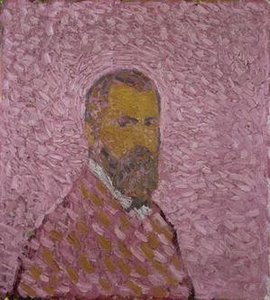
Cuno Amiet
1861 - 1924 , Suiza
Breves datos
- Artistic Movement Or Style: Expresionismo
- Artists Who Influenced This Artist:
- Giovanni Giacometti
- Frank Buchser
- Adolphe William Bouguereau
- Date Of Birth: 28 marzo 1868
- Date Of Death: 6 julio 1961
- Full Name: Cuno Amiet
- Nationality: Suizo
- Notable Artworks:
- Richesse du soir
- Selbstportrait, 1934
- Place Of Birth: Solothurn, Suiza