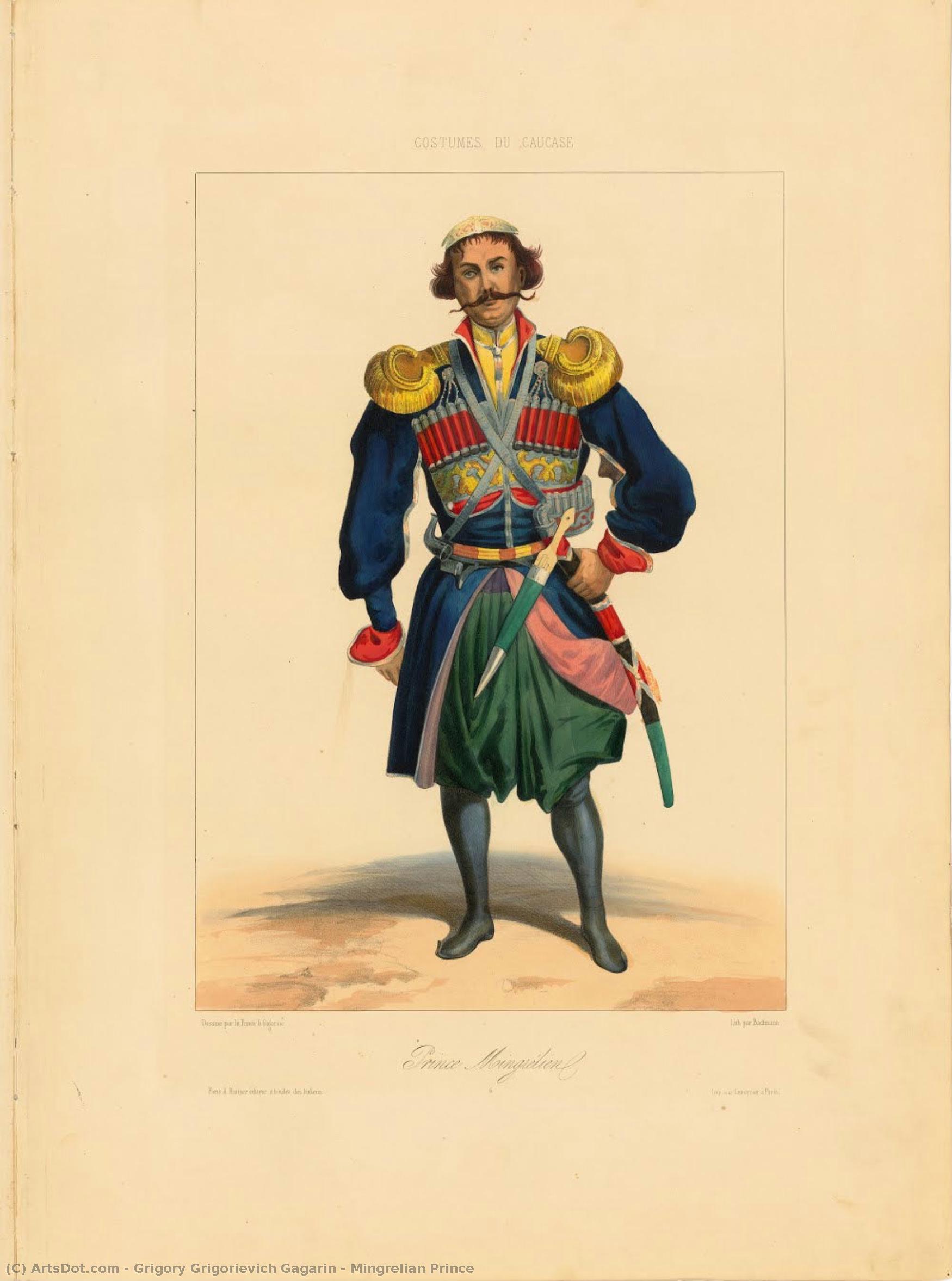
Mingrelian Prince - Grigory Gagarin: A Portrait of Caucasus Identity
Grigory Grigorievich Gagarin (1810-1893), a Russian painter, diplomat and administrator, stands as a pivotal figure in 19th-century Russian art, particularly renowned for his captivating depictions of Caucasian peoples. Born in Saint Petersburg to the noble Rurikid princely family, Gagarin’s artistic journey began with private lessons from Karl Briullov, establishing him on a path toward mastering Romanticism's expressive ideals. His oeuvre transcends mere representation; it embodies an attempt to capture not just physical likeness but also the spirit and cultural nuances of the Caucasus region—a landscape brimming with diverse traditions and histories.
- Subject Matter: Gagarin’s “Caucasian Prince” portrays a man in military uniform, embodying authority and resilience against the backdrop of mountainous terrain. This figure isn't merely an individual; he represents a broader category – Caucasian nobility—a deliberate choice reflecting the artist’s fascination with documenting regional cultures.
- Style & Technique: Gagarin employed oil paints on canvas, utilizing meticulous brushwork to achieve textural depth and luminosity. His style leans heavily into Romanticism's emphasis on emotion and dramatic lighting, creating an atmosphere that conveys both grandeur and vulnerability. The artist’s attention to detail—evident in the rendering of clothing textures and facial expressions—demonstrates a commitment to realism tempered by artistic interpretation.
- Historical Context: Gagarin’s work emerged during Mikhail Vorontsov's governorship over Tiflis (modern Tbilisi), Georgia, a period marked by Russian imperial expansion into the Caucasus. The artist’s involvement in monumental projects like the Tbilisi Sioni Cathedral and the restoration of ancient Georgian churches underscores his role as a cultural ambassador for Russia within this transformative era.
- Symbolism: Beyond mere portraiture, Gagarin's paintings carry symbolic weight. The mountainous landscape serves as a metaphor for strength and permanence, mirroring the enduring traditions of Caucasian communities. Furthermore, the military uniform symbolizes duty and honor—values central to Russian aristocratic culture during Gagarin’s lifetime.
- Emotional Impact: Viewing “Caucasian Prince” evokes contemplation on identity, heritage, and the complexities of cultural exchange. Gagarin's masterful technique captures not only visual accuracy but also a palpable sense of character—a man imbued with dignity and bearing witness to history.
The Art Palace of Georgia: A Legacy Preserved
“Sketches and Drawings of Caucasian People,” meticulously documented by Alexander Duma, offer invaluable insight into Gagarin’s artistic process and his profound engagement with Georgian culture. These preparatory studies reveal the artist's dedication to capturing the essence of regional life—from portraits of prominent figures to detailed depictions of landscapes and architectural elements. The Art Palace of Georgia houses a remarkable collection of these drawings, safeguarding a tangible connection to Gagarin’s groundbreaking contribution to Russian art history.
Beyond Technique: Capturing Essence
Gagarin's artistic brilliance lies not solely in his technical prowess but also in his ability to convey emotion and narrative within his canvases. Like “The Tale of Tsar Saltan,” Gagarin skillfully blended realism with imaginative storytelling, demonstrating a sensitivity to literary conventions that elevated his paintings beyond mere visual representations. His work stands as a testament to the Romantic spirit—a desire to explore profound themes of human experience and cultural heritage.
A Continuing Influence: Reverberations in Contemporary Art
Gagarin’s legacy continues to inspire artists today, particularly those interested in exploring regional identities and capturing the beauty of natural landscapes. His meticulous observation and expressive brushwork serve as a model for conveying complex emotions through visual media—a tradition that resonates powerfully with modern artistic sensibilities. Exploring Gagarin's oeuvre offers a captivating glimpse into the formative years of Russian Romanticism and its enduring impact on art history.