 Ver en contexto
 Enviar
 Compartir
 Detalles

 Descargar
 Similares
 Radiografía
 Presentación de diapositivas
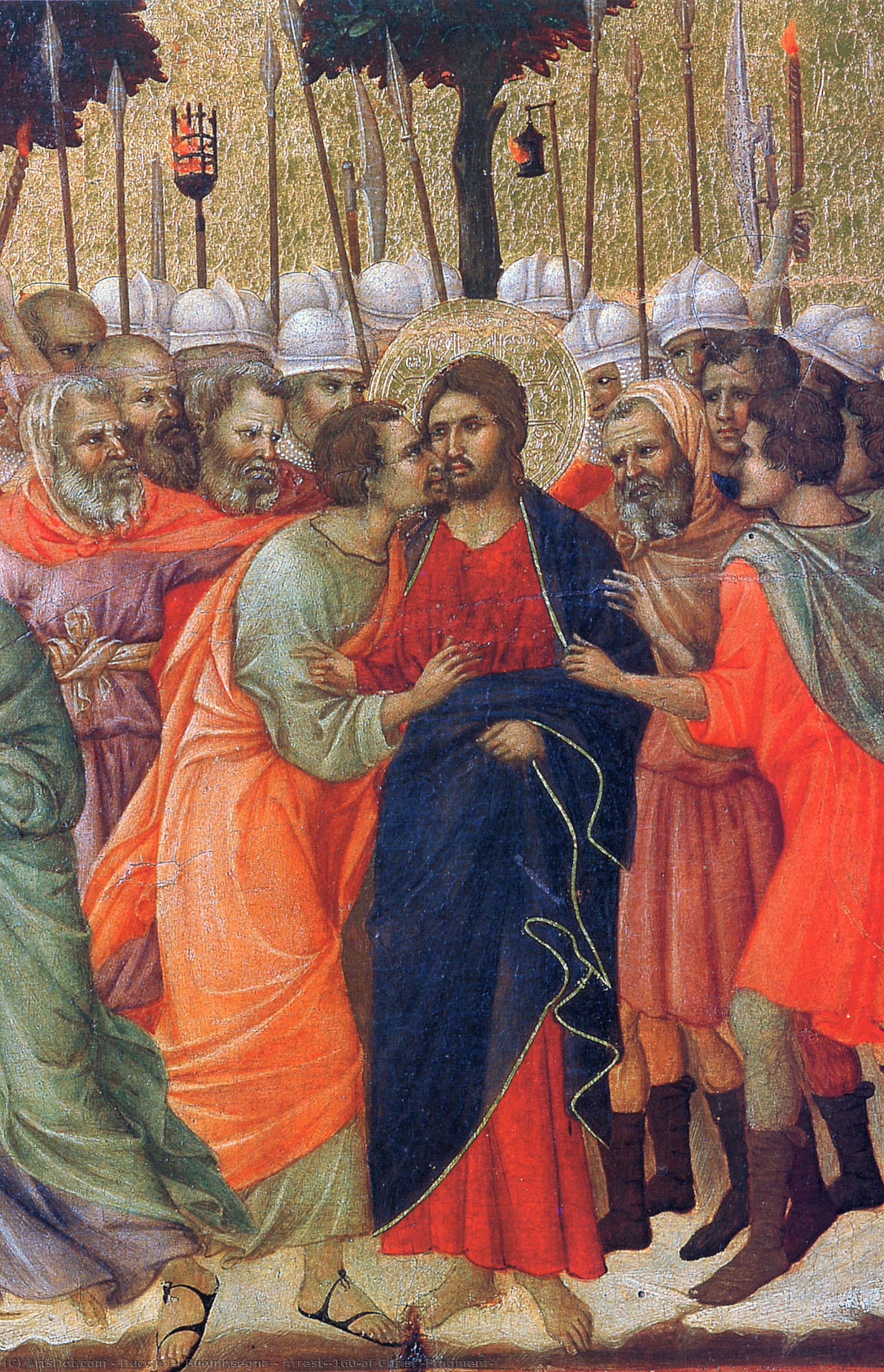
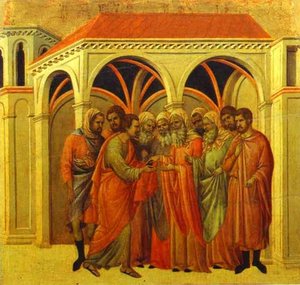
Arrest of Christ (Fragment)


 Ver más
Reproducción al óleo hecha a mano
Óleo sobre lienzo pintado a mano en el tamaño y marco de su elección, realizado por encargo por nuestros artistas. ( Comprar impresión Comprar imagen)




P118B $10

P118H $10

P118W $10

P438Z $10

P508JH $12

P508YH $12

P805H $10

P805Z $10

P919BZ $10

P919G $10

P919XJ $10

P959ZH $10

P968JZ $12

W106C $8

W218G $10

W218JH $8

W218Y $10

W307PJ $10

W316G $10

W316PJ $8

W316Y $10

W398PJ $8

W4111J $10

W500HY $15

W500JH $15

W692G $12

W849H $8

W940BG $15

W953PJ $8




Elija entre nuestros tamaños predefinidos que respetan las proporciones originales de la obra.

Puede ingresar sus propias dimensiones para adaptarse a un marco o espacio específico. Si el tamaño seleccionado no coincide con las proporciones de la imagen original, recortaremos la obra o extenderemos la pintura con elementos adicionales pintados a mano. Se le enviará una maqueta digital para su aprobación antes de comenzar la producción.
Tenga en cuenta que la vista previa en pantalla no refleja el recorte o la extensión reales. Solo la maqueta mostrará con precisión la composición final.
Si bien existen tamaños personalizados, recomendamos seleccionar una dimensión de la lista predefinida para preservar las proporciones originales.
Tras realizar el pedido, el equipo de ArtsDot.com enviará un correo electrónico al cliente para solicitar instrucciones y proporcionarle una vista previa del boceto.
Envío a todo el mundo () en 3-4 semanas en lugar de las 5 semanas estándar. (27 agosto). Sin comprometer la calidad.

Envío exprés gratuito a todo el mundo

Lienzo de lino de alta calidad

Seguro de envío total

Garantía de reembolso de impuestos aduaneros

Garantía de fidelidad cromática exacta

Política de devolución de 60 días (solo por defectos)

Garantía de devolución del 100% del dinero

Descuento por cantidad
 La opción de vidrio solo está disponible en tamaños inferiores a 110 cm.

Arrest of Christ (Fragment)
Técnica de reproducción
Dimensiones de la reproducción
-


Precio total final
$ 263
Descripción de la obra
A Moment Frozen in Time: The Drama of Duccio’s Arrest of Christ
In the quiet intensity of Duccio di Buoninsegna's Arrest of Christ (Fragment), we find ourselves standing at the precipice of a historical and spiritual revolution. Painted around 1311, this fragment is far more than a mere remnant of a larger altarpiece; it is a window into a transformative era where the rigid, celestial hierarchies of the Byzantine tradition began to yield to a burgeoning humanism. As we gaze upon the scene, the tension is palpable. The arrest of Jesus is not depicted as a distant, iconographic event, but as a visceral, unfolding tragedy. Through Duccio's masterful hand, the viewer is drawn into the chaotic energy of the crowd, where Roman soldiers and onlookers converge in a swirling composition of movement and mounting dread.
The technique employed here showcases the luminous brilliance of tempera on wood panel, a medium that allows for an extraordinary depth of color and fine textural detail. Duccio achieves a delicate balance between the stylized elegance of his predecessors and a new, daring naturalism. While the drapery of the figures retains a certain rhythmic, formal grace—echoing the spiritual authority of the Sienese School—there is an unmistakable sense of physical weight and emotional vulnerability in the faces and gestures. The artist’s ability to capture the play of light across surfaces creates a sense of divine presence amidst earthly turmoil, making the fragment feel alive with a pulse that has endured for over seven centuries.
Symbolism and the Soul of the Sienese School
Beyond the immediate narrative of conflict, every element within this composition whispers of deeper theological truths. The placement of objects near the central figure of Christ serves as a silent liturgy; for instance, the bowl and cup positioned near his head are not merely incidental details but profound symbols of the Eucharist, connecting the moment of his betrayal to the ultimate sacrifice of the sacrament. This layering of meaning ensures that the painting functions simultaneously as a historical record and a devotional tool, designed to stir the soul of the faithful and provoke contemplation on the nature of suffering and redemption.
For the discerning collector or interior designer, this piece offers an unparalleled opportunity to introduce a sense of profound history and intellectual depth into a space. A high-quality reproduction of this fragment brings with it the prestige of the Siena Cathedral’s legacy and the sophisticated aesthetic of the Proto-Renaissance. It is a work that commands attention not through sheer scale, but through its psychological complexity and the exquisite craftsmanship of its era. To possess such an image is to hold a piece of the dawn of modern Italian art, providing a focal point of grace, drama, and timeless beauty that can anchor any curated collection or elegantly designed room.
Obras relacionadas
Biografía del artista
vida temprana y carrera
Duccio di Buoninsegna, un renombrado pintor italiano de Siena, fue activo durante el tardo siglo XIII y principios del XIV. Nacido en 1255, la vida personal de Duccio permanece envuelta en misterio, con poco conocimiento sobre su origen familiar o sus primeros años. Sin embargo, sus contribuciones al estilo pictórico del trecento y la escuela sienesa están bien documentadas.estilo artístico e influencias
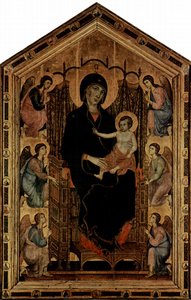
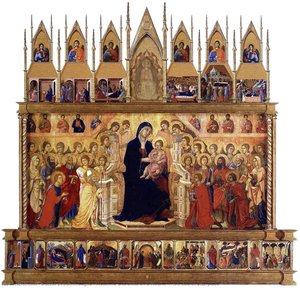
El trabajo de Duccio se caracteriza por su innovador uso del espacio y el color, como se ve en su obra maestra La Madonna de los Rucellai (1285). Esta pintura, que presenta a la Virgen María sosteniendo al Niño Jesús, rodeada de ángeles y santos, muestra el estilo único de Duccio, que combina el arte bizantino con nuevas técnicas. Su uso del modelado y su juego con la luz y los colores oscuros revelan figuras debajo de una vestidura pesada, creando una atmósfera acogedora y cálida.obras notables y legado
Algunas de las obras notables de Duccio incluyen:- Maestó (frontal, paneles de coronación), Partiendo de los apóstoles (arte gótico, óleo) - un testimonio de su enfoque innovador del espacio y el color.
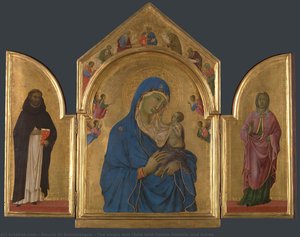
- Políptico No. 28 (La Virgen Santa con el Niño Jesús y cuatro santos) (arte gótico, óleo) - demuestra la maestría de Duccio en la composición y la narrativa.
- Maestó (espalda, predela), Tentación en un pinnáculo del templo (arte gótico, óleo) - muestra su capacidad para equilibrar la luz y los colores oscuros.
legado y recuerdo
A pesar de tener dificultades con la gestión financiera, el legado artístico de Duccio supera ampliamente sus desafíos personales. Su obra se encuentra en varios museos y galerías, incluyendo la Galería de Arte de la Ciudad de Manchester, que alberga numerosas obras maestras de artistas destacados. Ver las obras de Duccio di Buoninsegna en ArtsDot.com Wikipedia: Duccio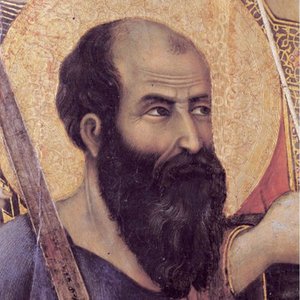
Duccio di Buoninsegna
1255 - 1319 , Italia
Datos clave
- Artistas Influenciados: ['Escuela Sienesa']
- Artistas Que Influyeron: ['Arte Bizantino']
- Fecha De Nacimiento: c. 1255
- Lugar De Nacimiento: Siena, Italia
- Movimiento Artístico: Gótico Sienés, Trecento
- Nacionalidad: Italiana
- Nombre Completo: Duccio di Buoninsegna
- Obras Notables:
- Madonna de Rucellai
- Maestà
- Vuelo a Egipto
Artículos relacionados
Las 10 Obras Maestras del Alto Medieval: Arte, Historia y Decoración Exclusiva
Descubre las 10 obras maestras del Alto Medieval. Explora la historia, el simbolismo y la belleza de la pintura románica y gótica. Reproducciones exclusivas en ArtsDot.com para decorar tu hogar con arte atemporal.
10 Obras Maestras Medievales que Definen el Arte (y tu Hogar)
Descubre 10 obras maestras del arte medieval, desde Duccio a Van Eyck. Explora la historia, simbolismo y belleza de Giotto, Simone Martini y más. Encuentra reproducciones de alta calidad para decorar tu hogar en ArtsDot.com.
Sacred Narratives Embodied: A Comprehensive Exploration of Religious Iconography in Art History
Explore the rich history of religious iconography in art! Discover symbolism, movements & masterpieces from Byzantine to Renaissance periods. Expert insights for collectors and enthusiasts at ArtsDot.
Sacred Narratives on Canvas: Exploring Religious Scenes & Their Enduring Influence
Explore the rich history of religious art from Giotto to the Renaissance masters with ArtsDot. Discover symbolism, techniques & enduring legacies. Museum-quality reproductions available.
Proto-Renacimiento: 10 Obras Maestras que Cambiaron la Historia del Arte | ArtsDot
Descubre las 10 obras maestras del Proto Renacimiento que revolucionaron el arte italiano. Explora la historia de Giotto, Duccio y Cimabue. Reproducciones de arte en ArtsDot.com para decorar tu hogar con belleza atemporal.