 Ver en contexto
 Enviar
 Compartir
 Detalles

 Descargar
 Similares
 Radiografía
 Presentación de diapositivas
Girl with Poppies


 Ver más
Reproducción al óleo hecha a mano
Óleo sobre lienzo pintado a mano en el tamaño y marco de su elección, realizado por encargo por nuestros artistas. ( Comprar impresión Comprar imagen)




P118B $10

P118H $10

P118W $10

P438Z $10

P508JH $12

P508YH $12

P805H $10

P805Z $10

P919BZ $10

P919G $10

P919XJ $10

P959ZH $10

P968JZ $12

W106C $8

W218G $10

W218JH $8

W218Y $10

W307PJ $10

W316G $10

W316PJ $8

W316Y $10

W398PJ $8

W4111J $10

W500HY $15

W500JH $15

W692G $12

W849H $8

W940BG $15

W953PJ $8




Elija entre nuestros tamaños predefinidos que respetan las proporciones originales de la obra.

Puede ingresar sus propias dimensiones para adaptarse a un marco o espacio específico. Si el tamaño seleccionado no coincide con las proporciones de la imagen original, recortaremos la obra o extenderemos la pintura con elementos adicionales pintados a mano. Se le enviará una maqueta digital para su aprobación antes de comenzar la producción.
Tenga en cuenta que la vista previa en pantalla no refleja el recorte o la extensión reales. Solo la maqueta mostrará con precisión la composición final.
Si bien existen tamaños personalizados, recomendamos seleccionar una dimensión de la lista predefinida para preservar las proporciones originales.
Tras realizar el pedido, el equipo de ArtsDot.com enviará un correo electrónico al cliente para solicitar instrucciones y proporcionarle una vista previa del boceto.
Envío a todo el mundo () en 3-4 semanas en lugar de las 5 semanas estándar. (27 agosto). Sin comprometer la calidad.

Envío exprés gratuito a todo el mundo

Lienzo de lino de alta calidad

Seguro de envío total

Garantía de reembolso de impuestos aduaneros

Garantía de fidelidad cromática exacta

Política de devolución de 60 días (solo por defectos)

Garantía de devolución del 100% del dinero

Descuento por cantidad
 La opción de vidrio solo está disponible en tamaños inferiores a 110 cm.

Girl with Poppies
Técnica de reproducción
Dimensiones de la reproducción
-


Precio total final
$ 263
Descripción de la obra
A Portrait of Quietude: Elihu Vedder’s “Girl with Poppies”
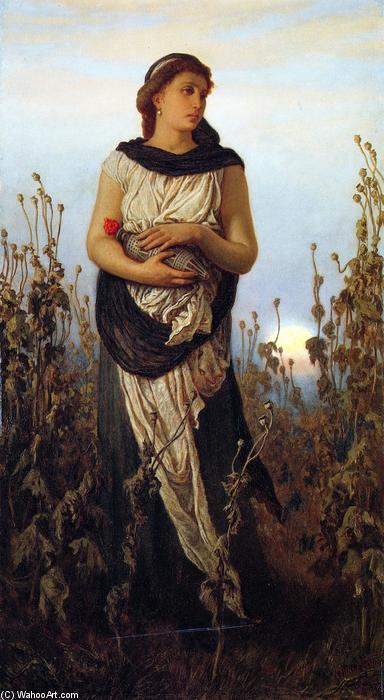
Elihu Vedder's "Girl with Poppies," painted in 1877, is not merely a depiction of a young woman; it’s an immersion into a mood—a poignant meditation on solitude, memory, and the subtle beauty found within nature. The painting immediately draws the viewer in with its muted palette dominated by blues, grays, and creams, creating an atmosphere of contemplative melancholy. This isn't a vibrant celebration of life, but rather a quiet acknowledgment of its transient qualities.
The subject herself is presented with a striking simplicity. Dressed in attire suggestive of classical antiquity – a flowing gown reminiscent of Grecian robes – she stands within a field of tall reeds or rushes, their dry stalks creating an almost skeletal framework around her. Her gaze is directed towards the horizon, lost in thought, conveying a sense of introspection and perhaps even a touch of sadness. Vedder masterfully employs linear perspective, defining the forms of her dress and the reeds with precise lines, while simultaneously allowing the distant landscape to soften into atmospheric haze. This creates a powerful depth, pulling the viewer into the scene and emphasizing the woman’s isolation within this expansive space.
The Language of Romanticism and Symbolism
Vedder's work firmly resides within the Romantic movement, but with a distinctly Pre-Raphaelite sensibility. The emphasis on emotional intensity, the exploration of nature’s power, and the use of rich textures all align with Romantic ideals. However, Vedder departs from the grand narratives often associated with Romanticism, opting instead for a more intimate and psychologically driven approach. The reeds themselves are laden with symbolic weight; traditionally, they have been associated with mourning and transition – a poignant reminder of mortality and the passage of time. The single poppy she holds is a potent symbol of remembrance, offering a small spark of color and hope amidst the prevailing somber tones.
Furthermore, Vedder’s background profoundly shaped his artistic vision. His early years spent in Cuba and later studies in Paris and Italy exposed him to diverse cultural influences, particularly the Italian Renaissance and the Macchiaioli movement – a group of Italian painters who prioritized capturing fleeting moments of light and atmosphere. This exposure is evident in the painting's luminous quality and its focus on capturing the essence of a particular moment rather than adhering strictly to academic realism.
A Masterclass in Technique
“Girl with Poppies” showcases Vedder’s exceptional technical skill. The artist employs smooth blending techniques, creating seamless transitions between tones and textures. The rendering of the fabric is particularly noteworthy – it appears both delicate and substantial, conveying a sense of weight and movement. Close examination reveals meticulous brushwork, especially in depicting the texture of the reeds, which are rendered with remarkable detail, suggesting their dryness and fragility. The use of light is masterful; it’s soft and diffused, casting subtle shadows that enhance the painting's depth and atmosphere.
A Timeless Reflection
Ultimately, “Girl with Poppies” transcends its historical context to offer a timeless reflection on the human condition. It’s a painting that invites contemplation, prompting viewers to consider themes of solitude, memory, and the beauty found in quiet moments. Reproductions capture only part of this experience; the original's subtle nuances and emotional depth remain powerfully evocative. The piece continues to resonate with audiences today, cementing Vedder’s legacy as one of America’s most significant Symbolist painters.
Obras relacionadas
Biografía del artista
Vida Temprana y Formación Artística
- Nacimiento: 26 de febrero de 1836, Nueva York City, Estados Unidos
- Fallecimiento: 29 de enero de 1923, Roma, Italia
Elihu Vedder nació en una familia con circunstancias únicas – sus padres eran primos. Su vida temprana fue moldeada por diversas experiencias, incluyendo tiempo pasado en Cuba debido a la reubicación de su padre y periodos entre la casa de su abuelo materno en Schenectady y un internado. A pesar de las reservas iniciales de su padre, sus ambiciones artísticas fueron apoyadas por su madre.
- Formación Temprana: Vedder comenzó su formación formal en Nueva York City bajo la tutela de Tompkins H. Matteson.
- Estudios Europeos: Continuó sus estudios en París con François-Édouard Picot y posteriormente en Italia, donde fue profundamente influenciado por el Renacimiento italiano y los pintores Macchiaioli.
- Influencia Italiana: Su tiempo en Italia fomentó una profunda conexión emocional con su compañero pintor Giovanni Costa, lo que llevó a viajes antes de que las limitaciones financieras lo obligaran a regresar a América.
Carrera y Obras Destacadas
La carrera de Vedder abarcó diversas disciplinas artísticas, desde la pintura y la ilustración hasta el diseño de murales y la poesía. Cultivó amistades con figuras prominentes como Walt Whitman y Herman Melville.
- Ilustraciones para El Rubaiyat: Vedder es quizás mejor conocido por sus cincuenta y cinco ilustraciones que acompañan a la traducción de El Rubaiyat de Omar Khayyam (edición de lujo) de Edward FitzGerald. Estas ilustraciones son consideradas obras maestras del arte simbolista.
- Pinturas Visionarias: Pinturas notables incluyen “El Huevo de la Roca”, “El Pescador y el Genio”, y “Guarida de la Serpiente Marina”, que muestran su estilo visionario y temas imaginativos.
- Trabajo de Murales: Decoró el pasillo de la Sala de Lectura en la Biblioteca del Congreso de Washington con murales, un testimonio de su habilidad como artista decorativo.
- Colaboración con Tiffany: Vedder colaboró con Louis Comfort Tiffany, diseñando cristalería, mosaicos y estatuillas para la compañía Tiffany.
Estilo Artístico e Influencias
El estilo artístico de Vedder se caracteriza por su naturaleza visionaria, imágenes románticas y la frecuente incorporación de influencias orientales.
- Simbolismo: Vedder fue una figura clave en el movimiento simbolista, enfatizando la emoción y el individualismo sobre el realismo estricto.
- Prerrafaelitas: Su tiempo en Inglaterra lo expuso a la Hermandad Prerrafaelita, influyendo en su estilo artístico hacia una mayor claridad y detalle.
- Místicos Ingleses e Irlandeses: Fue influenciado por las obras de William Blake y William Butler Yeats, reflejando una fascinación por el misticismo y la espiritualidad.
- Renacimiento Italiano & Macchiaioli: Sus estudios en Italia moldearon su comprensión de la forma, el color y la composición.
Legado y Años Posteriores
Las contribuciones de Vedder al arte estadounidense se extendieron más allá de la pintura. Ayudó a establecer el grupo In Arte Libertas en Italia y dejó atrás una serie de escritos, incluyendo reflexiones autobiográficas y poesía.
- Afiliación: Vedder fue miembro de la Academia Americana de Artes y Letras.
- Actividades Literarias: Publicó The Digressions of V (1910), Miscellaneous Moods in Verse (1914) y Doubt and Other Things (1922).
- Años Posteriores: Vedder pasó sus últimos años principalmente en Italia, continuando creando arte y escribiendo hasta su muerte en Roma en 1923. Su legado perdura a través de sus evocadoras pinturas e ilustraciones que continúan cautivando al público hoy en día.
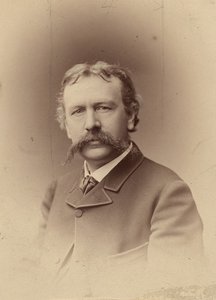
Elihu Vedder
1836 - 1923 , Estados Unidos de América
Datos clave
- Artistas Que Influyeron:
- François-Édouard Picot
- Giovanni Costa
- William Blake
- William Butler Yeats
- Fecha De Fallecimiento: 29 de enero de 1923
- Fecha De Nacimiento: 26 de febrero de 1836
- Lugar De Nacimiento: Ciudad de Nueva York, EE. UU.
- Movimiento Artístico: Simbolismo, Romanticismo
- Nacionalidad: Estadounidense
- Nombre Completo: Elihu Vedder
- Obras Notables:
- El Huevo de la Roca
- El Pescador y el Genio
- Lair of the Sea Serpent
- Ilustraciones del Rubaiyat
Artículos relacionados

Paisajes Románticos: 10 Obras Maestras que Definieron un Movimiento Artístico
Descubre los 10 paisajes románticos más influyentes de artistas como Caspar David Friedrich y Turner. Explora la belleza, el simbolismo y las técnicas del movimiento romántico. Reproducciones de arte exclusivas en ArtsDot.com.

Evocations of Place: A Historical Journey Through Landscape Art
Explore the rich history of landscape art with ArtsDot. Discover renowned artists, movements like Impressionism & Romanticism, and expert guidance for collecting timeless pieces. Find your perfect serene escape today!
Grant Wood & American Regionalism: Identity, Myth & the Rural Landscape
Explore the world of Grant Wood & American Regionalism with ArtsDot. Discover the symbolism behind 'American Gothic', recurring themes, and the movement's lasting impact on art history. High-quality reproductions available.

Asher Brown Durand: Luminism, Landscape & the American Ideal – A Comprehensive Exploration
Explore the life & art of Asher Brown Durand, a founding member of the Hudson River School. Discover his masterful landscapes, Luminist techniques, and lasting impact on American painting. Learn about key works like 'Kindred Spirits' & collecting Durand today.

Evocations of Place: A Historical Journey Through Landscape Art
Explore the rich history of landscape art with ArtsDot. Discover renowned artists, movements like Impressionism & tonalism, and expert guidance for collecting timeless pieces. Find your perfect serene escape today!