

 Ver en contexto
 Enviar
 Compartir
 Detalles

 Descargar
 Similares
 Radiografía
 Presentación de diapositivas
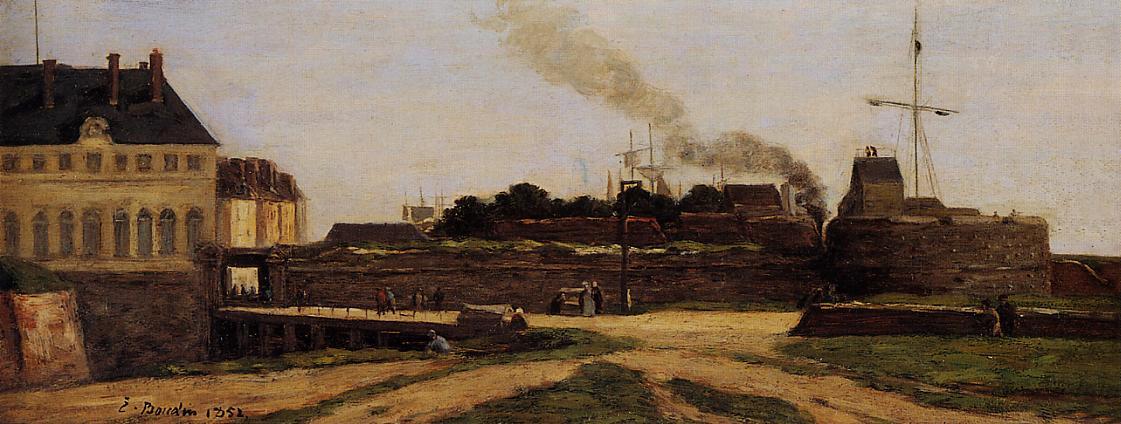
Le Havre, the Town Hotel and the Francois I Tower


 Ver más
Adquiera una imagen digital de alta resolución y optimizada, muy superior a la vista previa en línea.
Cada archivo es preparado meticulosamente por nuestros especialistas internos mediante el uso de herramientas avanzadas y un experto retoque manual. Nos aseguramos de que cada imagen posea una claridad excepcional, una precisión cromática impecable y un detalle minucioso.
El archivo final se entrega por correo electrónico en un plazo de 72 horas, optimizado para su uso inmediato en entornos profesionales, editoriales y de impresión. Esta es la misma calidad en la que confían los estudios de diseño, las editoriales y las galerías de primer nivel.
Imagen Digital
Descarga un archivo de alta resolución para exhibición personal, impresión y proyectos creativos. ( Comprar impresión Comprar pintura hecha a mano)
Incluido en cada pedido de imágenes digitales
Entrega digital experta, garantizada.
Al elegir ArtsDot.com, no solo está adquiriendo una imagen; está recibiendo una obra de arte digital mejorada profesionalmente, elaborada con precisión y respaldada por una garantía de satisfacción. Esto es todo lo que incluye su pedido, automáticamente:

Entrega rápida por email
Recibirá su archivo de imagen digital en alta resolución por correo electrónico en un plazo de 72 horas tras realizar su pedido, listo para su uso inmediato.

Archivo digital optimizado por IA
Su obra de arte se optimiza profesionalmente mediante herramientas avanzadas de IA y edición manual, garantizando el máximo detalle, claridad y precisión cromática.

Reenvío gratuito de por vida
¿Has borrado o perdido tu archivo por error? No te preocupes: te lo volveremos a enviar en cualquier momento, sin coste adicional.

Sin gastos de importación, siempre
Disfrute de su obra de arte al instante sin aduanas, aranceles ni gastos de envío; las descargas digitales siempre están libres de impuestos.

Garantía de fidelidad de color
Garantizamos que su imagen digital refleje los colores originales con la mayor fidelidad posible, mediante el uso de herramientas profesionales y gestión del color.

Garantía de satisfacción de 60 días
Si no está satisfecho con su imagen digital, la revisaremos o le reembolsaremos el 100% en un plazo de 60 días, sin preguntas.

100% Garantía de devolución de dinero
¿No está satisfecho? Obtenga un reembolso completo dentro de los 60 días posteriores a la recepción de su archivo digital, sin necesidad de explicaciones.

Descuentos por pedidos grandes
Compra 3 imágenes, ahorra 10% - Compra 5, ahorra 15% - Compra 10+, ahorra 20%. Ideal para proyectos creativos, galerías y agencias.
Eugène Louis Boudin: Capturing Light and Atmosphere in Le Havre
Eugène Louis Boudin (1824-1898), a pivotal figure in the burgeoning Impressionist movement, stands as an enduring testament to the transformative power of plein air painting—the practice of creating artwork outdoors directly from observation. Born in Honfleur, France, Boudin’s formative years were steeped in the maritime traditions of his hometown, where he witnessed firsthand the capricious dance between light and water – experiences that would indelibly shape his artistic vision.
Rather than adhering to the rigid conventions of academic art academies, Boudin embarked on a path of independent exploration, beginning his working life aboard steamboats traversing between Le Havre and Honfleur at just ten years old. It was during these voyages that he discovered his innate talent for capturing fleeting impressions of light and color with rapid sketches in the margins of his books—a habit that foreshadowed his lifelong dedication to portraying the natural world with unprecedented accuracy and emotional resonance.
His relocation to Le Havre, where his father established a shop for stationery and picture frames, solidified Boudin’s immersion within an artistic milieu. He diligently honed his skills alongside his family, eventually establishing his own modest atelier—a space dedicated to fostering creativity and pursuing artistic excellence. This environment nurtured his ability to translate the sensory experience of nature onto canvas with remarkable sensitivity.
“Le Havre, the Town Hotel and the Francois I Tower”: A Study in Coastal Realism
"Le Havre, the Town Hotel and the François I Tower," painted in 1859, exemplifies Boudin’s masterful embrace of Realism—a stylistic approach that prioritized truthful representation over idealized beauty. Unlike Romantic painters who sought to evoke emotion through dramatic landscapes and fantastical narratives, Boudin focused on capturing the tangible qualities of his surroundings with meticulous detail.
The painting depicts Le Havre harbor during a period of significant industrial expansion, reflecting the burgeoning economic dynamism of France in the mid-nineteenth century. Boudin skillfully renders the imposing Town Hotel—a symbol of civic pride and architectural grandeur—its façade bathed in warm sunlight. Adjacent to it is the bustling docks, where steamboats emit plumes of smoke, conveying a palpable sense of activity and progress.
Dominating the composition is the François I Tower—a monumental structure commemorating the reign of Francis I, representing France’s historical legacy amidst the rapid transformations of modernity. Boudin's masterful use of light—particularly the diffused glow emanating from the tower—creates an atmosphere of contemplative serenity, inviting viewers to contemplate the interplay between past and present.
Technique and Impressionistic Vision
Boudin’s technique is characterized by loose brushstrokes and a vibrant palette—elements that are hallmarks of Impressionism. He eschewed blending colors on the palette entirely, opting instead for juxtaposing complementary hues directly onto the canvas to achieve luminous effects. This approach allowed him to capture the subtle nuances of light and color as they shifted throughout the day.
Furthermore, Boudin meticulously observed atmospheric conditions—such as haze and mist—incorporating these elements into his paintings to heighten their emotional impact. By conveying the ephemeral beauty of nature with unwavering honesty, Boudin cemented his place as one of the pioneers of Impressionism—a movement that irrevocably altered the course of art history.
Symbolic Resonance: Light, Industry, and Heritage
"Le Havre, the Town Hotel and the François I Tower" transcends mere visual representation; it embodies profound symbolic resonance. The tower stands as a reminder of France’s enduring cultural heritage—a bastion against the encroaching forces of industrialization. Simultaneously, the harbor scene celebrates the dynamism of economic progress—the transformative influence of steam power on maritime trade.
However, most importantly, Boudin's painting captures the essence of human experience—the quiet contemplation afforded by observing the natural world and appreciating its sublime beauty. Through his unwavering commitment to capturing light and atmosphere with unparalleled sensitivity, Boudin bequeathed to posterity a timeless masterpiece that continues to inspire awe and admiration.
Obras relacionadas
Biografía del artista
Vida Temprana y Carrera
Eugène Louis Boudin, un renombrado pintor francés, nació el 12 de julio de 1824 en Honfleur, Francia. Era hijo de un piloto portuario y desarrolló una fuerte afinidad por el mar desde temprana edad. Su viaje artístico comenzó con su trabajo en un barco de vapor entre Le Havre y Honfleur a la edad de 10 años.Influencias Artísticas y Estilo
El estilo de Boudin estuvo fuertemente influenciado por los maestros holandeses del siglo XVII, particularmente después de conocer a Johan Jongkind, quien lo introdujo a la pintura "en plein air" (al aire libre). Este enfoque le permitió capturar la luz cambiante y los colores del mundo natural. Sus pasteles, caracterizados como sumarios y económicos, atrajeron una atención significativa por parte de Charles Baudelaire y Corot, quien lo llamó el “rey de los cielos”.Obras Destacadas y Exposiciones
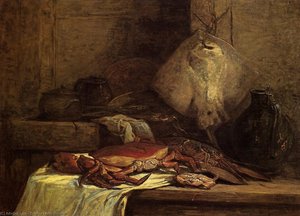
- Still Life with Lobster on a White Tablecloth (Nature Morte au Homard sur un Nappe Blanche), ahora en el High Museum of Art de Atlanta, muestra el enfoque sobrio pero noble de Boudin hacia las pinturas de bodegón.
- La participación de Boudin en la primera exposición impresionista en 1873, junto con Claude Monet y otros jóvenes artistas, solidificó su influencia en el mundo del arte.
- Su obra se puede encontrar en varios museos, incluyendo el Musée d'Orsay en París, que alberga varias de sus pinturas, como Landscape with Sunset.
Logros y Reconocimiento
A lo largo de su carrera, Boudin recibió numerosos elogios, incluyendo una medalla de tercer lugar en el Salón de París de 1881 y una medalla de oro en la Exposición Universal de 1889. En 1892, fue nombrado Caballero de la Legión de Honor.Legado e Importancia Histórica
El legado de Eugène Louis Boudin se extiende más allá de su propia obra, ya que jugó un papel fundamental en dar forma a las carreras de jóvenes artistas como Claude Monet. El Premio Eugène Boudin, otorgado por la Société Nationale des Beaux-Arts, es un testimonio de su influencia duradera en el mundo del arte. Boudin es considerado una figura clave en la transición hacia el impresionismo y su enfoque "en plein air" sentó las bases para muchos artistas posteriores. Su capacidad para capturar la atmósfera y la luz fugaz lo convierte en un precursor importante del movimiento impresionista, y su influencia se puede ver claramente en el trabajo de Monet y otros artistas que siguieron sus pasos.- Vea más obras de Boudin en https://ArtsDot.com/@/eugene-louis-boudin
- Explore la colección del Musée d'Orsay, que presenta varias pinturas de Boudin, en https://ArtsDot.com/@@/a@d3aulp-discover-the-charm-of-musee-eugene-boudin-(france)-and-its-impressionist-ma..
- Aprenda más sobre el arte francés y su historia en https://en.wikipedia.org/wiki/french_art
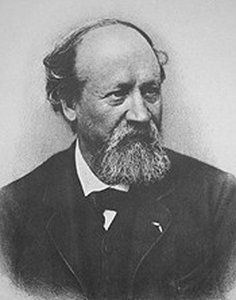
Eugène Louis Boudin
1824 - 1898 , Francia
Breves datos
- Artistas Que Influyeron:
- Johan Jongkind
- Charles Baudelaire
- Corot
- Estilo Artístico: Impresionismo temprano
- Fecha De Muerte: 8 de agosto de 1898
- Fecha De Nacimiento: 12 de julio de 1824
- Influenciado A Artistas: ['Claude Monet']
- Lugar De Nacimiento: Honfleur, Francia
- Nacionalidad: Francesa
- Nombre Completo: Eugène Louis Boudin
- Obras Notables:
- Naturaleza muerta con langosta
- Paisaje con atardecer
- Marina
- Fecamp, el puerto

