

 Vista previa
 Compartir
 Compartir
 Ver detalles

 Descargar
 Ver similares
 Radiografía
 Presentación de diapositivas
St Mennas
 Ink
Ink- Mannerism
 1563
1563- Renaissance
 246.0 x 144.0 cm
 Musée des Beaux-Arts et de la Dentelle d’Alençon
 Leer más
Reproducción al óleo hecha a mano
Óleo sobre lienzo pintado a mano en el tamaño y marco de su elección, realizado por encargo por nuestros artistas. ( Pedir impresión Comprar descarga)




































Elija entre nuestros tamaños predefinidos que respetan las proporciones originales de la obra.

Puede ingresar sus propias dimensiones para adaptarse a un marco o espacio específico. Si el tamaño seleccionado no coincide con las proporciones de la imagen original, recortaremos la obra o extenderemos la pintura con elementos adicionales pintados a mano. Se le enviará una maqueta digital para su aprobación antes de comenzar la producción.
Tenga en cuenta que la vista previa en pantalla no refleja el recorte o la extensión reales. Solo la maqueta mostrará con precisión la composición final.
Si bien existen tamaños personalizados, recomendamos seleccionar una dimensión de la lista predefinida para preservar las proporciones originales.
Tras realizar el pedido, el equipo de ArtsDot.com enviará un correo electrónico al cliente para solicitar instrucciones y proporcionarle una vista previa del boceto.
Envío a todo el mundo () en 3-4 semanas en lugar de las 5 semanas estándar. (19 agosto). Sin comprometer la calidad.

Envío exprés gratuito a todo el mundo

Lienzo de lino de alta calidad

Seguro de envío completo

Garantía de reembolso de aranceles aduaneros

Garantía de fidelidad cromática exacta

Política de devolución de 60 días (solo por defectos)

Garantía de devolución del 100% del dinero

Oferta por volumen
 La opción de vidrio solo está disponible en tamaños inferiores a 110 cm.

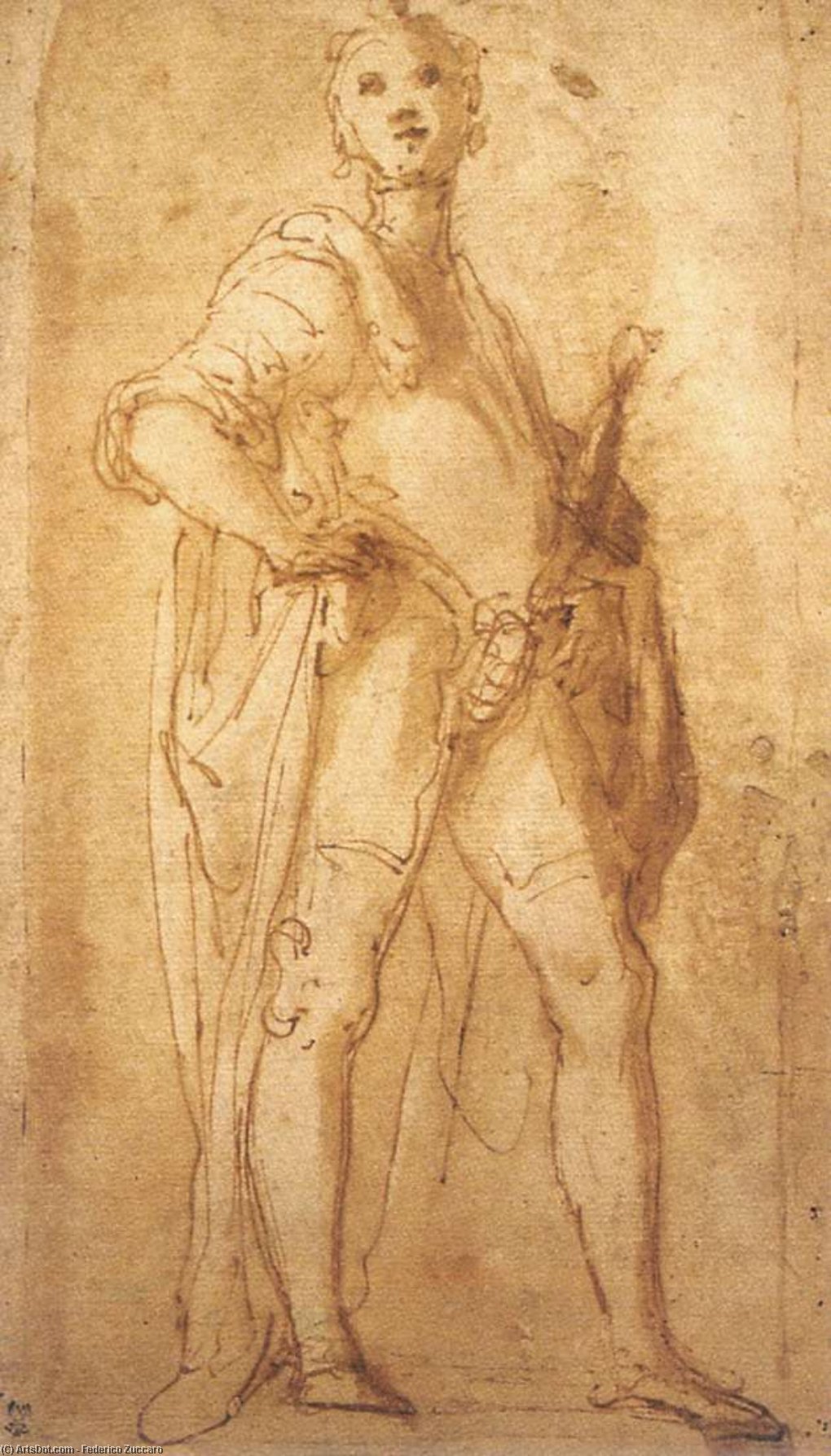
St Mennas
Técnica de reproducción
Tamaño de la reproducción
-


Precio total
$ 263
Descripción de la obra
A Vision of Devotion: The Intimacy of St Mennas
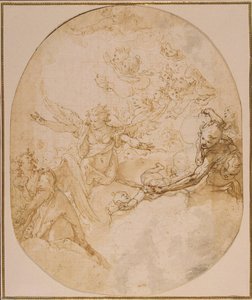
In the delicate interplay of light and shadow captured within Federico Zuccaro’s 1563 masterpiece, St Mennas, we encounter a profound moment of spiritual introspection. This exquisite pen drawing serves as a window into the soul of the Renaissance, offering a glimpse of a figure caught in a state of quiet contemplation. The subject, depicted in profile, possesses an ethereal presence; with one arm raised and a hand clutching a sacred manuscript, the saint appears to be suspended between the earthly realm and the divine. There is an undeniable intimacy in this work, as if Zuccaro has invited the viewer to eavesdrop on a private prayer. The minimalist background strips away all worldly distractions, forcing our gaze to rest solely upon the expressive features of the face and the graceful, rhythmic lines of the draped garments.
The technique employed by Zuccaro is nothing short of virtuosic. Utilizing the precision of pen and ink, the artist achieves a remarkable depth through fine hatching and meticulous shading. Every fold of the classical attire and every subtle contour of the saint's facial hair is rendered with such clarity that one can almost feel the texture of the fabric and the weight of the moment. This mastery of line allows for a sense of immediacy that is rare in larger-scale oil paintings, providing a raw, preparatory energy that suggests the artist’s hand moving swiftly to capture a fleeting inspiration. For collectors and designers alike, this piece offers a sophisticated study in balance, where the complexity of detail is harmonized by a serene and uncluttered composition.
The Legacy of Roman Mannerism
To understand St Mennas, one must look toward the vibrant artistic landscape of late 16th-century Italy. Federico Zuccaro was not merely a painter but a central figure in the Roman Mannerist movement, an era defined by elegance, artifice, and a sophisticated approach to classical forms. Having studied under the influence of architectural giants like Palladio, Zuccaro brought a unique sense of proportion and structural harmony to his figurative works. In this drawing, we see the hallmarks of that training: the balanced silhouette and the deliberate, sculptural quality of the figure. The work reflects a period when artists sought to transcend mere realism to achieve a higher, more stylized beauty that spoke to the intellect and the spirit.
For those looking to integrate such historical grandeur into a contemporary interior, a high-quality reproduction of this work provides an unparalleled sense of prestige. Whether placed in a curated gallery space or as a focal point in a refined study, the monochromatic elegance of Zuccaro’s line work complements both classical and modern decor. It serves as more than just decoration; it is a conversation piece that invites reflection on the enduring power of Renaissance humanism. Owning a reproduction of St Mennas allows one to possess a fragment of art history, bringing the quiet, focused intensity of the 1560s into the modern home.
Obras relacionadas
![Leyenda De San Francisco - [23] - San Francisco Lamentado Por Santa Clara — Giotto Di Bondone, Gótico](/media/artworks/images/thumbnails/d9/a8/d9a8803f4ecd4b049507cc14e2371b42.jpg)


Biografía del artista
Federico Zuccaro: The Architect of Roman Mannerism
Federico Zuccaro (1539-1609) stands as a pivotal figure in the Italian Renaissance, specifically within the burgeoning Roman Mannerist movement. He wasn’t merely a painter; he was an architect, historian, and crucially, a champion of artistic innovation—a rare combination that cemented his legacy as one of the era's most influential artists. Born in Siena, Zuccaro’s early life remains somewhat shrouded in mystery, though he received a robust artistic education from his father, Giovanni Zuccaro, who himself was a celebrated sculptor and painter. This familial connection instilled within Federico a deep appreciation for classical ideals and established him firmly on the path to mastering both painting and sculpture.- Early Career & Patronage: Zuccaro’s formative years were spent honing his skills in Florence under Andrea Palladio, absorbing Palladio's meticulous attention to proportion and architectural harmony. He quickly gained recognition for his frescoes—particularly those adorning Palazzo Vecchio—demonstrating an exceptional ability to convey emotion and narrative complexity within a restrained stylistic framework. His commissions from wealthy Florentine families solidified his reputation as a craftsman of considerable talent.
- The Influence of Taddeo Zuccaro: Perhaps the most significant influence on Federico’s artistic development was his brother, Taddeo Zuccaro. Together they formed an unparalleled creative partnership, exploring innovative techniques and pushing the boundaries of Mannerist aesthetics. Taddeo's mastery of sculpture complemented Federico’s painting prowess, fostering a collaborative environment that yielded masterpieces like “The Holy Family” in Palazzo Vecchio—a testament to their shared vision.
- Architectural Achievements: Beyond his paintings, Zuccaro achieved considerable renown as an architect. He undertook ambitious projects throughout Rome and Italy, designing palaces, churches, and villas with a distinctive Mannerist flair characterized by illusionistic decoration and dramatic spatial arrangements. His designs prioritized grandeur and elegance, reflecting the tastes of papal patrons and aristocratic families.
- The Accademia di San Luca: Zuccaro’s dedication to artistic scholarship extended beyond his creative endeavors. Recognizing the need for formalized artistic training, he established the Accademia di San Luca in 1595—a pioneering institution that aimed to preserve and disseminate knowledge of classical art and architecture. He served as its first president, fostering a vibrant intellectual community and shaping the trajectory of Roman artistic education.
- Legacy & Recognition: Zuccaro’s influence resonated throughout his lifetime and beyond. Giorgio Vasari, a fellow artist and historian, acknowledged Zuccaro's contribution to Mannerist art, praising his meticulous observation and masterful execution. Although he didn’t achieve the widespread fame enjoyed by some of his contemporaries—particularly Titian—Zuccaro’s enduring artistic achievements continue to inspire admiration and scholarly study today.
- Britannica Editors. “Federico Zuccaro.” Britannica Encyclopedia, www.britannica.com/biography/Federico-Zuccaro. Accessed 20 Oct. 2023.
- Getty Museum. “Federico Zuccaro.” Getty Museum Collection, www.getty.edu/art/collection/person/103JZ6. Accessed 20 Oct. 2023.
federico zuccaro
1539 - 1609
Datos clave
- Artistic Movement Or Style: Mannerism
- Artists Or Movements Influenced By This Artist: ['Bartolomeo Carducci']
- Artists Who Influenced This Artist:
- Giorgio Vasari
- Taddei Zuccaro
- Date Of Birth: 1539
- Date Of Death: 1609
- Full Name: Federico Zuccaro
- Nationality: Italian
- Notable Artworks:
- The Last Judgment
- Saint Jerome in His Study
- Place Of Birth: Rome, Italy
Artículos relacionados

Ephemeral Expressions: Exploring the Nuances of Ink on Paper Through History & Contemporary Art
Explore the captivating world of ink wash painting – from its ancient origins to contemporary masters. Discover techniques, symbolism & conservation insights with ArtsDot.com.

Ephemeral Lines: Exploring Emotional Resonance in Ink Sketching Traditions
Explore the profound art of ink sketching! Discover techniques to express emotion, master line work, and cultivate artistic sensitivity. Learn from historical masters & unlock your creative potential.
El Greco: Las 25 Obras Maestras que Definen un Genio del Arte y la Fe
Descubre las 25 obras maestras de El Greco, el genio del Renacimiento español. Explora su arte religioso, manierismo y la historia detrás de cuadros icónicos como 'El Entierro del Conde de Orgaz'. Encuentra reproducciones de alta calidad en ArtsDot.com.
Bartolomeo Pinelli: Neoclassical Linearity & Roman Topography of Memory
Explore the captivating world of Bartolomeo Pinelli, a master Italian engraver renowned for his evocative Roman scenes & historical narratives. Discover his art and legacy with ArtsDot.

Alfred Freddy Krupa: A Modern Visionary of New Ink Art & Emotional Depth
Explore the captivating world of Alfred Freddy Krupa, a pioneering Croatian artist redefining New Ink Art. Discover his unique technique, powerful themes, and global impact. A must-read for art enthusiasts & collectors.

