 Ver en contexto
 Enviar
 Compartir
 Detalles

 Descargar
 Similares
 Radiografía
 Presentación de diapositivas
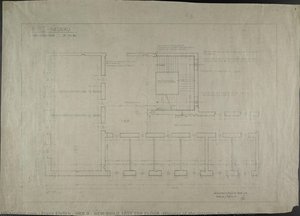
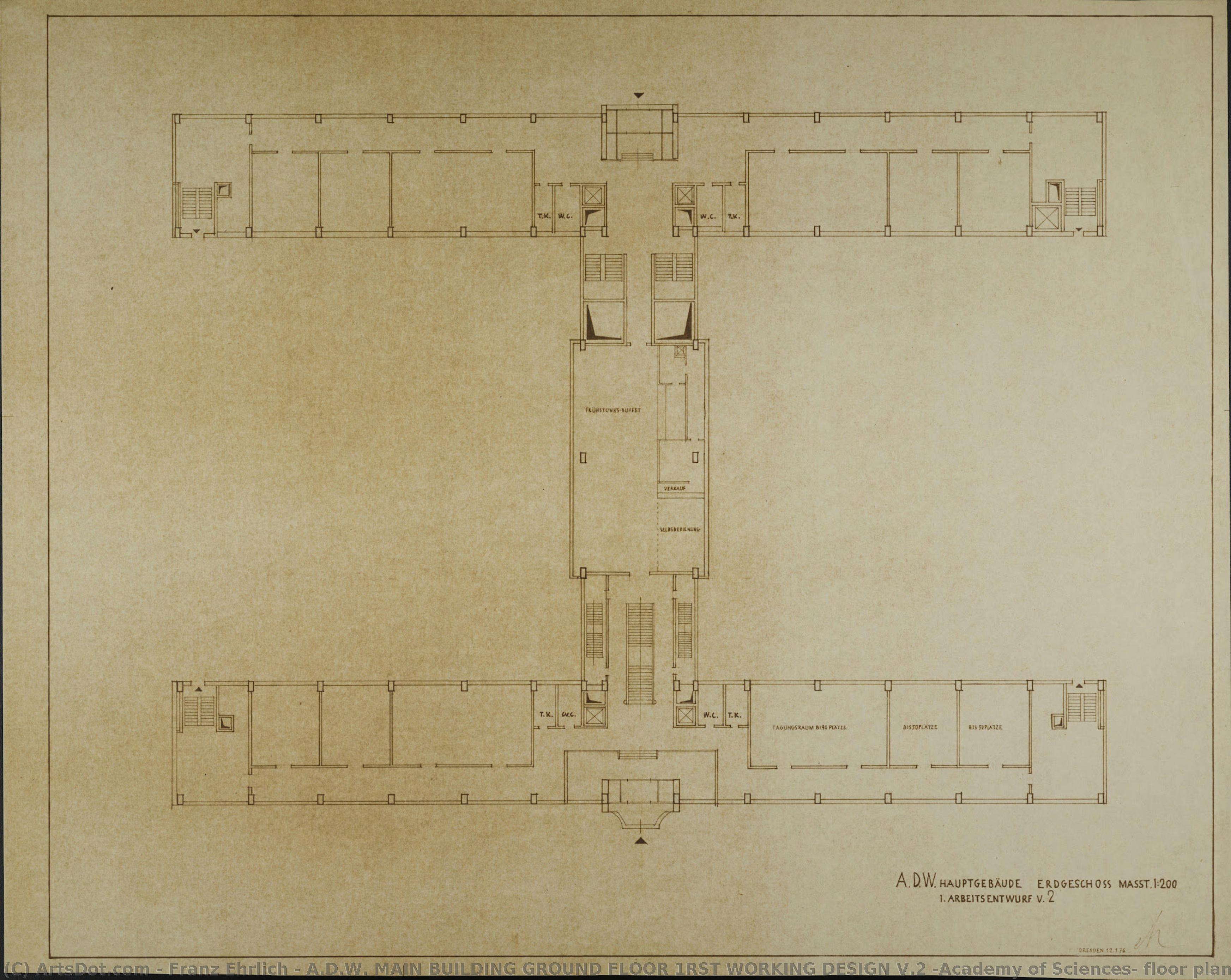
A.D.W. MAIN BUILDING GROUND FLOOR 1RST WORKING DESIGN V.2 (Academy of Sciences, floor plan)
 Drawing
- WallArt
- Bauhaus
 1976
1976 52.0 x 65.0 cm
 Bauhaus Dessau Foundation
 Ver más
Reproducción al óleo hecha a mano
Óleo sobre lienzo pintado a mano en el tamaño y marco de su elección, realizado por encargo por nuestros artistas. ( Comprar impresión Comprar imagen)




P118B $10

P118H $10

P118W $10

P438Z $10

P508JH $12

P508YH $12

P805H $10

P805Z $10

P919BZ $10

P919G $10

P919XJ $10

P959ZH $10

P968JZ $12

W106C $8

W218G $10

W218JH $8

W218Y $10

W307PJ $10

W316G $10

W316PJ $8

W316Y $10

W398PJ $8

W4111J $10

W500HY $15

W500JH $15

W692G $12

W849H $8

W940BG $15

W953PJ $8




Elija entre nuestros tamaños predefinidos que respetan las proporciones originales de la obra.

Puede ingresar sus propias dimensiones para adaptarse a un marco o espacio específico. Si el tamaño seleccionado no coincide con las proporciones de la imagen original, recortaremos la obra o extenderemos la pintura con elementos adicionales pintados a mano. Se le enviará una maqueta digital para su aprobación antes de comenzar la producción.
Tenga en cuenta que la vista previa en pantalla no refleja el recorte o la extensión reales. Solo la maqueta mostrará con precisión la composición final.
Si bien existen tamaños personalizados, recomendamos seleccionar una dimensión de la lista predefinida para preservar las proporciones originales.
Tras realizar el pedido, el equipo de ArtsDot.com enviará un correo electrónico al cliente para solicitar instrucciones y proporcionarle una vista previa del boceto.
Envío a todo el mundo () en 3-4 semanas en lugar de las 5 semanas estándar. (31 agosto). Sin comprometer la calidad.

Envío exprés gratuito a todo el mundo

Lienzo de lino de alta calidad

Seguro de envío total

Garantía de reembolso de impuestos aduaneros

Garantía de fidelidad cromática exacta

Política de devolución de 60 días (solo por defectos)

Garantía de devolución del 100% del dinero

Descuento por cantidad
 La opción de vidrio solo está disponible en tamaños inferiores a 110 cm.

A.D.W. MAIN BUILDING GROUND FLOOR 1RST WORKING DESIGN V.2 (Academy of Sciences, floor plan)
Técnica de reproducción
Dimensiones de la reproducción
-


Precio total final
$ 263
The Blueprint of Intellect: Exploring an Architectural Vision
To gaze upon this drawing is not merely to observe lines on paper; it is to step into the very sinews of thought and collaboration. This depiction, titled A.D.W. Main Building Ground Floor 1Rst Working Design V.2, offers a meticulous glimpse into an academic heart—the Academy of Sciences. It functions as more than just a floor plan; it is a captured moment of intellectual potential, a diagram of human endeavor rendered in precise black and white graphite or ink. The intricate network of hallways, defined rooms, and doorways speaks to a highly organized ecosystem designed to foster knowledge exchange. One can almost hear the hushed tones of debate echoing off these imagined walls.
A Glimpse into Mid-Century Design Philosophy
Created in 1976, this work carries the weight of post-war architectural ambition, filtered through the lens of a master draftsman like Franz Ehrlich. While the drawing itself is a technical document, its artistic resonance lies in how it treats space. The inclusion of figures scattered throughout the layout transforms the sterile blueprint into a narrative scene. These small human elements suggest life animating the structure—students poring over texts, scholars meeting for clandestine discussions, and the daily rhythm of intellectual pursuit taking place within these carefully delineated boundaries. It speaks to an era where institutional design was paramount, yet Ehrlich imbues it with a sense of lived-in humanity.
Technique and Visual Texture
The technique employed is characteristic of detailed architectural drafting—a mastery of line weight, perspective suggestion, and negative space. The contrast between the dense black lines defining walls and the vast white expanses representing open areas gives the piece a remarkable graphic energy. For collectors or designers considering a reproduction for an interior setting, this high-contrast quality makes it incredibly versatile. It functions beautifully as a sophisticated piece of wall art that adds intellectual depth without overwhelming a space. The precision required to render such complexity suggests countless hours of careful drafting, making every line feel deliberate and significant.
Symbolism of Structure and Community
Symbolically, this floor plan represents the structure underpinning civilization itself—the architecture of learning. The interconnectedness of the rooms symbolizes the necessary interplay between different disciplines; no single field exists in isolation. It is a visual ode to community built around shared pursuit. Owning such a reproduction allows one to bring that sense of ordered, yet vibrant, intellectual community into a private dwelling or professional space. It serves as a constant, quiet reminder of the power inherent in gathering minds.
Obras relacionadas

Biografía del artista
Early Life and Education
Franz Ehrlich, a name synonymous with both architectural innovation and poignant historical experience, was born in 1907 in Reuth, Germany – a small town nestled within the landscape of Bavaria. From his earliest years, a deep-seated passion for the arts ignited within him, a spark that propelled him towards formal training. He wasn’t simply drawn to aesthetics; there seemed to be an innate understanding of form and structure, a desire to translate visual concepts into tangible realities. This inclination led him to enroll at the prestigious Bauhaus in Dessau, a crucible of modern art and design, from 1927 to 1930. The Bauhaus wasn’t merely a school; it was a revolutionary movement, a laboratory for experimentation where traditional artistic boundaries were relentlessly challenged. Here, under the tutelage of masters like Walter Gropius, László Moholy-Nagy, Paul Klee, and Joost Schmidt, Ehrlich honed his skills in architecture, graphic design, and sculpture, absorbing the principles of functionalism, geometric abstraction, and a profound belief in art’s ability to serve humanity. The Bauhaus experience fundamentally shaped his artistic perspective, instilling within him a commitment to both beauty and social responsibility – values that would profoundly influence his subsequent work.Artistic Career and Communist Affiliation
Ehrlich's artistic journey was inextricably linked to the turbulent political climate of Weimar Germany. His affiliation with the communist party proved to be a defining moment, one that dramatically altered the course of his life and career. In 1935, he faced arrest and imprisonment by the rising Nazi regime, an event that forced him into hiding and ultimately led to a period of profound hardship and displacement. Despite these immense challenges, Ehrlich refused to abandon his artistic pursuits. He continued to create, driven by a deep sense of conviction and a desire to express his beliefs through his art. This resilience in the face of adversity is perhaps one of the most remarkable aspects of his biography. His work during this period reflects a heightened awareness of social injustice and political oppression – themes that would continue to resonate throughout his career. The experience of persecution instilled within him a profound empathy for those marginalized by society, informing his design choices and artistic vision.Notable Works
Ehrlich’s oeuvre is characterized by a remarkable blend of architectural innovation, graphic design expertise, and sculptural experimentation. Several projects stand out as particularly significant contributions to the world of art and design. “800 YRS. FRAMEWORK WALL 3” (Leipzig Trade Fair), for example, showcases his ability to integrate form and function in a striking display rack, demonstrating a mastery of spatial relationships and material manipulation. His execution plan for Professor Dr. Baumann’s house exemplifies his meticulous attention to detail and his understanding of architectural principles. Perhaps most intriguing is “1933” – a photo-sculptural advertising project that brilliantly combined photography with sculpture, creating a unique visual language that captured the spirit of the era. These projects, along with others such as the design for the entrance gate inscription at Auschwitz (“Jedem das Seine”), reveal a complex and deeply thoughtful artist grappling with profound social and political issues.Museums and Collections
Ehrlich’s artistic legacy is preserved in several key institutions around the world. The ArtsDot.com website offers an extensive collection of his works, providing a valuable resource for researchers and art enthusiasts alike. Furthermore, the Bauhaus Dessau Foundation (Dessau-Roßlau, Germany) serves as a vital repository of his architectural drawings, models, and other archival materials, offering invaluable insights into his creative process. The foundation’s commitment to preserving and interpreting the Bauhaus legacy ensures that Ehrlich's contributions to modern design continue to be recognized and celebrated. His work is also featured in various exhibitions and collections internationally, solidifying his place as a significant figure in 20th-century art and architecture.Legacy and Impact
Franz Ehrlich’s life story is more than just the chronicle of an artist; it's a poignant reflection of Germany’s tumultuous history during the first half of the 20th century. His experiences – from his formative years at the Bauhaus to his imprisonment under the Nazi regime and his subsequent work in East Germany – offer a powerful lens through which to examine the intersection of art, politics, and social justice. He wasn't simply an architect or designer; he was a witness to history, a participant in resistance movements, and a creator whose work bore testament to both the beauty and the brutality of his time. His legacy endures not only through his architectural designs and graphic works but also as a symbol of resilience, creativity, and unwavering commitment to human dignity.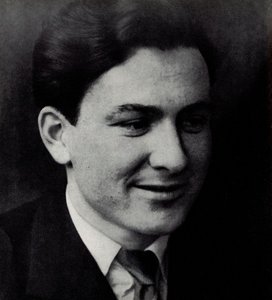
Franz Ehrlich
1907 - 1984 , Alemania
Datos clave
- Artistic Movement Or Style: Bauhaus, Expresionismo
- Artists Or Movements Influenced By This Artist:
- El Bauhaus
- La Liga Comunista Joven
- Artists Who Influenced This Artist:
- Walter Gropius
- László Moholy-Nagy
- Klee
- Joost Schmidt
- Date Of Birth: 1907
- Full Name: Franz Ehrlich
- Nationality: Germano
- Notable Artworks:
- 800 YRS. FRAMEWORK WALL 3
- Untitled (HKB I o II)
- Painting con Violín
- Place Of Birth: Reuth, Alemania
Artículos relacionados

Giclée Prints: Archival Quality & Aesthetic Nuances for the Discerning Collector
Explore the world of giclée prints with ArtsDot. Learn about archival quality, aesthetic nuances & investment potential. Expert guidance for discerning art collectors seeking museum-quality reproductions and lasting value.

Las 10 Pinturas Más Famosas Dominadas por el Negro | Arte y Decoración
Descubre las 10 pinturas más impactantes dominadas por el negro. Explora obras maestras de Rembrandt, Goya y Rothko, su historia y significado. Encuentra reproducciones de arte exclusivas para transformar tu hogar en .

The Enduring Legacy of Fine Art Prints: Technique, History & Aesthetic Impact
Explore the rich history & techniques of fine art prints. Discover investment potential, assess authenticity, and learn how to preserve your collection with expert guidance. Trusted insights for discerning collectors.

Echoes of Time: Exploring the Enduring Appeal & Historical Context of Vintage Art Prints
Explore the captivating world of vintage art prints! Discover their history, collecting tips & enduring appeal. Expert insights on chromolithography and building a legacy collection with ArtsDot.

Los 10 Maestros del Realismo Académico: Obras que Marcaron la Historia del Arte
Descubre los 10 lienzos más emblemáticos del Realismo Académico. Explora la historia, técnica y belleza de obras maestras de Bouguereau, Gérôme y Cabanel. Encuentra reproducciones de arte clásico en ArtsDot.com.