 Ver en contexto
 Enviar
 Compartir
 Detalles

 Descargar
 Similares
 Radiografía
 Presentación de diapositivas
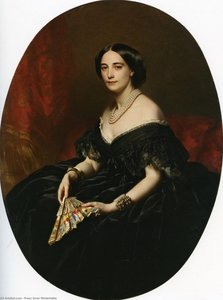
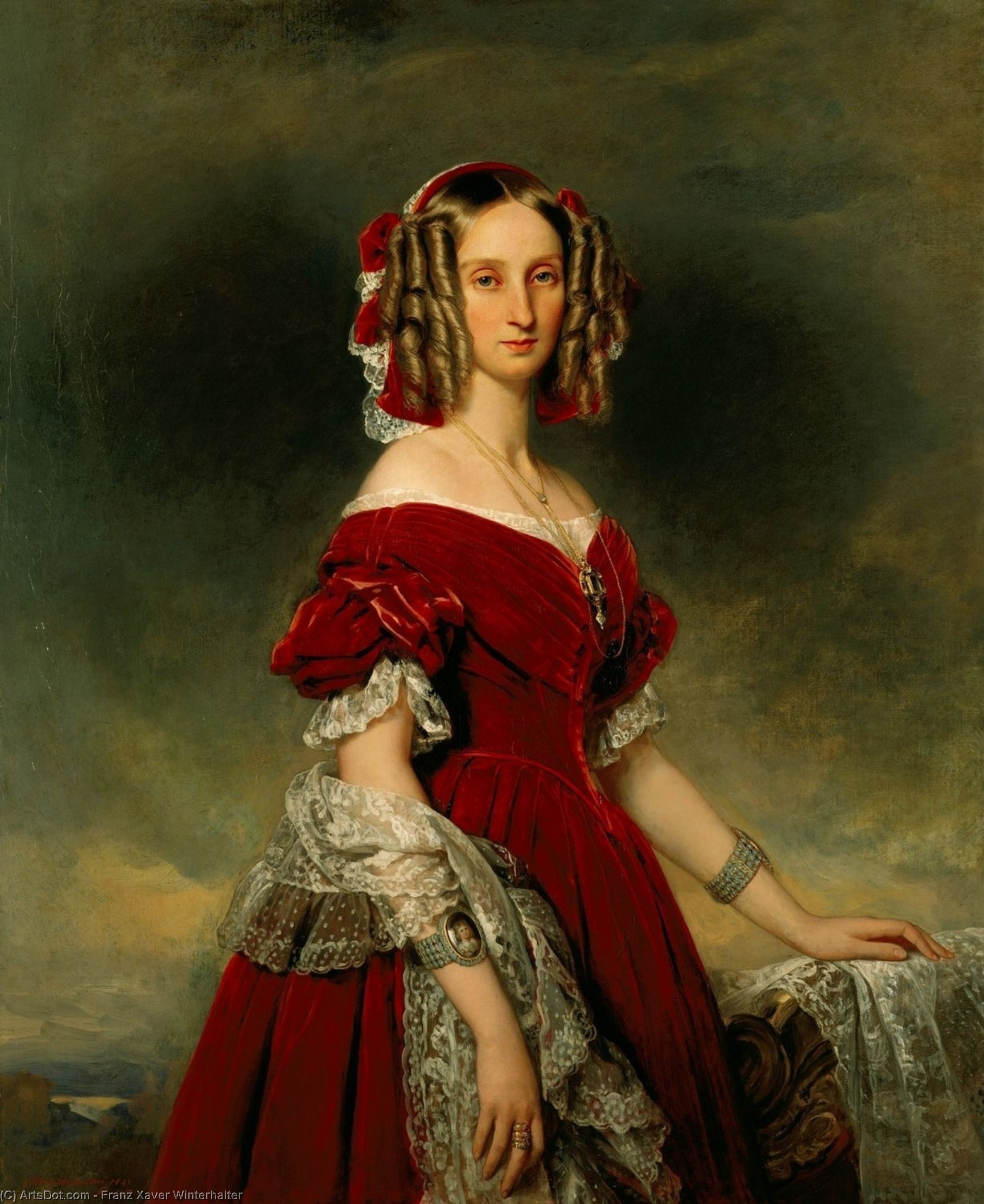
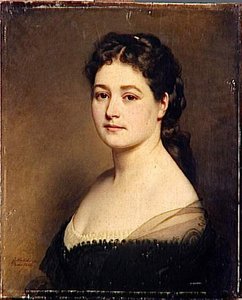
Portrait of Louises von Orléans


 Ver más
Reproducción al óleo hecha a mano
Óleo sobre lienzo pintado a mano en el tamaño y marco de su elección, realizado por encargo por nuestros artistas. ( Comprar impresión Comprar imagen)




P118B $10

P118H $10

P118W $10

P438Z $10

P508JH $12

P508YH $12

P805H $10

P805Z $10

P919BZ $10

P919G $10

P919XJ $10

P959ZH $10

P968JZ $12

W106C $8

W218G $10

W218JH $8

W218Y $10

W307PJ $10

W316G $10

W316PJ $8

W316Y $10

W398PJ $8

W4111J $10

W500HY $15

W500JH $15

W692G $12

W849H $8

W940BG $15

W953PJ $8




Elija entre nuestros tamaños predefinidos que respetan las proporciones originales de la obra.

Puede ingresar sus propias dimensiones para adaptarse a un marco o espacio específico. Si el tamaño seleccionado no coincide con las proporciones de la imagen original, recortaremos la obra o extenderemos la pintura con elementos adicionales pintados a mano. Se le enviará una maqueta digital para su aprobación antes de comenzar la producción.
Tenga en cuenta que la vista previa en pantalla no refleja el recorte o la extensión reales. Solo la maqueta mostrará con precisión la composición final.
Si bien existen tamaños personalizados, recomendamos seleccionar una dimensión de la lista predefinida para preservar las proporciones originales.
Tras realizar el pedido, el equipo de ArtsDot.com enviará un correo electrónico al cliente para solicitar instrucciones y proporcionarle una vista previa del boceto.
Envío a todo el mundo () en 3-4 semanas en lugar de las 5 semanas estándar. (31 agosto). Sin comprometer la calidad.

Envío exprés gratuito a todo el mundo

Lienzo de lino de alta calidad

Seguro de envío total

Garantía de reembolso de impuestos aduaneros

Garantía de fidelidad cromática exacta

Política de devolución de 60 días (solo por defectos)

Garantía de devolución del 100% del dinero

Descuento por cantidad
 La opción de vidrio solo está disponible en tamaños inferiores a 110 cm.

Portrait of Louises von Orléans
Técnica de reproducción
Dimensiones de la reproducción
-


Precio total final
$ 263
The Aura of Aristocracy: Capturing an Era with Winterhalter
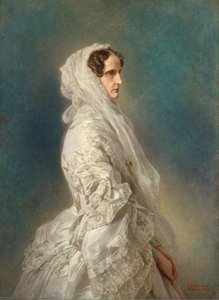
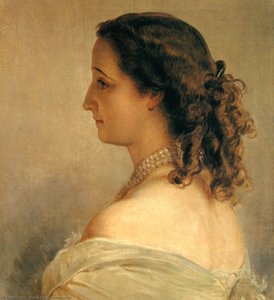
To gaze upon the Portrait of Louises von Orléans is to step directly into the gilded salons of mid-nineteenth-century European aristocracy. Painted in 1841, this work by Franz Xaver Winterhalter transcends a mere likeness; it is a meticulously crafted tableau vivant, an enduring monument to status, beauty, and the rigid elegance of its time. The subject, Louises von Orléans, is presented with a regal bearing that speaks volumes about her station in life. Winterhalter, renowned for his ability to capture royalty and nobility, did not just paint a woman; he immortalized a social archetype—the poised, richly adorned lady of the Romantic era transitioning into Victorian formality.
Mastery in Neo-Classical Grandeur
Technically, the painting exemplifies the polished refinement characteristic of Neo-Classicism filtered through the lens of high portraiture. Winterhalter’s brushwork, while achieving an almost photographic smoothness in rendering skin and fabric, possesses an underlying luminosity that suggests painstaking artistry. Observe the cascade of her long hair, rendered with delicate precision, contrasting beautifully against the deep saturation of her red gown. The choice of color is inherently dramatic; the vibrant crimson speaks of passion and wealth, a deliberate focal point against the softer tones of her complexion and surroundings. It is this masterful handling of texture—the sheen on the silk, the softness of the skin, the weight of the jewelry—that elevates the piece from mere portraiture to high art.
A Glimpse into 19th-Century Society
The historical context surrounding this painting is crucial to understanding its emotional resonance. The 1840s were a period of immense social flux, where inherited titles and visible displays of wealth remained paramount. Winterhalter excelled at documenting this intersection of personal glamour and societal expectation. The portrait functions as both a commemoration of Louises von Orléans and a visual document of the era’s ideals for feminine beauty—a blend of classical grace with burgeoning material opulence. The necklace, catching the light just so, is not merely an accessory; it is a symbol of lineage and enduring connection.
Bringing Salon Splendor Home
For the discerning collector or interior designer, this reproduction offers an unparalleled opportunity to infuse a space with historical gravitas and undeniable romance. Imagine this portrait gracing a drawing-room or a grand hall—it immediately suggests stories whispered across generations of privilege. The emotional impact is one of stately admiration; it invites contemplation on beauty's fleeting nature juxtaposed against the permanence of artistic skill. Owning a reproduction allows one to curate an atmosphere steeped in European grandeur, making it a breathtaking centerpiece that speaks volumes about sophisticated taste.
Obras relacionadas
Biografía del artista
Primeros años y formación
Franz Xaver Winterhalter nació el 20 de abril de 1805 en la pequeña aldea de Menzenschwand, Alemania. Era el sexto hijo de Fidel Winterhalter, agricultor y productor de resina, y su esposa Eva Meyer. Su infancia estuvo marcada por una estrecha relación con su familia, especialmente con su hermano Hermann, quien también se convirtió en pintor. Franz Xaver asistió a la escuela en un monasterio benedictino en St. Blasien antes de trasladarse a Freiburg im Breisgau para estudiar dibujo y grabado bajo la tutela de Karl Ludwig Schüler. En 1823, con el patrocinio del Barón von Eichtal, se mudó a Múnich para continuar su formación artística.Ascenso a la fama
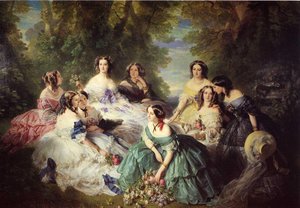
El gran avance de Winterhalter llegó en 1828 cuando se convirtió en maestro de dibujo de Sophie Margravina de Baden en Karlsruhe. Esta oportunidad le llevó a ser nombrado pintor de la corte del Gran Duque, donde pintó retratos del Gran Duque Leopoldo de Baden y su esposa. Destacan entre sus obras más notables: La Emperatriz Eugenia rodeada de sus damas de compañía (1855) y los retratos de la Emperatriz Elisabeth de Austria (1865). Su éxito en Francia le valió más de 30 encargos del rey Luis Felipe, consolidando su reputación como especialista en retratos dinásticos y aristocráticos. También pintó al menos 120 obras para la Reina Victoria, que permanecen en la colección real, expuestas en Buckingham Palace y otras residencias reales.Estilo artístico y legado
La obra de Winterhalter se caracteriza por una combinación de semejanza con halago, animando la pompa oficial con la moda moderna. A pesar de su éxito, no fue tomado en serio en los círculos artísticos, pero su reputación como retratista perduró. Obras notables:- "Il dolce farniente" (1836) e "Il decameron" (1837) mostraron sus composiciones académicas al estilo de Rafael.
- Su retrato del Príncipe de Wagram con su joven hija (1838) fue elogiado en el Salón.
Museos asociados
- El Museo Kunstsalon Franke Schenk (Alemania)
- El Museo Colección Hugo Fischer (Bühl, Alemania)
Explora las obras de Winterhalter
Puede ver las obras de Winterhalter en:- https://ArtsDot.com/@/franz-xaver-winterhalter
- /es/art/show/art-d3bsd9-es/ (El Museo Colección Hugo Fischer)
Conclusión
El legado de Franz Xaver Winterhalter como maestro del retrato real sigue siendo incomparable. Su obra, aunque no siempre tomada en serio en los círculos artísticos, continúa fascinando con su mezcla única de realismo y halago. Explore sus obras en ArtsDot.com para profundizar en el mundo de este pintor y litógrafo alemán.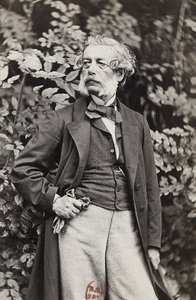
Franz Xaver Winterhalter
1805 - 1873 , Alemania
Datos clave
- Estilo Artístico: Retrato aristocrático
- Fecha De Muerte: 1873
- Fecha De Nacimiento: 20 de abril de 1805
- Lugar De Nacimiento: Menzschenswand, Alemania
- Nacionalidad: Alemán
- Nombre Completo: Franz Xaver Winterhalter
- Obras Notables:
- Il dolce farniente (1836)
- Il decameron (1837)
- Príncipe de Wagram y su hija (1838)
- Emperatriz Eugenia (1855)
Artículos relacionados
Los 10 Maestros del Neoclasicismo: Obras que Definieron una Era |
Descubre los 10 imprescindibles del Neoclasicismo con . Obras de David, Ingres y Canova que marcaron una era. Historia, técnica y significado de cada pieza. Encuentra reproducciones de arte de museo en

Crimson Threads of Narrative: Exploring Symbolism & Representation in Artworks Featuring the Red Dress
Explore the rich symbolism of the red dress in art history! From ancient power displays to iconic portraits like Cézanne’s 'Madame Cezanne', discover the cultural and artistic significance behind this captivating color. Expert analysis & insights.

Giclée Prints: Archival Quality & Aesthetic Nuances for the Discerning Collector
Explore the world of giclée prints with ArtsDot. Learn about archival quality, aesthetic nuances & investment potential. Expert guidance for discerning art collectors seeking museum-quality reproductions and lasting value.

Echoes of Time: Exploring the Enduring Appeal & Historical Context of Vintage Art Prints
Explore the captivating world of vintage art prints! Discover their history, collecting tips & enduring appeal. Expert insights on chromolithography and building a legacy collection with ArtsDot.

The Enduring Legacy of Fine Art Prints: Technique, History & Aesthetic Impact
Explore the rich history & techniques of fine art prints. Discover investment potential, assess authenticity, and learn how to preserve your collection with expert guidance. Trusted insights for discerning collectors.