

 Ver en contexto
 Enviar
 Compartir
 Detalles

 Descargar
 Similares
 Radiografía
 Presentación de diapositivas
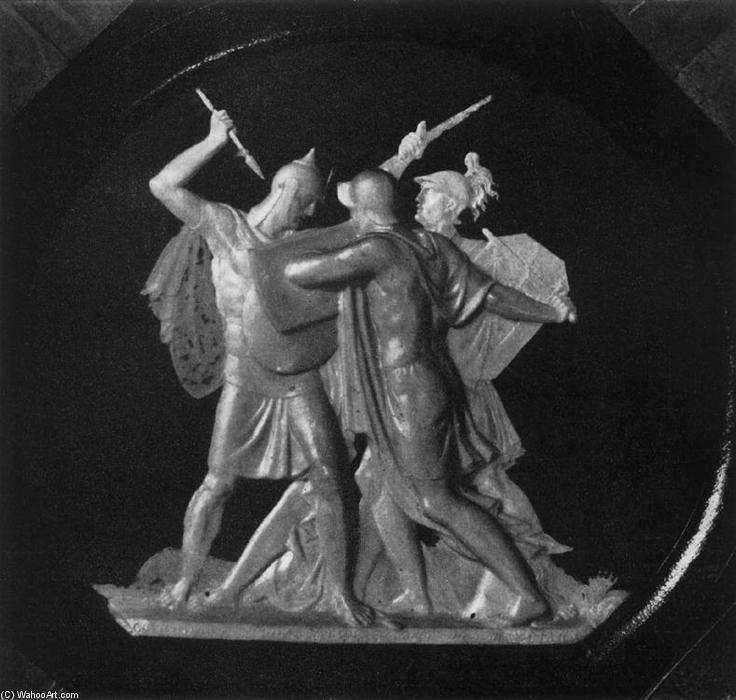
The Battle at Borodino


 Ver más
Adquiera una imagen digital de alta resolución y optimizada, muy superior a la vista previa en línea.
Cada archivo es preparado meticulosamente por nuestros especialistas internos mediante el uso de herramientas avanzadas y un experto retoque manual. Nos aseguramos de que cada imagen posea una claridad excepcional, una precisión cromática impecable y un detalle minucioso.
El archivo final se entrega por correo electrónico en un plazo de 72 horas, optimizado para su uso inmediato en entornos profesionales, editoriales y de impresión. Esta es la misma calidad en la que confían los estudios de diseño, las editoriales y las galerías de primer nivel.
Imagen Digital
Descarga un archivo de alta resolución para exhibición personal, impresión y proyectos creativos. ( Comprar impresión Comprar pintura hecha a mano)
Incluido en cada pedido de imágenes digitales
Entrega digital experta, garantizada.
Al elegir ArtsDot.com, no solo está adquiriendo una imagen; está recibiendo una obra de arte digital mejorada profesionalmente, elaborada con precisión y respaldada por una garantía de satisfacción. Esto es todo lo que incluye su pedido, automáticamente:

Entrega rápida por email
Recibirá su archivo de imagen digital en alta resolución por correo electrónico en un plazo de 72 horas tras realizar su pedido, listo para su uso inmediato.

Archivo digital optimizado por IA
Su obra de arte se optimiza profesionalmente mediante herramientas avanzadas de IA y edición manual, garantizando el máximo detalle, claridad y precisión cromática.

Reenvío gratuito de por vida
¿Has borrado o perdido tu archivo por error? No te preocupes: te lo volveremos a enviar en cualquier momento, sin coste adicional.

Sin gastos de importación, siempre
Disfrute de su obra de arte al instante sin aduanas, aranceles ni gastos de envío; las descargas digitales siempre están libres de impuestos.

Garantía de fidelidad de color
Garantizamos que su imagen digital refleje los colores originales con la mayor fidelidad posible, mediante el uso de herramientas profesionales y gestión del color.

Garantía de satisfacción de 60 días
Si no está satisfecho con su imagen digital, la revisaremos o le reembolsaremos el 100% en un plazo de 60 días, sin preguntas.

100% Garantía de devolución de dinero
¿No está satisfecho? Obtenga un reembolso completo dentro de los 60 días posteriores a la recepción de su archivo digital, sin necesidad de explicaciones.

Descuentos por pedidos grandes
Compra 3 imágenes, ahorra 10% - Compra 5, ahorra 15% - Compra 10+, ahorra 20%. Ideal para proyectos creativos, galerías y agencias.
A Frozen Moment of Fury: Fyodor Tolstoy’s “The Battle at Borodino”
Fyodor Petrovich Tolstoy's 1817 wax relief, "The Battle at Borodino," isn’t merely a depiction of a pivotal moment in the Napoleonic Wars; it’s a carefully constructed tableau of controlled chaos, a testament to the artist’s unwavering commitment to Neoclassical principles. This work, now meticulously reproduced for art lovers worldwide, transports us directly into the heart of one of history's most brutal clashes – the Battle of Borodino, fought on the outskirts of Moscow in 1812. Tolstoy, a member of the esteemed Tolstoy family and a key figure in establishing medal-making traditions within Russia, eschewed the dramatic flourishes of Romanticism, instead opting for a disciplined, almost austere approach that elevates the scene to a level of timeless grandeur.

A Study in Geometric Power: Technique and Composition
Tolstoy’s mastery lies not just in the subject matter, but in his meticulous execution. The relief is rendered primarily in cool tones – grays, browns, and ochres—creating a sense of somber intensity. Lines are paramount; they define the musculature of the warriors, the rigid forms of their armor, and the sharp edges of their weapons. The composition adheres rigidly to classical principles: a dynamic triangular arrangement focuses attention on the central clash, while flanking figures contribute to the overall balance. The use of shading is remarkably restrained, suggesting form and volume through subtle gradations rather than dramatic contrasts. This controlled approach lends an air of dignified severity to the scene – it’s not a chaotic brawl, but a carefully choreographed dance of death.
The choice of wax relief as the medium is significant. Wax allowed for incredible detail and precision, mirroring Tolstoy's commitment to classical ideals. The process itself demanded patience and skill, requiring meticulous layering and polishing to achieve the desired texture and luminosity. Furthermore, wax’s inherent fragility adds a layer of poignant beauty to the work; it speaks to the fleeting nature of life and the enduring power of memory.
Echoes of History: Context and Symbolism
The Battle of Borodino holds immense historical weight – a brutal, bloody encounter that shaped the course of Napoleon’s invasion of Russia. Tolstoy's depiction captures not just the physical violence of the battle, but also its psychological impact. The faces of the warriors are etched with grim determination and exhaustion, conveying the immense cost of conflict. The inclusion of figures like cuirassiers charging into the fray underscores the bravery and sacrifice inherent in warfare. The scene is a stark reminder of the human toll exacted by ambition and conquest.
Beyond its historical significance, “The Battle at Borodino” also carries symbolic weight. The classical style—with its emphasis on idealized forms and heroic narratives—reflects Tolstoy’s belief in the enduring values of order, discipline, and civic virtue. It's a work that speaks to the timeless struggle between good and evil, courage and fear, life and death.
Bringing History Home: Reproduction and Artistic Legacy
Today, ArtsDot offers high-quality reproductions of Tolstoy’s “The Battle at Borodino,” allowing art enthusiasts worldwide to experience this remarkable work firsthand. Each reproduction is meticulously crafted using state-of-the-art printing techniques to faithfully capture the artist's nuanced palette and intricate details. Whether adorning a grand salon or a cozy study, this iconic image serves as a powerful reminder of history’s dramatic moments and the enduring legacy of one of Russia’s most distinguished artists.
Obras relacionadas
Biografía del artista
Fyodor Petrovich Tolstoy: A Neoclassical Voice Amidst Russian Reform
Fyodor Petrovich Tolstoy (1783-1873) stands as a singular figure in 19th-century Russian art—a sculptor whose meticulous craftsmanship and unwavering adherence to classical ideals offered a counterpoint to the burgeoning Romantic fervor sweeping across Europe. Born into the aristocratic Tolstoy family, his lineage traced back to influential landowners who wielded considerable sway within the Imperial Court, Fyodor’s upbringing instilled in him a disciplined intellect and an appreciation for artistic excellence from a remarkably young age. His father, Pyotr Andreyevich Tolstoy, served as Vice-Chancellor of Saint Petersburg University and held a prominent position in the Ministry of War Supplies, shaping Fyodor's worldview with discussions on governance and societal responsibility. Early Artistic Training and Influences From his childhood sketches—now housed within the Tretyakov Gallery—evidence suggests that Fyodor’s artistic inclinations were nurtured by his mother, Elizabeth Barbot-de-Marni, who recognized his talent and encouraged him to pursue painting diligently. Remarkably, at just four years old, he began drawing under her tutelage, demonstrating an innate aptitude for visual representation. Further bolstering his artistic development was the patronage of his cousin, Pyotr Aleksandrovich Tolstoy—a wealthy benefactor who provided Fyodor with access to exceptional educational opportunities. Notably, he attended Jesuit College in Polotsk, immersing himself in both art and science, cultivating a well-rounded intellectual curiosity that would inform his subsequent endeavors. Academic Pursuits and Artistic Evolution The ascension of Emperor Paul I marked a pivotal moment for Fyodor’s family, triggering a decline in their fortunes. However, Paul I's keen interest in the arts propelled Pyotr Tolstoy to Saint Petersburg, where Fyodor continued his education under the guidance of luminaries such as Nicolas Léonard Sébastien Félix Auguste Clément Gébert Bertouville and Alexandre Alexandrovich Andreyev—scientists who instilled in him a profound understanding of mathematics, astronomy, political economy, zoology, archaeology, and numismatics. Beyond formal instruction, Fyodor’s artistic sensibilities were profoundly shaped by the influence of Sergey Konstantinovich Zaryanko, whose teachings emphasized observation and anatomical accuracy. Perhaps most significantly, he studied under Orest Kiprensky—the reigning idol of Russian portraiture—whose stylistic approach championed a restrained palette and meticulous attention to detail. Sculptorial Achievements and Artistic Style Fyodor’s artistic journey culminated in his appointment as an adjutant to Admiral Pavel Chichagov, forcing him into early retirement. Despite this setback, he persevered in his craft, securing employment at the Hermitage Museum where he honed his skills and experimented with diverse mediums. His sculptural output—primarily wax reliefs, medallions, and silhouettes—is characterized by a distinctive neoclassical aesthetic—marked by cool detachment, spare formalism, and economical execution. Tolstoy’s works embody a deliberate rejection of Romantic sentimentality, prioritizing clarity of form and precision of technique. He meticulously studied the human anatomy, striving to capture idealized beauty with unwavering accuracy. His artistic vision found expression in monumental projects commemorating significant historical events, notably “The Battle at Borodino” (1817) and “The Uprising in 1812,” where he skillfully employed shading and dramatic composition to convey the intensity of conflict and heroism. Legacy and Historical Significance Fyodor Tolstoy’s contribution to Russian art extends beyond his individual masterpieces; he played a crucial role in establishing medal working in Russia, fostering a tradition that would endure for decades after his death. His unwavering commitment to classical principles served as an anchor amidst the turbulent currents of artistic innovation—a testament to the enduring power of disciplined craftsmanship and intellectual rigor. Tolstoy’s sculptures continue to resonate with viewers today, offering insights into the cultural landscape of 19th-century Russia and demonstrating the profound impact that a single artist can have on shaping artistic discourse and preserving historical memory.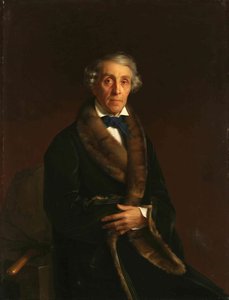
fyodor petrovich tolstoy
1783 - 1873 , Rusia
Breves datos
- Artistic Movement Or Style: Neoclasicismo
- Artists Who Influenced This Artist: ['Orest Kiprensky']
- Date Of Birth: 21 febrero 1783
- Date Of Death: 25 abril 1873
- Full Name: Fyodor Petrovich Tolstoy
- Nationality: Ruso
- Notable Artworks:
- Batalla de Borodino
- Levadura en el bosque
- Place Of Birth: San Petersburgo, Rusia

