

 Ver en contexto
 Enviar
 Compartir
 Detalles

 Descargar
 Similares
 Radiografía
 Presentación de diapositivas
 Estadísticas
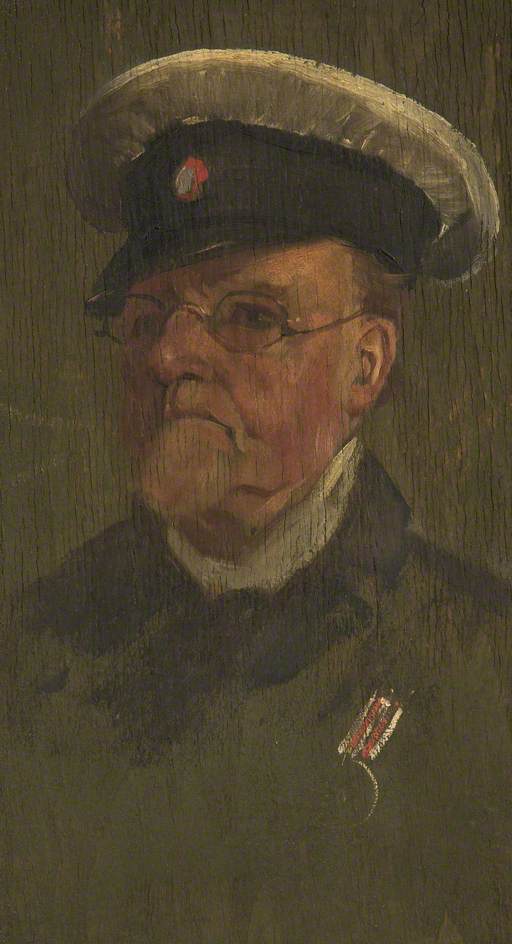
G. Leadbetter, 38th


 Ver más
Adquiera una imagen digital de alta resolución y optimizada, muy superior a la vista previa en línea.
Cada archivo es preparado meticulosamente por nuestros especialistas internos mediante el uso de herramientas avanzadas y un experto retoque manual. Nos aseguramos de que cada imagen posea una claridad excepcional, una precisión cromática impecable y un detalle minucioso.
El archivo final se entrega por correo electrónico en un plazo de 72 horas, optimizado para su uso inmediato en entornos profesionales, editoriales y de impresión. Esta es la misma calidad en la que confían los estudios de diseño, las editoriales y las galerías de primer nivel.
Imagen Digital
Descarga un archivo de alta resolución para exhibición personal, impresión y proyectos creativos. ( Cambiar a Impresión Comprar pintura hecha a mano)
Incluido en cada pedido de imágenes digitales
Entrega digital experta, garantizada.
Al elegir ArtsDot.com, no solo está adquiriendo una imagen; está recibiendo una obra de arte digital mejorada profesionalmente, elaborada con precisión y respaldada por una garantía de satisfacción. Esto es todo lo que incluye su pedido, automáticamente:

Entrega rápida por email
Recibirá su archivo de imagen digital en alta resolución por correo electrónico en un plazo de 72 horas tras realizar su pedido, listo para su uso inmediato.

Archivo digital optimizado por IA
Su obra de arte se optimiza profesionalmente mediante herramientas avanzadas de IA y edición manual, garantizando el máximo detalle, claridad y precisión cromática.

Reenvío gratuito de por vida
¿Has borrado o perdido tu archivo por error? No te preocupes: te lo volveremos a enviar en cualquier momento, sin coste adicional.

Sin gastos de importación, siempre
Disfrute de su obra de arte al instante sin aduanas, aranceles ni gastos de envío; las descargas digitales siempre están libres de impuestos.

Garantía de fidelidad de color
Garantizamos que su imagen digital refleje los colores originales con la mayor fidelidad posible, mediante el uso de herramientas profesionales y gestión del color.

Garantía de satisfacción de 100 días
Si no está satisfecho con su imagen digital, la revisaremos o le reembolsaremos el 100% en un plazo de 100 días, sin preguntas.

100% Garantía de devolución de dinero
¿No está satisfecho? Obtenga un reembolso completo dentro de los 100 días posteriores a la recepción de su archivo digital, sin preguntas.

Descuentos por pedidos grandes
Compra 3 imágenes, ahorra 10% - Compra 5, ahorra 15% - Compra 10+, ahorra 20%. Ideal para proyectos creativos, galerías y agencias.
A Sailor’s Gaze: Unveiling ‘G. Leadbetter, 38th’
George Edmund Butler's “G. Leadbetter, 38th,” painted circa 1920, is more than a simple portrait; it’s a poignant window into the realities of early 20th-century military life and the quiet dignity of a soldier caught in the currents of history. The painting depicts a man – identified as Gunner G. Leadbetter – rendered with remarkable detail against a subtly textured background, his gaze direct and unwavering. It’s a study in restrained emotion, capturing not just a likeness but an essence, a sense of quiet contemplation beneath the weight of experience.
Butler's artistic journey is itself fascinating. Born in Southampton, England, he emigrated to New Zealand as a boy, absorbing the landscapes and cultural influences that would later inform his work. His formal training in Europe – at the Antwerp Academy and the Académie Julian in Paris – provided him with technical mastery alongside exposure to diverse artistic movements. However, it was his service as an official war artist for the New Zealand Expeditionary Force during World War I that truly cemented his place in history. This commission demanded not just skillful brushwork but a profound understanding of the human condition under pressure, qualities vividly demonstrated in “G. Leadbetter, 38th.”
Technical Mastery and Impressionistic Touches
The painting’s strength lies partly in Butler's meticulous technique. He employs a controlled realism, evident in the careful rendering of the sailor’s uniform – the crisp lines of his jacket, the subtle folds of his trousers, the glint of metal on his buttons. Yet, he avoids slavish imitation, instead imbuing the portrait with an impressionistic quality. Notice how light and shadow play across Leadbetter's face, creating a sense of depth and volume. The muted palette – dominated by browns, greys, and blues – contributes to the painting’s somber mood, reflecting the hardships endured during wartime.
Butler’s use of oil paint is particularly noteworthy. He builds up layers of color with delicate brushstrokes, creating a rich surface texture that invites close examination. The background, rendered in broad washes, provides a sense of atmosphere without distracting from the central figure. The subtle variations in tone suggest a fleeting moment captured – perhaps a pause during a long watch or a quiet reflection on distant battles.
Symbolism and Context: A Soldier’s Story
“G. Leadbetter, 38th” is deeply rooted in its historical context. The portrait speaks to the experiences of New Zealand soldiers serving overseas, highlighting their resilience and unwavering commitment. The sailor's direct gaze suggests a quiet strength, a refusal to be defined solely by his military role. It’s a reminder that behind every uniform lies an individual with hopes, fears, and dreams.
The inclusion of the red pin on Leadbetter’s hat is also significant. While its precise meaning remains open to interpretation, it could symbolize loyalty, service, or perhaps even a personal connection to home. It adds a layer of intimacy to the portrait, suggesting that this is not merely an official depiction but a glimpse into the private life of a soldier.
A Timeless Portrait: Reproduction and Beyond
Reproductions of “G. Leadbetter, 38th” offer a remarkable opportunity to bring this evocative artwork into your home or office. The painting’s quiet dignity and emotional resonance make it an ideal addition to any collection, serving as a poignant reminder of the sacrifices made by those who served in World War I. Consider framing the reproduction in a classic style to complement its historical subject matter, or opt for a more contemporary setting to create a striking juxtaposition of eras.
When selecting a high-quality reproduction, pay attention to detail – the color accuracy, the texture, and the overall clarity. A faithful reproduction will capture the essence of Butler’s original work, allowing you to appreciate its beauty and significance for generations to come.
Obras relacionadas
Biografía del artista
George Edmund Butler: Una Vida en el Arte y la Guerra
- Nacido: Southampton, Reino Unido (15 de enero de 1872)
- Fallecido: Twickenham, Inglaterra (9 de agosto de 1936)
George Edmund Butler fue un pintor británico de paisajes y retratos que ganó reconocimiento por su habilidad artística y su papel único como artista oficial de guerra durante la Primera Guerra Mundial. Su viaje vital abarcó la emigración a Nueva Zelanda, una extensa formación artística europea, una carrera exitosa en Inglaterra y, finalmente, el servicio documentando las experiencias de los soldados neozelandeses en el Frente Occidental.
Primeros Años y Formación Artística
- Años en Nueva Zelanda: La familia de Butler emigró a Nueva Zelanda cuando tenía once años. Trabajó para su padre mientras estudiaba arte a tiempo parcial bajo la tutela de James Nairn en la Escuela de Diseño de Wellington.
- Comienzos Artísticos: En 1892, se unió al vanguardista Wellington Art Club y rápidamente estableció una reputación por pintar paisajes marinos. Un viaje a Sydney en 1897 le proporcionó mayor exposición a diversos estilos artísticos.
- Formación Europea: Entre 1898 y 1900, Butler realizó estudios de arte significativos en el extranjero. Se casó con Sarah Jane Popplestone en Inglaterra y estudió en la Escuela de Arte Lambeth, la Academia Julian en París (donde obtuvo honores) y la Academia de Amberes, obteniendo una medalla de oro y un laurel.
Desarrollo Profesional y Reconocimiento Real
- Regreso a Nueva Zelanda y Dunedin: Al regresar a Wellington, Butler exhibió su obra antes de establecerse en Dunedin entre 1901 y 1905. A pesar del elogio crítico, las dificultades financieras lo llevaron a complementar sus ingresos con la enseñanza y los encargos de retratos.
- Bristol y la Royal West of England Academy: En 1905, se mudó a Bristol, Inglaterra, donde enseñó arte en Clifton College. Su talento fue finalmente reconocido con su elección como miembro de la Royal West of England Academy en 1912. También expuso en instituciones prestigiosas como la Royal Academy of Arts y la Royal Scottish Academy.
Artista Oficial de Guerra y Documentación del Conflicto
- Nombramiento como Artista de Guerra de la NZEF: Debido a su reputación y sus conexiones con Nueva Zelanda, Butler fue nombrado artista oficial de guerra para la Fuerza Expedicionaria Neozelandesa (NZEF) en septiembre de 1918. Sirvió con el rango honorífico de capitán.
- Bocetos Bajo Fuego: Durante su tiempo con la NZEF, Butler documentó meticulosamente las operaciones militares a través de bocetos y pinturas, a menudo trabajando en condiciones desafiantes. Estos bocetos sirvieron como base para obras posteriores.
- Retratos y Paisajes Encargados: Tras el armisticio, fue comisionado en privado por Robert Heaton Rhodes y el General Sir Andrew Hamilton Russell para crear una serie de retratos de oficiales superiores y paisajes que representaban los sitios de batalla neozelandeses a lo largo del Frente Occidental. El gobierno de Nueva Zelanda compró posteriormente estas obras para su preservación en archivos nacionales.
Vida Posterior y Legado
- Vida Posguerra: Butler nunca regresó a Nueva Zelanda después de la guerra. Se casó nuevamente tras la muerte de su primera esposa y continuó pintando en Inglaterra.
- Significado Histórico: La obra de George Edmund Butler como artista oficial de guerra proporciona un valioso registro visual de las experiencias de los soldados neozelandeses durante la Primera Guerra Mundial. Sus pinturas y bocetos ofrecen información sobre los paisajes, las personalidades y los eventos de esa época, contribuyendo a nuestra comprensión de la participación de Nueva Zelanda en el conflicto.
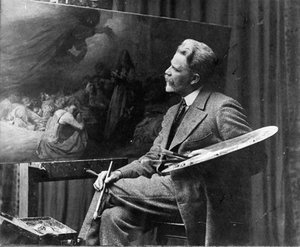
George Edmund Butler
1872 - 1936 , Reino Unido
Breves datos
- Fecha De Fallecimiento: 9 de agosto de 1936
- Fecha De Nacimiento: 15 de enero de 1872
- Lugar De Nacimiento: Southampton, Reino Unido
- Movimiento Artístico: Paisaje y retrato
- Nacionalidad: Británico
- Nombre Completo: George Edmund Butler
- Obras Notables: ['G. Sandford, 28th']