 Ver en contexto
 Enviar
 Compartir
 Detalles

 Descargar
 Similares
 Radiografía
 Presentación de diapositivas
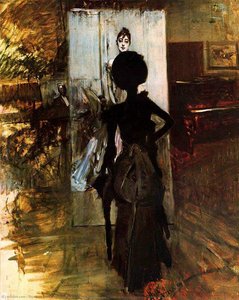
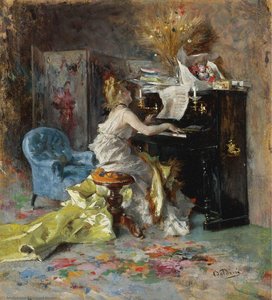
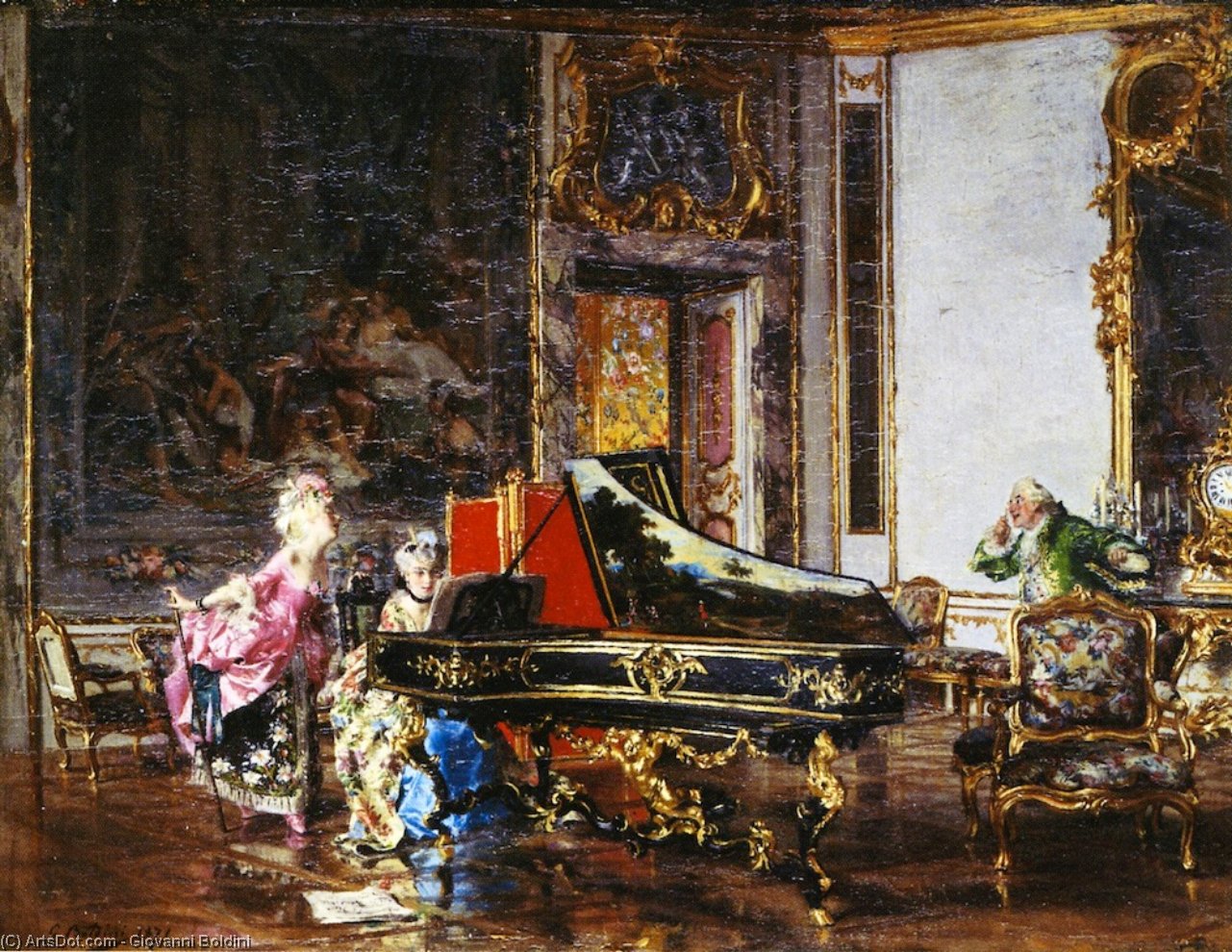
Two Women in Eighteenth-Century Costume at the Piano (also known as The Old Song)
 Oil On Canvas
- WallArt
- Impressionism
 1871
1871- 19th Century
 31.0 x 39.0 cm
 Ver más
Reproducción al óleo hecha a mano
Óleo sobre lienzo pintado a mano en el tamaño y marco de su elección, realizado por encargo por nuestros artistas. ( Comprar impresión Comprar imagen)




P118B $10

P118H $10

P118W $10

P438Z $10

P508JH $12

P508YH $12

P805H $10

P805Z $10

P919BZ $10

P919G $10

P919XJ $10

P959ZH $10

P968JZ $12

W106C $8

W218G $10

W218JH $8

W218Y $10

W307PJ $10

W316G $10

W316PJ $8

W316Y $10

W398PJ $8

W4111J $10

W500HY $15

W500JH $15

W692G $12

W849H $8

W940BG $15

W953PJ $8




Elija entre nuestros tamaños predefinidos que respetan las proporciones originales de la obra.

Puede ingresar sus propias dimensiones para adaptarse a un marco o espacio específico. Si el tamaño seleccionado no coincide con las proporciones de la imagen original, recortaremos la obra o extenderemos la pintura con elementos adicionales pintados a mano. Se le enviará una maqueta digital para su aprobación antes de comenzar la producción.
Tenga en cuenta que la vista previa en pantalla no refleja el recorte o la extensión reales. Solo la maqueta mostrará con precisión la composición final.
Si bien existen tamaños personalizados, recomendamos seleccionar una dimensión de la lista predefinida para preservar las proporciones originales.
Tras realizar el pedido, el equipo de ArtsDot.com enviará un correo electrónico al cliente para solicitar instrucciones y proporcionarle una vista previa del boceto.
Envío a todo el mundo () en 3-4 semanas en lugar de las 5 semanas estándar. (31 agosto). Sin comprometer la calidad.

Envío exprés gratuito a todo el mundo

Lienzo de lino de alta calidad

Seguro de envío total

Garantía de reembolso de impuestos aduaneros

Garantía de fidelidad cromática exacta

Política de devolución de 60 días (solo por defectos)

Garantía de devolución del 100% del dinero

Descuento por cantidad
 La opción de vidrio solo está disponible en tamaños inferiores a 110 cm.

Two Women in Eighteenth-Century Costume at the Piano (also known as The Old Song)
Técnica de reproducción
Dimensiones de la reproducción
-


Precio total final
$ 263
The Allure of Leisure: Capturing an Eighteenth-Century Moment
To gaze upon Giovanni Boldini's depiction, Two Women in Eighteenth-Century Costume at the Piano, is to be instantly transported across the veil of time. This painting is not merely a record of two women playing music; it is an immersion into the sophisticated, languid atmosphere of a bygone era—the height of genteel leisure. The scene unfolds with an effortless grace that speaks volumes about the social rituals and refined tastes of the late nineteenth century, even as its subject matter evokes the elegance of the eighteenth century. Boldini masterfully captures the interplay between performance and companionship. The two central figures are positioned around a grand piano, their postures suggesting both practiced artistry and genuine enjoyment. One woman anchors the left side, while her counterpart graces the right, creating a balanced yet intimate tableau that draws the viewer into their shared musical moment.
Boldini's Brushwork: A Study in Impressionistic Light
Technically, this work showcases Boldini’s signature flair for capturing movement and luminosity. While the subject matter nods to historical costume, the execution pulses with the vibrant energy characteristic of his later style, influenced by the spontaneity of Impressionism. Observe how the light seems to catch the folds of their elaborate gowns, lending a shimmering quality to the fabric that suggests silk and satin under candlelight or afternoon sun. Boldini’s brushwork is renowned for its vivacity; it is never stiff or academic. Instead, it flows, mirroring the music being played—a delicate dance of color and shadow across the canvas. The inclusion of background elements, such as the observing third figure and the strategically placed bottles, adds depth, grounding the ethereal performance in a tangible, lived-in space.
Historical Echoes and Social Portraiture
The choice to depict figures in eighteenth-century attire lends an air of romantic nostalgia. In the context of Boldini’s life during the Belle Époque, this piece functions as both a celebration of historical costume and a commentary on enduring social graces. The piano itself becomes a focal point—a symbol of domestic refinement and intellectual pursuit among the affluent classes. It invites us to consider the role of music in shaping identity and community. For collectors and designers alike, this painting offers more than just decoration; it suggests an entire lifestyle—one steeped in culture, conversation, and artistic appreciation.
Emotional Resonance for the Modern Collector
What truly endures about this artwork is its palpable sense of joy. Despite the formality suggested by the costumes, the overall emotional current is one of shared pleasure. It whispers tales of whispered secrets exchanged between musical notes. Owning a reproduction of this piece allows one to curate an atmosphere of cultivated elegance within a modern setting. Whether placed in a drawing-room corner or above a console table, it serves as a timeless conversation starter, inviting admiration for its technical brilliance and its enduring evocation of sophisticated camaraderie.
Obras relacionadas

Biografía del artista
Primeros años y formación
Giovanni Boldini, pintor italiano de género y retratos, nació el 31 de diciembre de 1842 en Ferrara, Italia. Su padre, un pintor de temas religiosos, fomentó su temprano interés por el arte. En 1862, Boldini se trasladó a Florencia durante seis años para estudiar y dedicarse a la pintura, donde conoció a los macchiaioli, un grupo de pintores realistas italianos que fueron precursores del impresionismo.Carrera artística
El estilo artístico de Boldini se caracterizó por su respuesta fluida y espontánea a la naturaleza, como se ve en sus paisajes. Sin embargo, fueron sus retratos los que le valieron un amplio reconocimiento. Se hizo conocido como el "maestro del trazo", un título acuñado por Time Magazine en 1933.Obras notables y exposiciones
- El retrato de Giovanni Boldini de la condesa de Rasty recostada (impresionismo) es un ejemplo notable de su obra, que muestra su capacidad para capturar la esencia de sus sujetos.
- En 1897, tuvo una exposición individual en Nueva York, lo que consolidó aún más su reputación como retratista.
- Participó en la Bienal de Venecia en 1895, 1903, 1905 y 1912, demostrando su compromiso con el mundo del arte.
Influencias y desarrollo artístico
Boldini inicialmente se formó bajo la influencia de los macchiaioli, adoptando sus técnicas realistas y su enfoque en la observación directa de la naturaleza. Sin embargo, a medida que evolucionaba su carrera, desarrolló un estilo más libre y expresivo, influenciado por el impresionismo y el arte japonés. Su habilidad para capturar el movimiento y la luz se convirtió en una característica distintiva de sus retratos, especialmente aquellos realizados durante su período parisino.Legado e importancia histórica
Giovanni Boldini falleció el 11 de julio de 1931 en París, dejando atrás un legado como uno de los pintores de retratos más elegantes de su tiempo. Su obra continúa inspirando a artistas y entusiastas del arte por igual.- Explore más obras de Giovanni Boldini en [https://ArtsDot.com/@/giovanni-boldini].
- Descubra el Museo Giovanni Boldini (Italia) y su importancia en el arte italiano en [https://ArtsDot.com/@@/a@d3astr-museo-giovanni-boldini-(italy)-a-hidden-gem-of-italian-art].
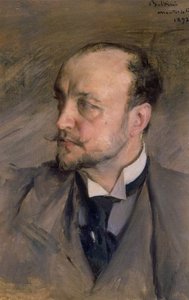
Giovanni Boldini
1842 - 1931 , Italia
Datos clave
- Artistas Influyentes: ['Macchiaioli']
- Estilo Artístico: Impresionismo, Realismo
- Fecha De Fallecimiento: 11 de julio de 1931
- Fecha De Nacimiento: 31 de diciembre de 1842
- Lugar De Nacimiento: Ferrara, Italia
- Nacionalidad: Italiana
- Nombre Completo: Giovanni Boldini
- Obras Notables: ['La condesa de Rasty reclinada']
Artículos relacionados
Giovanni Boldini: A Study in Belle Époque Portraiture & the Cult of Personality
Explore the captivating world of Giovanni Boldini, master of Belle Époque portraiture. Discover his signature style, iconic works like 'Miss Bell,' and lasting influence on art history. Expert analysis for collectors.
Echoes of 1882: Art, Culture & the Belle Époque's Lasting Impression
Explore the art & culture of the Belle Époque! Discover Impressionism, Realism, and iconic Parisian paintings from Degas, Béraud & more. High-quality reproductions at ArtsDot.

Obras Maestras Llenas de Juego: El Arte que Inspira Alegría y Vitalidad | ArtsDot
Descubre 10 obras maestras llenas de alegría y vitalidad. Explora la historia detrás de Monet, Renoir, Van Gogh y más. Encuentra lienzos originales e inspiración para decorar tu hogar con arte vibrante en ArtsDot.com
Jean-Georges Béraud: Capturing Parisian Life in the Belle Époque
Explore the captivating world of Jean-Georges Béraud, master painter of Belle Époque Paris. Discover his iconic scenes, artistic evolution, and social commentary. A deep dive into 19th-century French art.
Echoes of 1875: Art, Culture & the Belle Époque's Pivotal Moment
Explore the art & culture of 1875 Paris – a pivotal year for Impressionism & the Belle Époque. Discover Degas, Béraud, Stewart & more with ArtsDot's expert insights.