![The Battle Of Grunwald [tannenberg] — Jan Matejko](/media/artworks/images-full/8f/8a/8f8a06d6ec24e6bcc3ec1d7df4905ab0.jpg)
 Ver en contexto
 Enviar
 Compartir
 Detalles

 Descargar
 Similares
 Radiografía
 Presentación de diapositivas
The Battle of Grunwald [Tannenberg]
 Oil On Canvas
- WallArt
- Romantic Historical Painting
 19th Century
 987.0 x 426.0 cm
 Museo Nacional de Varsovia
 Ver más
Giclée / Impresión de arte
Impresiones giclée o en lienzo de calidad de museo con producción rápida y opciones de acabado flexibles. ( Comprar pintura hecha a mano Comprar imagen)




P118B $10

P118H $10

P118W $10

P438Z $10

P508JH $12

P508YH $12

P805H $10

P805Z $10

P919BZ $10

P919G $10

P919XJ $10

P959ZH $10

P968JZ $12

W106C $8

W218G $10

W218JH $8

W218Y $10

W307PJ $10

W316G $10

W316PJ $8

W316Y $10

W398PJ $8

W4111J $10

W500HY $15

W500JH $15

W692G $12

W849H $8

W940BG $15

W953PJ $8




Elija entre nuestros tamaños predefinidos que respetan las proporciones originales de la obra.

Puede introducir sus propias dimensiones para adaptarse a un marco o espacio específico. Si el tamaño seleccionado no coincide con las proporciones de la imagen original, recortaremos la obra de arte o extenderemos la imagen con un borde con efecto espejo o de color sólido. Se enviará una maqueta digital para su aprobación antes de que comience la producción.
Tenga en cuenta que la vista previa en pantalla no refleja el recorte o la extensión real. Solo la maqueta mostrará con precisión la composición final.
Aunque existen tamaños personalizados, recomendamos seleccionar una dimensión de la lista predefinida para preservar las proporciones originales.
Envío a todo el mundo () en 2 semanas en lugar de las 4/5 semanas estándar. (25 agosto)

Envío exprés gratuito a todo el mundo

Lienzo de lino de alta calidad

Seguro de envío total

Garantía de reembolso de impuestos aduaneros

Garantía de fidelidad cromática exacta

Política de devolución de 60 días (solo por defectos)

Garantía de devolución del 100% del dinero

Descuento por cantidad
 La opción de vidrio solo está disponible en tamaños inferiores a 110 cm.

The Battle of Grunwald [Tannenberg]
Giclée / Impresión de arte
Dimensiones de la reproducción
-


Precio total final
$ 62
Descripción de la pieza
A Monumental Vision of Polish Triumph
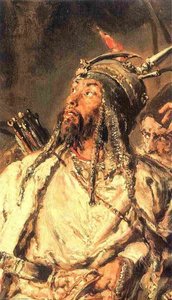
In the grand tapestry of European history painting, few canvases command the room with as much visceral authority as Jan Matejko’s The Battle of Grunwald. This monumental masterpiece, stretching an incredible 987 by 426 centimeters, is far more than a mere depiction of medieval warfare; it is a profound psychological landscape of national resilience. Painted in the late 19th century, the work captures the climactic moment of the 1410 conflict between the allied forces of the Kingdom of Poland and the Grand Duchary of Lithuania against the formidable Teutonic Order. To stand before this work—or to possess a high-quality reproduction of it—is to be swept into a whirlwind of motion, where the air seems thick with the dust of cavalry charges and the metallic tang of clashing steel.
Matejko, a titan of Academic Romanticism, utilized his immense skill to weave a complex narrative through every inch of the canvas. The composition is a masterclass in controlled chaos. Rather than presenting a singular, static focal point, the artist guides the eye through a labyrinth of heroic figures, fallen warriors, and heraldic banners. One cannot help but be drawn to the central drama: the death of the Grand Master, Ulrich von Jungingen, and the triumphant presence of Grand Duke Vytautas. The technique employed is nothing short of extraordinary; using oil on canvas, Matejko achieved a luminous depth that brings the textures of heavy plate armor, flowing crimson capes, and weathered shields to life with startling realism.
Symbolism and the Soul of a Nation
Beyond its surface-level spectacle, The Battle of Grunwald serves as a deeply symbolic vessel for Polish identity. Created during a period when Poland was struggling to maintain its cultural sovereignty amidst foreign partitions, the painting acted as a spiritual bulwark. Every element is imbued with meaning: the swords sent by the Teutonic Knights as a mocking gesture become symbols of provocation and destiny, while the intense, dramatic lighting evokes a sense of divine justice unfolding on the battlefield. The artist meticulously researched historical manuscripts to ensure that every crest and costume resonated with authenticity, turning the canvas into a living historical document.
For the discerning collector or interior designer, this piece offers an unparalleled opportunity to introduce a sense of gravity and heritage into a space. The painting’s sheer scale and emotional intensity make it a definitive statement piece, capable of anchoring a grand hall, a library, or a sophisticated study. It does not merely decorate a wall; it commands the atmosphere, inviting contemplation on themes of bravery, sacrifice, and the enduring strength of the human spirit. A reproduction of such a work brings the epic scale of history into the modern home, offering a timeless connection to one of the most significant triumphs in Eastern European history.
Obras relacionadas
Biografía del artista
Primeros años y educación
Jan alojzy matejko, un renombrado pintor polaco, nació el 24 de junio de 1838 en krakúv, polonia. Su padre, franciszek ksawery matejko, era un tutor y maestro de música nacido en chequia. La vida temprana de jan se vio marcada por la revolución de krakúv de 1846 y el sitio de 1848 de krakúv por los austriacos, eventos que más tarde influirían en sus temas artísticos. Matejko asistió a la escuela secundaria st. ann pero abandonó en 1851 debido a su mal rendimiento académico. Sin embargo, demostró un talento excepcional para el arte desde una edad temprana. Estudió en la escuela de bellas artes de krakúv de 1852 a 1858, especializándose en pintura histórica bajo la tutela de wojciech korneli stattler y włodysław łuszczkiewicz.Carrera artística
El primer trabajo importante de matejko, los zares shuyski ante zygmunt iii, se completó en 1853. Comenzó a exhibir sus pinturas históricas en la sociedad de amigos de las bellas artes de krakúv en 1855. Obras notables incluyen:- Rejtan (1866): una gran pintura al óleo sobre lienzo que representa un momento crucial en la historia polaca.
- Unión de lublin (1869): una pieza significativa que muestra la habilidad de matejko para capturar eventos históricos.
- Batalla de grunwald (1878): una obra maestra que destaca su capacidad para transmitir la intensidad de las escenas de batalla.
Influencias y desarrollo artístico
El estilo de matejko estuvo profundamente influenciado por el romanticismo europeo, particularmente por artistas como eugène delacroix. Sin embargo, también se inspiró en el arte polaco anterior, especialmente en los trabajos de jan matthew gutenmacher. A medida que su carrera avanzaba, matejko desarrolló un enfoque distintivo caracterizado por composiciones grandiosas, una atención meticulosa al detalle histórico y un uso dramático del color y la luz. Sus pinturas a menudo representan momentos clave de la historia polaca, enfatizando el patriotismo y el orgullo nacional.Logros importantes y legado
Matejko pasó la mayor parte de su vida en krakúv, convirtiéndose finalmente en director de la academia de bellas artes jan matejko, anteriormente conocida como la academia de bellas artes de krakúv. Sus alumnos incluyeron a pintores destacados como maurycy gottlieb, jacek malczewski, józef mehoffer y stanisław wyspiański. Obras notables disponibles en ArtsDot:- Jan matejko: varna (romanticismo)
- Jan matejko: bodegón (romanticismo)
- Jan matejko: la unión de lublin (298 x 512 cm, romanticismo, óleo sobre lienzo)
Referencias:
descubriendo las obras maestras del muzeum narodowe krakúv, polonia (wikipedia.org)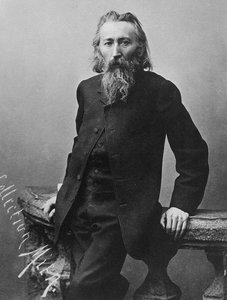
Jan Matejko
1838 - 1893 , Polonia
Datos clave
- Artistas Influenciados:
- Maurycy Gottlieb
- Jacek Malczewski
- Artistas Que Influyeron:
- Wojciech Korneli Stattler
- Władysław Łuszczkiewicz
- Fecha De Fallecimiento: 1 de noviembre de 1893
- Fecha De Nacimiento: 24 de junio de 1838
- Lugar De Nacimiento: Kraków, Polonia
- Movimiento Artístico: Romanticismo
- Nacionalidad: Polaco
- Nombre Completo: Jan Alojzy Matejko
- Obras Notables:
- Rejtan (1866)
- Unión de Lublin (1869)
- Batalla de Grunwald (1878)
Artículos relacionados
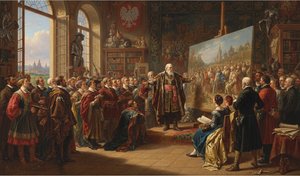
Jan Matejko: Historical Narrative & National Identity in 19th-Century Polish Painting
Explore the powerful historical paintings of Jan Matejko, Poland's national artist. Discover his iconic works & learn how he shaped Polish identity in the 19th century. High-quality reproductions available.
Romantic Realism's Finest: 10 Masterpieces for Your Home | ArtsDot
Explore 10 defining masterpieces of Romantic Realism! Discover Courbet, Millet & Daumier's powerful paintings—capturing emotion and social realities. Find museum-quality reproductions for your home at ArtsDot.com.
Las 10 Obras Maestras del Alto Medieval: Arte, Historia y Decoración Exclusiva
Descubre las 10 obras maestras del Alto Medieval. Explora la historia, el simbolismo y la belleza de la pintura románica y gótica. Reproducciones exclusivas en ArtsDot.com para decorar tu hogar con arte atemporal.
10 Obras Maestras Medievales que Definen el Arte (y tu Hogar)
Descubre 10 obras maestras del arte medieval, desde Duccio a Van Eyck. Explora la historia, simbolismo y belleza de Giotto, Simone Martini y más. Encuentra reproducciones de alta calidad para decorar tu hogar en ArtsDot.com.
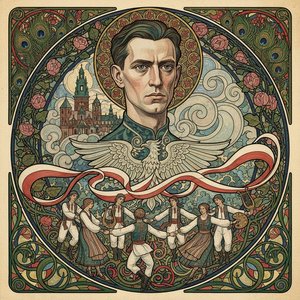
Stanisław Wyspiański: Symbolism, National Identity & the Polish Secession
Explore the life & work of Stanisław Wyspiański, a pivotal figure in Polish Symbolism and the Young Poland movement. Discover his iconic paintings, dramas, and stained glass designs reflecting national identity & artistic innovation.