

 Ver en contexto
 Enviar
 Compartir
 Detalles

 Descargar
 Similares
 Radiografía
 Presentación de diapositivas
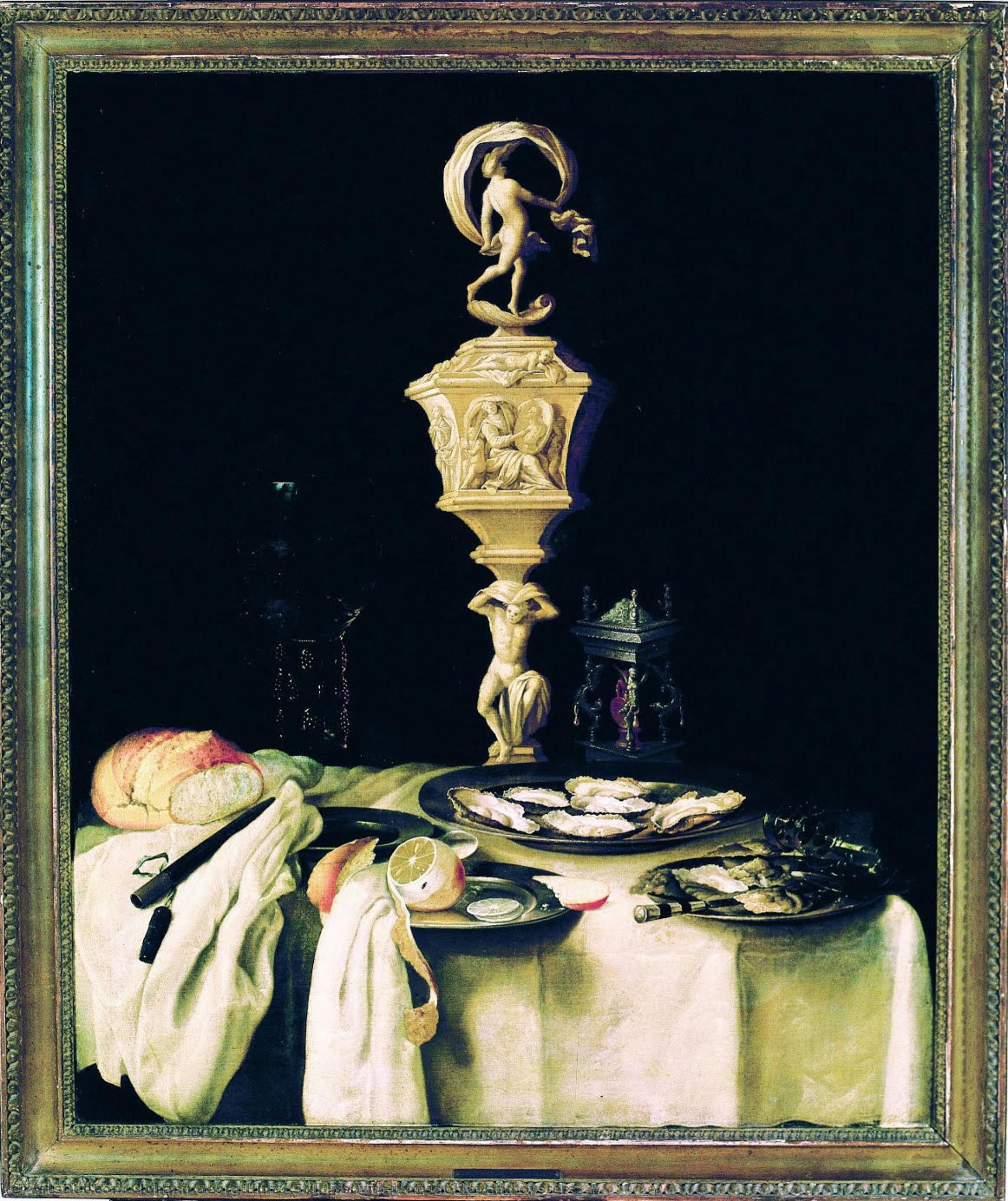
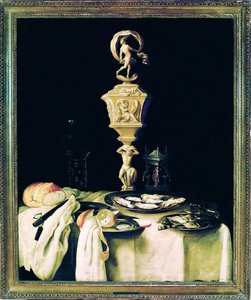
Still life with ivory goblet and oysters


 Ver más
Adquiera una imagen digital de alta resolución y optimizada, muy superior a la vista previa en línea.
Cada archivo es preparado meticulosamente por nuestros especialistas internos mediante el uso de herramientas avanzadas y un experto retoque manual. Nos aseguramos de que cada imagen posea una claridad excepcional, una precisión cromática impecable y un detalle minucioso.
El archivo final se entrega por correo electrónico en un plazo de 72 horas, optimizado para su uso inmediato en entornos profesionales, editoriales y de impresión. Esta es la misma calidad en la que confían los estudios de diseño, las editoriales y las galerías de primer nivel.
Imagen Digital
Descarga un archivo de alta resolución para exhibición personal, impresión y proyectos creativos. ( Comprar impresión Comprar pintura hecha a mano)
Incluido en cada pedido de imágenes digitales
Entrega digital experta, garantizada.
Al elegir ArtsDot.com, no solo está adquiriendo una imagen; está recibiendo una obra de arte digital mejorada profesionalmente, elaborada con precisión y respaldada por una garantía de satisfacción. Esto es todo lo que incluye su pedido, automáticamente:

Entrega rápida por email
Recibirá su archivo de imagen digital en alta resolución por correo electrónico en un plazo de 72 horas tras realizar su pedido, listo para su uso inmediato.

Archivo digital optimizado por IA
Su obra de arte se optimiza profesionalmente mediante herramientas avanzadas de IA y edición manual, garantizando el máximo detalle, claridad y precisión cromática.

Reenvío gratuito de por vida
¿Has borrado o perdido tu archivo por error? No te preocupes: te lo volveremos a enviar en cualquier momento, sin coste adicional.

Sin gastos de importación, siempre
Disfrute de su obra de arte al instante sin aduanas, aranceles ni gastos de envío; las descargas digitales siempre están libres de impuestos.

Garantía de fidelidad de color
Garantizamos que su imagen digital refleje los colores originales con la mayor fidelidad posible, mediante el uso de herramientas profesionales y gestión del color.

Garantía de satisfacción de 60 días
Si no está satisfecho con su imagen digital, la revisaremos o le reembolsaremos el 100% en un plazo de 60 días, sin preguntas.

100% Garantía de devolución de dinero
¿No está satisfecho? Obtenga un reembolso completo dentro de los 60 días posteriores a la recepción de su archivo digital, sin necesidad de explicaciones.

Descuentos por pedidos grandes
Compra 3 imágenes, ahorra 10% - Compra 5, ahorra 15% - Compra 10+, ahorra 20%. Ideal para proyectos creativos, galerías y agencias.
Obras relacionadas
Biografía del artista
The Luminous World of Johann Georg Hinz
In the grand tapestry of the German Baroque, few threads shimmer with as much quiet, meticulous brilliance as those woven by Johann Georg Hinz. A master of the still life, Hinz possessed a rare ability to transform the mundane objects of everyday existence—a glinting oyster, a heavy pewter tankard, or a dew-kissed piece of fruit—into profound meditations on texture, light, and the fleeting nature of time. While history often reserves its loudest praises for the sweeping dramas of Rubens or the psychological depth of Rembrandt, Hinz carved out a sanctuary of intimacy. His work invites the viewer not into a theater of grand gestures, but into a private, silent room where every surface tells a story of tactile beauty and ephemeral splendor.
Born in 1630, likely in Altenau or within the artistic orbit of the Rhineland, Hinz’s early life was shaped by the burgeoning traditions of Northern European realism. His lineage suggests a deep-seated connection to the craft; with a father, Johann Christoph Hinz, who was himself an engraver and painter, the language of visual precision was his first mother tongue. This foundational training in the nuances of line and shadow prepared him for a career defined by an almost scientific devotion to observation. As he moved through the artistic landscapes of his era, possibly spending formative time in Amsterdam, he absorbed the sophisticated Dutch approach to the pronkstilleven—the ostentatious still life—blending it with a distinctly German sensibility that favored a certain grounded, earthy elegance.
A Legacy of Light and Texture
The true genius of Hinz lies in his command over the sensory experience of paint. To look upon a Hinz composition is to feel the cold dampness of an oyster shell or the smooth, chilled surface of an ivory goblet. He was a painter of surfaces, obsessed with the way light interacts with different materials: the way it clings to the velvet skin of a peach, how it refracts through a glass of amber beer, or how it dances upon the metallic rim of a silver vessel. His workshop, established in the mid-17th century, became a beacon for those seeking to master this delicate interplay of light and shadow. Through his tutelage, he influenced a generation of artists, including Christian Berentz and potentially Franz Werner von Tamm, ensuring that his meticulous approach to detail would ripple through the subsequent decades of German art.
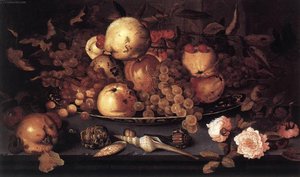
His subject matter often revolved around the concept of the curiosity cabinet, presenting collections of precious objects that reflected the humanist interests of the age. These were not merely displays of wealth, but carefully curated arrangements of nature and artifice. In his hands, a simple breakfast scene becomes an exploration of abundance and decay, a subtle memento mori hidden within the lushness of a fruit bowl. This duality—the celebration of life's richness paired with the quiet reminder of its transience—is what gives his oeuvre such enduring psychological resonance.
Historical Significance and Artistic Impact
Though the biographical records of Hinz’s later years are occasionally fragmented, his impact on the development of the German Baroque still life is undeniable. He was a pioneer who brought the sophisticated techniques of the Dutch masters to the German territories, specifically in regions like Hamburg, where he became a foundational figure in the local artistic identity. His ability to elevate the "lesser" genres of painting—still life and minor objects—to a level of high art helped expand the boundaries of what was considered worthy of the canvas.
Today, the works of Johann Georg Hinz serve as exquisite windows into the 17th century. They offer more than just aesthetic pleasure; they provide a window into the soul of an era that found divinity in the details. His legacy remains preserved in the silent, breathtaking moments captured within his frames:
- The Mastery of Materiality: His unparalleled ability to replicate the tactile essence of glass, metal, and organic matter.
- The Influence of the Düsseldorf School: The propagation of a style defined by luminous color palettes and meticulous detail.
- A Bridge Between Traditions: His role in synthesizing Dutch realism with German Baroque sensibilities.
johann georg hinz
1630 - 1688
Breves datos
- Artistic Movement Or Style: Baroque Painting
- Artists Or Movements Influenced By This Artist: ['Dutch Masters']
- Artists Who Influenced This Artist: ['Peter Paul Rubens']
- Date Of Death: 1688
- Full Name: Johann Georg Hinz
- Nationality: German
- Notable Artworks: ['Still Life with Fruit and Flowers']
- Place Of Birth: Germany

