 Ver en contexto
 Enviar
 Compartir
 Detalles

 Descargar
 Similares
 Radiografía
 Presentación de diapositivas
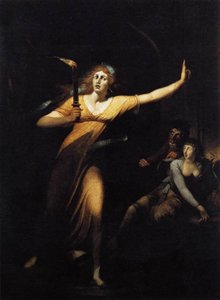
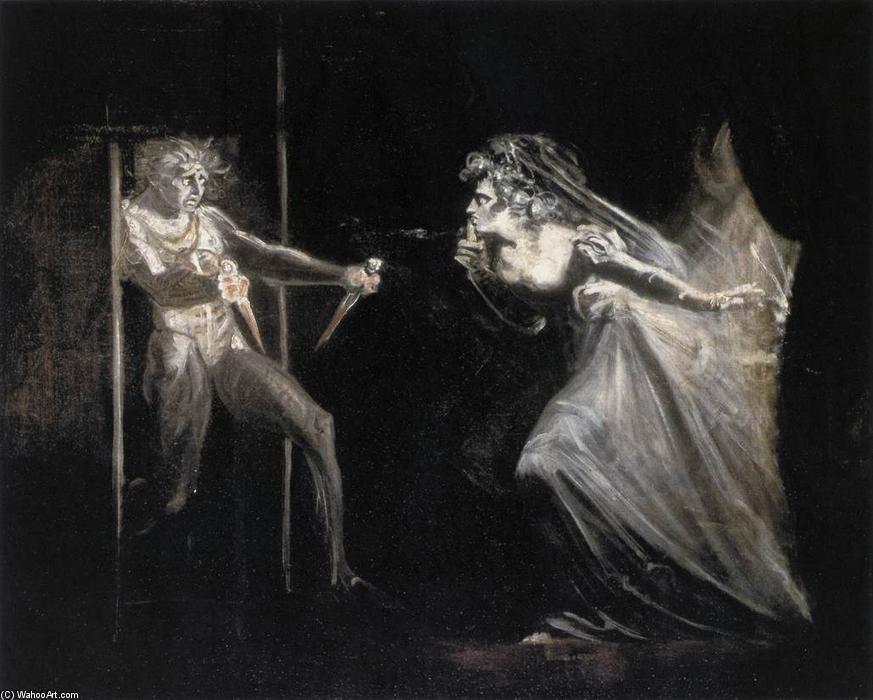
Lady Macbeth with the Daggers
 Oil On Canvas
- WallArt
- Romanticism
 1812
1812- 19th Century
 101.0 x 127.0 cm
 Tate Gallery
 Ver más
Giclée / Impresión de arte
Impresiones giclée o en lienzo de calidad de museo con producción rápida y opciones de acabado flexibles. ( Comprar pintura hecha a mano Comprar imagen)




P118B $10

P118H $10

P118W $10

P438Z $10

P508JH $12

P508YH $12

P805H $10

P805Z $10

P919BZ $10

P919G $10

P919XJ $10

P959ZH $10

P968JZ $12

W106C $8

W218G $10

W218JH $8

W218Y $10

W307PJ $10

W316G $10

W316PJ $8

W316Y $10

W398PJ $8

W4111J $10

W500HY $15

W500JH $15

W692G $12

W849H $8

W940BG $15

W953PJ $8




Elija entre nuestros tamaños predefinidos que respetan las proporciones originales de la obra.

Puede introducir sus propias dimensiones para adaptarse a un marco o espacio específico. Si el tamaño seleccionado no coincide con las proporciones de la imagen original, recortaremos la obra de arte o extenderemos la imagen con un borde con efecto espejo o de color sólido. Se enviará una maqueta digital para su aprobación antes de que comience la producción.
Tenga en cuenta que la vista previa en pantalla no refleja el recorte o la extensión real. Solo la maqueta mostrará con precisión la composición final.
Aunque existen tamaños personalizados, recomendamos seleccionar una dimensión de la lista predefinida para preservar las proporciones originales.
Envío a todo el mundo () en 2 semanas en lugar de las 4/5 semanas estándar. (24 agosto)

Envío exprés gratuito a todo el mundo

Lienzo de lino de alta calidad

Seguro de envío total

Garantía de reembolso de impuestos aduaneros

Garantía de fidelidad cromática exacta

Política de devolución de 60 días (solo por defectos)

Garantía de devolución del 100% del dinero

Descuento por cantidad
 La opción de vidrio solo está disponible en tamaños inferiores a 110 cm.

Lady Macbeth with the Daggers
Giclée / Impresión de arte
Dimensiones de la reproducción
-


Precio total final
$ 62
Descripción de la pieza
A Descent into Psychological Darkness: Lady Macbeth with the Daggers
To stand before this depiction of Lady Macbeth is to confront the very precipice of human ambition curdled by guilt. Johann Heinrich Friesli’s masterful rendering captures not merely a scene from Shakespeare, but the suffocating aftermath of moral transgression. The air in the painting feels thick, heavy with unspoken secrets and the metallic tang of spilled blood. It is an intensely dramatic tableau, steeped in the Romantic fascination with the sublime terror lurking beneath civilized veneers. The composition itself seems to press inward, trapping the viewer within the claustrophobic drama unfolding between the figures.
Mastery of Shadow and Light: Technique and Atmosphere
Friesli employs a breathtaking command of chiaroscuro, a technique that elevates this work beyond mere portraiture into the realm of psychological landscape. A single, dramatic light source carves Lady Macbeth from the surrounding gloom, illuminating her face and hands with an almost accusatory brilliance. This stark contrast between blinding highlights and impenetrable shadow is central to the painting's emotional resonance. Observe the brushwork: it is loose, gestural, particularly in the background where indistinct strokes suggest a fading reality or perhaps a fevered hallucination. The interplay of angular lines from the architecture—the staircase seeming to spiral into instability—against the flowing, ethereal drapery of her gown creates a palpable tension. This technical brilliance allows the viewer to feel the very tremor of shock that grips the central figure.
Symbolism and the Weight of Guilt
The symbolism woven throughout this piece is profound and deeply unsettling. The daggers are not just props; they are potent emblems of violence, betrayal, and irreversible action. Lady Macbeth’s expression—a complex tapestry of horror, shock, and perhaps nascent remorse—speaks volumes without uttering a single word. The overwhelming darkness that envelops the scene functions as a visual metaphor for the moral abyss she has willingly entered. It speaks to the consuming nature of unchecked ambition, suggesting that the greatest terror is not external, but the corruption festering within the soul itself.
A Touchstone of Romantic Drama
Dating from 1812, this work sits perfectly within the height of the Romantic movement, an era obsessed with intense emotion, the supernatural, and the depths of the individual psyche. Friesli’s background in depicting supernatural experiences lends an otherworldly quality to the scene; it feels less like a historical moment and more like a shared nightmare. For collectors and those seeking art that speaks directly to the visceral human condition, this piece offers unparalleled depth. Reproducing such a work allows one to bring home not just a painting, but a potent meditation on consequence, making it a dramatic focal point for any richly decorated interior.
Obras relacionadas
Biografía del artista
Early Life and Education
Johann Heinrich Füssli, a Swiss painter, draughtsman, and writer on art, was born on February 7, 1741, in Zurich, Switzerland. He was the second of eighteen children to Johann Caspar Füssli, a portrait painter. Füssli received a classical education at the Collegium Carolinum in Zurich, fostering an early appreciation for artistic principles and historical studies. This rigorous training laid the foundation for his later explorations into both classical and fantastical themes. His upbringing within a family deeply rooted in art provided him with invaluable insights and connections that would shape his career trajectory.Artistic Career and Influences
Füssli’s artistic journey commenced with his relocation to London in 1764, where he encountered Sir Joshua Reynolds, who became a pivotal mentor, encouraging him to dedicate himself entirely to painting. This marked a significant turning point, propelling him away from initial plans for a clerical career. Subsequently, Füssli spent eight years immersed in Italy, a period of intense study and artistic development. He meticulously examined the works of masters such as Titian, Caravaggio, and Mannerists, absorbing their techniques and stylistic approaches. These influences profoundly shaped his own distinctive style, characterized by dramatic lighting, dynamic compositions, and an exploration of emotional intensity.Supernatural Themes and Literary Inspiration
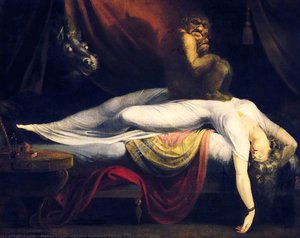
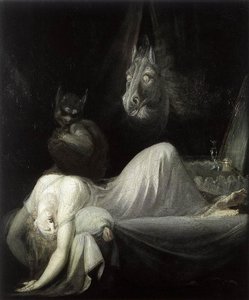
A defining characteristic of Füssli’s oeuvre is his fascination with the supernatural and the dreamlike. His paintings frequently depicted scenes imbued with otherworldly elements, nightmares, and fantastical creatures—a hallmark of the emerging Romantic movement. Notably, he created a series of works inspired by John Milton's epic poems, envisioning a “Milton Gallery” intended to rival Boydell’s Shakespeare Gallery. This ambition reflected his deep engagement with literary narratives and his desire to translate imaginative worlds onto canvas. His most famous work, *La Pesadilla* (The Nightmare), exemplifies this style, capturing the terror and disorientation of a dream state with remarkable intensity.Notable Works, Legacy, and Museums
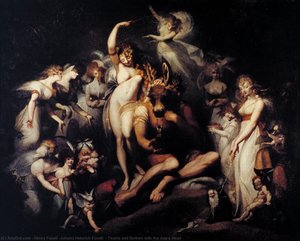
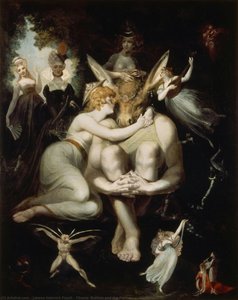
Füssli’s artistic legacy extends through numerous significant paintings, including “Titania, Bottom & Fairies,” a vibrant depiction of Shakespeare's *A Midsummer Night’s Dream*, showcasing his ability to infuse literary scenes with visual drama and symbolic richness. His association with the Royal Academy, where he held positions as Professor of Painting and Keeper, further cemented his influence on subsequent generations of British artists, including William Blake. Füssli’s works are now housed in prestigious museums worldwide, such as the Kunsthaus Zürich (Switzerland), which boasts a comprehensive collection of his paintings, including *La Pesadilla*, and the Albertina in Vienna (Austria), where one can admire his watercolor piece, “Teiresias Foretells the Future to Odysseus.” His exploration of psychological depth and emotional intensity continues to resonate with art lovers today. Recommended Reading:- Titania, Bottom & Fairies by Johann Heinrich Füssli
- Henry Fuseli - Wikipedia
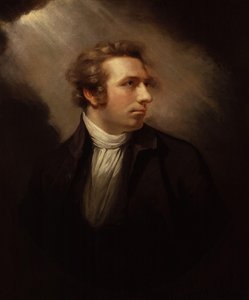
Johann Heinrich Füssli
1741 - 1825 , Suiza
Datos clave
- Artistic Movement Or Style: Romanticismo, Neoclasicismo
- Artists Or Movements Influenced By This Artist: ['William Blake']
- Artists Who Influenced This Artist:
- Titian
- Caravaggio
- Date Of Birth: 7 Feb 1741
- Date Of Death: 16 Abr 1825
- Full Name: Johann Heinrich Füssli
- Nationality: Suizo
- Notable Artworks:
- La Pesadilla
- Titania y Bottom
- Place Of Birth: Zúrich, Suiza
Artículos relacionados

Giclée Prints: Archival Quality & Aesthetic Nuances for the Discerning Collector
Explore the world of giclée prints with ArtsDot. Learn about archival quality, aesthetic nuances & investment potential. Expert guidance for discerning art collectors seeking museum-quality reproductions and lasting value.

Echoes of Time: Exploring the Enduring Appeal & Historical Context of Vintage Art Prints
Explore the captivating world of vintage art prints! Discover their history, collecting tips & enduring appeal. Expert insights on chromolithography and building a legacy collection with ArtsDot.

The Enduring Legacy of Fine Art Prints: Technique, History & Aesthetic Impact
Explore the rich history & techniques of fine art prints. Discover investment potential, assess authenticity, and learn how to preserve your collection with expert guidance. Trusted insights for discerning collectors.
Romantic Realism's Finest: 10 Masterpieces for Your Home | ArtsDot
Explore 10 defining masterpieces of Romantic Realism! Discover Courbet, Millet & Daumier's powerful paintings—capturing emotion and social realities. Find museum-quality reproductions for your home at ArtsDot.com.

Paisajes Románticos: 10 Obras Maestras que Definieron un Movimiento Artístico
Descubre los 10 paisajes románticos más influyentes de artistas como Caspar David Friedrich y Turner. Explora la belleza, el simbolismo y las técnicas del movimiento romántico. Reproducciones de arte exclusivas en ArtsDot.com.