

 Ver en contexto
 Enviar
 Compartir
 Detalles

 Descargar
 Similares
 Radiografía
 Presentación de diapositivas
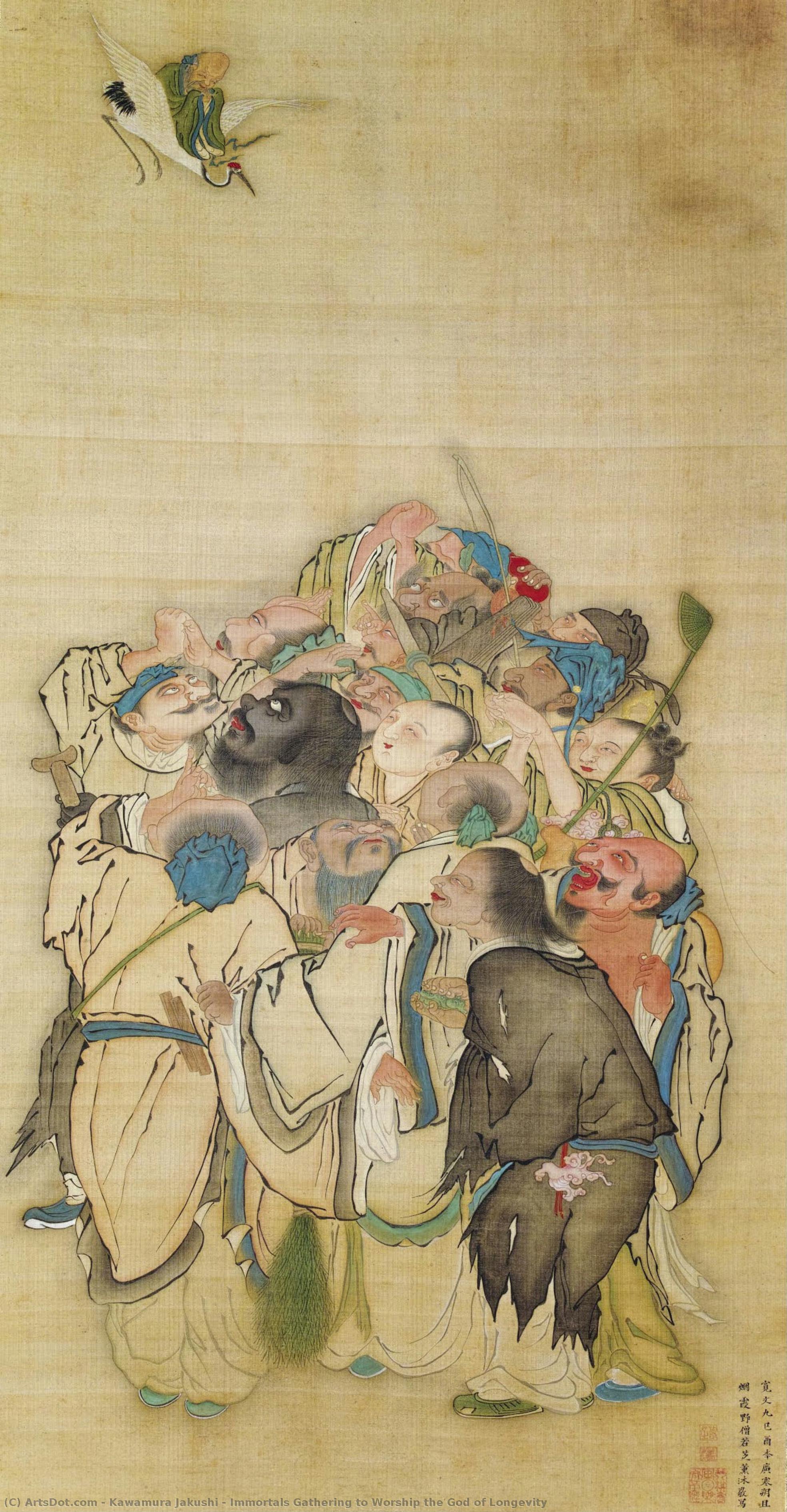
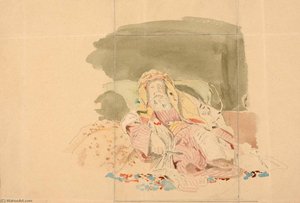
Immortals Gathering to Worship the God of Longevity


 Ver más
Adquiera una imagen digital de alta resolución y optimizada, muy superior a la vista previa en línea.
Cada archivo es preparado meticulosamente por nuestros especialistas internos mediante el uso de herramientas avanzadas y un experto retoque manual. Nos aseguramos de que cada imagen posea una claridad excepcional, una precisión cromática impecable y un detalle minucioso.
El archivo final se entrega por correo electrónico en un plazo de 72 horas, optimizado para su uso inmediato en entornos profesionales, editoriales y de impresión. Esta es la misma calidad en la que confían los estudios de diseño, las editoriales y las galerías de primer nivel.
Imagen Digital
Descarga un archivo de alta resolución para exhibición personal, impresión y proyectos creativos. ( Comprar impresión Comprar pintura hecha a mano)
Incluido en cada pedido de imágenes digitales
Entrega digital experta, garantizada.
Al elegir ArtsDot.com, no solo está adquiriendo una imagen; está recibiendo una obra de arte digital mejorada profesionalmente, elaborada con precisión y respaldada por una garantía de satisfacción. Esto es todo lo que incluye su pedido, automáticamente:

Entrega rápida por email
Recibirá su archivo de imagen digital en alta resolución por correo electrónico en un plazo de 72 horas tras realizar su pedido, listo para su uso inmediato.

Archivo digital optimizado por IA
Su obra de arte se optimiza profesionalmente mediante herramientas avanzadas de IA y edición manual, garantizando el máximo detalle, claridad y precisión cromática.

Reenvío gratuito de por vida
¿Has borrado o perdido tu archivo por error? No te preocupes: te lo volveremos a enviar en cualquier momento, sin coste adicional.

Sin gastos de importación, siempre
Disfrute de su obra de arte al instante sin aduanas, aranceles ni gastos de envío; las descargas digitales siempre están libres de impuestos.

Garantía de fidelidad de color
Garantizamos que su imagen digital refleje los colores originales con la mayor fidelidad posible, mediante el uso de herramientas profesionales y gestión del color.

Garantía de satisfacción de 60 días
Si no está satisfecho con su imagen digital, la revisaremos o le reembolsaremos el 100% en un plazo de 60 días, sin preguntas.

100% Garantía de devolución de dinero
¿No está satisfecho? Obtenga un reembolso completo dentro de los 60 días posteriores a la recepción de su archivo digital, sin necesidad de explicaciones.

Descuentos por pedidos grandes
Compra 3 imágenes, ahorra 10% - Compra 5, ahorra 15% - Compra 10+, ahorra 20%. Ideal para proyectos creativos, galerías y agencias.
Obras relacionadas
Biografía del artista
The Soul of Silk: The Artistic Legacy of Kawamura Jakushi
In the quiet, mist-shrouded landscapes of Japan’s Hizen Province, a profound artistic lineage was forged through the delicate medium of silk and the disciplined stroke of the ink brush. Kawamura Jakushi, an artist whose life spanned the transformative years of the Edo period (1638–1707), stands as a luminous figure in the history of Japanese painting. His journey was not merely one of personal skill, and yet it was deeply spiritual, beginning with his entry into the priesthood. This monastic foundation provided the philosophical bedrock for his creative vision, allowing him to approach the canvas—or more accurately, the silk scroll—as an extension of meditative practice. Moving to the bustling port town of Nagasaki, Jakushi immersed himself in a world where ancient traditions met the burgeoning influences of international trade, creating a unique tension between the serene and the worldly.
The development of Jakushi’s style was profoundly shaped by his mentorship under Itsunen, a distinguished Buddhist monk from Suifuku-ji Temple. As one of the early practitioners of the Obaku style in Nagasaki, Itsunen imparted the nuances of Chinese-influenced painting, characterized by its expressive power and spiritual depth. Under this guidance, Jakushi did not merely replicate his master’s strength; instead, he sought to amplify it, infusing his work with a certain eccentricity that set him apart. His mastery of the Sumi-e technique—the art of monochrome ink wash—allowed him to capture the essence of his subjects through subtle tonal variations and masterful brushwork, achieving a balance between simplicity and profound complexity.
Symbolism and the Sacred Narrative
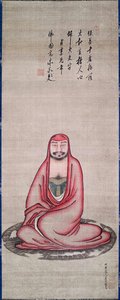
To gaze upon a work by Jakushi is to enter a realm where every stroke carries a weight of cultural and spiritual significance. His compositions often serve as windows into Buddhist iconography, where figures are not merely portraits but embodiments of cosmic truths. One of his most celebrated achievements is his portrayal of Bodhidharma, the founder of Zen Buddhism. In this masterpiece, Jakushi utilizes the delicate texture of silk to render the revered figure with a serene yet commanding grace. The interplay of light and shadow, achieved through meticulous ink washes, creates an atmosphere of contemplative stillness that invites the viewer into a state of spiritual reflection.
Beyond the central figures, Jakushi’s work is rich with the motifs of Japanese folklore and Buddhist ritual. He frequently integrated symbols such as the white crane, a potent emblem of longevity and auspiciousness, weaving together the natural world and the divine. His ability to blend these elements—the physical reality of nature and the metaphysical realm of the spirit—demonstrates a sophisticated understanding of narrative art. Whether depicting the Immortals Gathering or intricate religious inscriptions, his work remains anchored in a deep respect for the traditions of Hizen and the broader aesthetic values of his era.
A Legacy of Craft and Cultural Fusion
The historical significance of Kawamura Jakushi extends far beyond the boundaries of individual scrolls. He belonged to a lineage of craftsmen whose lives were intertwined with the evolving identity of Japan during the Edo period. The Jakushi family legacy is closely linked to the Nanban-Tsuba style, reflecting a period when Nagasaki’s openness to Western and Chinese trade introduced new materials and aesthetics, such as enamel inlay, into Japanese artistry. This era of fusion allowed artists like Jakushi to engage with global artistic currents while remaining fiercely loyal to core Japanese aesthetic principles.
His contribution to the artistic landscape of Hizen Province was nurtured by the patronage of the Ryuzoji daimyo family, whose support fostered an environment where diverse talents—from metal carving to silk painting—could flourish. Today, the works of Jakushi serve as vital historical documents, capturing a moment in time when the spiritual discipline of the monk and the technical precision of the craftsman converged. His enduring impact is felt in the way his "echoes of tradition" continue to resonate through the centuries, reminding us of the power of art to bridge the gap between the earthly and the eternal.
kawamura jakushi
Japan
Breves datos
- Artistic Movement Or Style: Silk Painting
- Full Name: Yuki Kawamura
- Nationality: Japanese
- Notable Artworks: ['Bodhidharma']
- Place Of Birth: Japan

