

 Ver en contexto
 Enviar
 Compartir
 Detalles

 Descargar
 Similares
 Radiografía
 Presentación de diapositivas
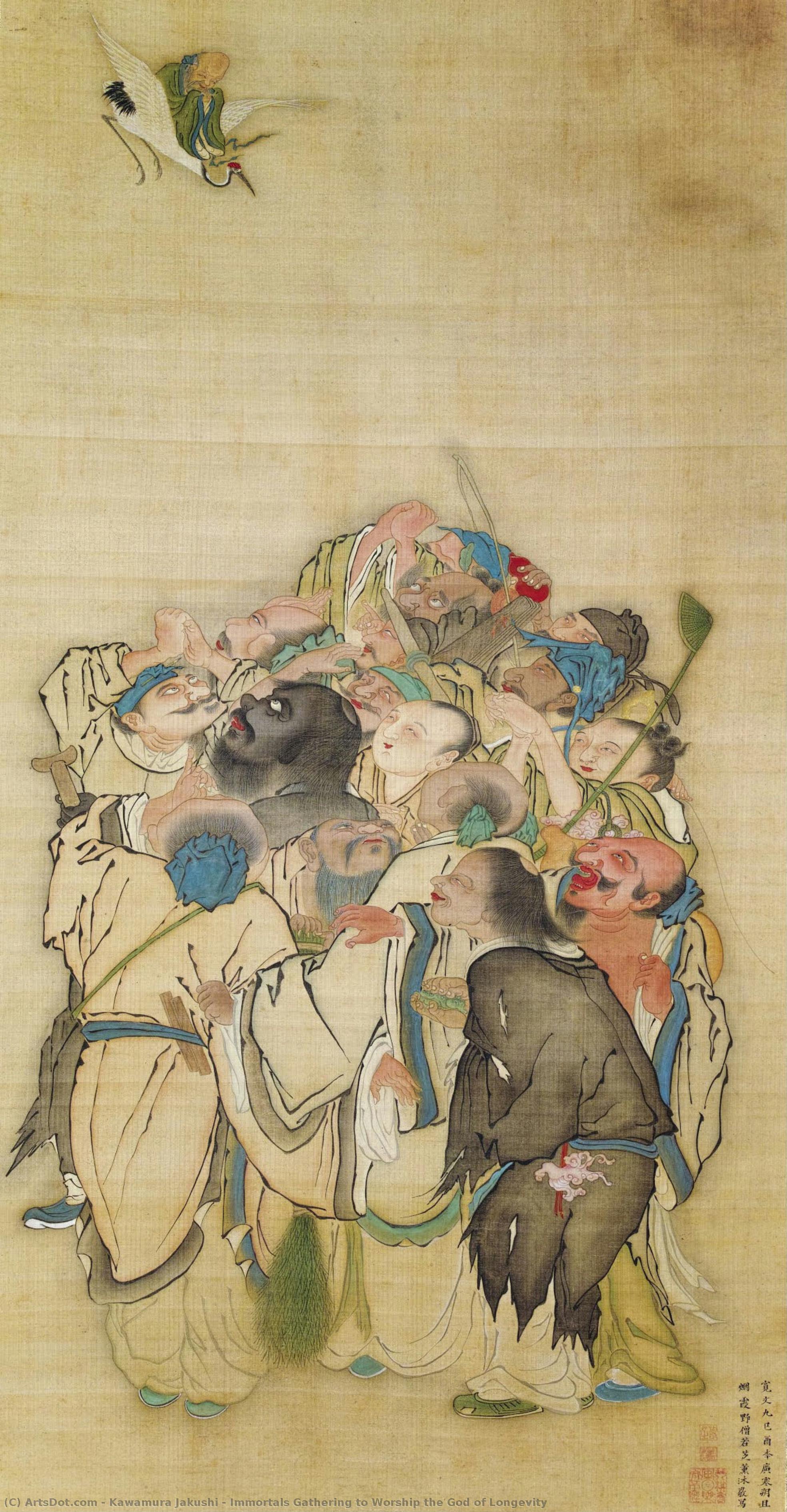
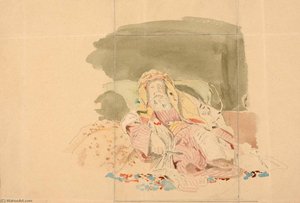
Immortals Gathering to Worship the God of Longevity


 Ver más
Giclée / Impresión de arte
Impresiones giclée o en lienzo de calidad de museo con producción rápida y opciones de acabado flexibles. ( Comprar pintura hecha a mano Comprar imagen)




































Elija entre nuestros tamaños predefinidos que respetan las proporciones originales de la obra.

Puede introducir sus propias dimensiones para adaptarse a un marco o espacio específico. Si el tamaño seleccionado no coincide con las proporciones de la imagen original, recortaremos la obra de arte o extenderemos la imagen con un borde con efecto espejo o de color sólido. Se enviará una maqueta digital para su aprobación antes de que comience la producción.
Tenga en cuenta que la vista previa en pantalla no refleja el recorte o la extensión real. Solo la maqueta mostrará con precisión la composición final.
Aunque existen tamaños personalizados, recomendamos seleccionar una dimensión de la lista predefinida para preservar las proporciones originales.
Envío a todo el mundo () en 2 semanas en lugar de las 4/5 semanas estándar. (5 septiembre)

Envío exprés gratuito a todo el mundo

Lienzo de lino de alta calidad

Seguro de envío total

Garantía de reembolso de impuestos aduaneros

Garantía de fidelidad cromática exacta

Política de devolución de 60 días (solo por defectos)

Garantía de devolución del 100% del dinero

Descuento por cantidad
 La opción de vidrio solo está disponible en tamaños inferiores a 110 cm.

Immortals Gathering to Worship the God of Longevity
Giclée / Impresión de arte
Dimensiones de la reproducción
-


Precio total final
$ 62
Obras relacionadas
Biografía del artista
The Soul of Silk: The Artistic Legacy of Kawamura Jakushi
In the quiet, mist-shrouded landscapes of Japan’s Hizen Province, a profound artistic lineage was forged through the delicate medium of silk and the disciplined stroke of the ink brush. Kawamura Jakushi, an artist whose life spanned the transformative years of the Edo period (1638–1707), stands as a luminous figure in the history of Japanese painting. His journey was not merely one of personal skill, and yet it was deeply spiritual, beginning with his entry into the priesthood. This monastic foundation provided the philosophical bedrock for his creative vision, allowing him to approach the canvas—or more accurately, the silk scroll—as an extension of meditative practice. Moving to the bustling port town of Nagasaki, Jakushi immersed himself in a world where ancient traditions met the burgeoning influences of international trade, creating a unique tension between the serene and the worldly.
The development of Jakushi’s style was profoundly shaped by his mentorship under Itsunen, a distinguished Buddhist monk from Suifuku-ji Temple. As one of the early practitioners of the Obaku style in Nagasaki, Itsunen imparted the nuances of Chinese-influenced painting, characterized by its expressive power and spiritual depth. Under this guidance, Jakushi did not merely replicate his master’s strength; instead, he sought to amplify it, infusing his work with a certain eccentricity that set him apart. His mastery of the Sumi-e technique—the art of monochrome ink wash—allowed him to capture the essence of his subjects through subtle tonal variations and masterful brushwork, achieving a balance between simplicity and profound complexity.
Symbolism and the Sacred Narrative
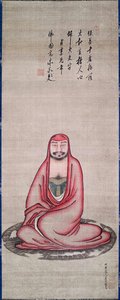
To gaze upon a work by Jakushi is to enter a realm where every stroke carries a weight of cultural and spiritual significance. His compositions often serve as windows into Buddhist iconography, where figures are not merely portraits but embodiments of cosmic truths. One of his most celebrated achievements is his portrayal of Bodhidharma, the founder of Zen Buddhism. In this masterpiece, Jakushi utilizes the delicate texture of silk to render the revered figure with a serene yet commanding grace. The interplay of light and shadow, achieved through meticulous ink washes, creates an atmosphere of contemplative stillness that invites the viewer into a state of spiritual reflection.
Beyond the central figures, Jakushi’s work is rich with the motifs of Japanese folklore and Buddhist ritual. He frequently integrated symbols such as the white crane, a potent emblem of longevity and auspiciousness, weaving together the natural world and the divine. His ability to blend these elements—the physical reality of nature and the metaphysical realm of the spirit—demonstrates a sophisticated understanding of narrative art. Whether depicting the Immortals Gathering or intricate religious inscriptions, his work remains anchored in a deep respect for the traditions of Hizen and the broader aesthetic values of his era.
A Legacy of Craft and Cultural Fusion
The historical significance of Kawamura Jakushi extends far beyond the boundaries of individual scrolls. He belonged to a lineage of craftsmen whose lives were intertwined with the evolving identity of Japan during the Edo period. The Jakushi family legacy is closely linked to the Nanban-Tsuba style, reflecting a period when Nagasaki’s openness to Western and Chinese trade introduced new materials and aesthetics, such as enamel inlay, into Japanese artistry. This era of fusion allowed artists like Jakushi to engage with global artistic currents while remaining fiercely loyal to core Japanese aesthetic principles.
His contribution to the artistic landscape of Hizen Province was nurtured by the patronage of the Ryuzoji daimyo family, whose support fostered an environment where diverse talents—from metal carving to silk painting—could flourish. Today, the works of Jakushi serve as vital historical documents, capturing a moment in time when the spiritual discipline of the monk and the technical precision of the craftsman converged. His enduring impact is felt in the way his "echoes of tradition" continue to resonate through the centuries, reminding us of the power of art to bridge the gap between the earthly and the eternal.
kawamura jakushi
Japan
Datos clave
- Artistic Movement Or Style: Silk Painting
- Full Name: Yuki Kawamura
- Nationality: Japanese
- Notable Artworks: ['Bodhidharma']
- Place Of Birth: Japan
Artículos relacionados

Serenity on Canvas: A Guide to the Timeless Beauty of Japanese Landscape Painting
Discover the serene beauty of Japanese landscape painting. From Hokusai's iconic woodblock prints to meditative sumi-e ink washes, explore a visual journey through the 'floating world' and learn how to bring this timeless Zen aesthetic into your modern home decor.

Katsushika Hokusai: Las 25 Obras Maestras del Ukiyo-e que Transformaron el Arte Japonés | ArtsDot
Descubre las 25 obras maestras de Katsushika Hokusai, el genio del ukiyo-e. Explora 'La Gran Ola', paisajes japoneses y su impacto en el arte moderno. Reproducciones de alta calidad para tu hogar en ArtsDot.com.

Floating World: The Captivating Art and Legacy of Japanese Ukiyo-e
Explore the profound beauty of Japanese Ukiyo-e. Discover the history, masters like Hokusai, and the enduring legacy of the 'Floating World' through an expert art-historical lens.
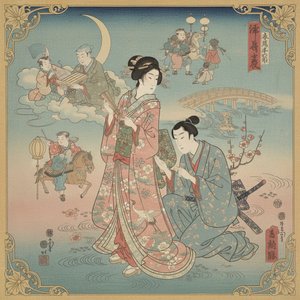
Suzuki Harunobu: Pioneering Ukiyo-e & the Refinement of Edo Period Printmaking
Discover the revolutionary world of Suzuki Harunobu, a pioneer of ukiyo-e printmaking. Explore his exquisite nishiki-e techniques, diverse subjects & lasting impact on Japanese art history. Learn more at ArtsDot.
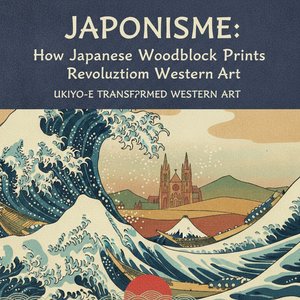
Japonisme: How Japanese Woodblock Prints Revolutionized Western Art
Explore the profound impact of Japonisme on Western art. Discover how Japanese ukiyo-e woodblock prints revolutionized perspective, color, and composition for masters like Monet and Van Gogh, forever changing the course of modern art history.

