

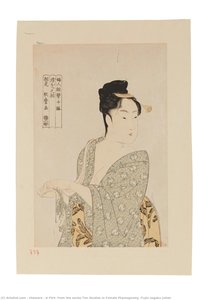
![Untitled [uwaki No Sō (the Fickle Onethe Fickle One)] — Kitagawa Utamaro](/media/artworks/images-full/3b/cd/3bcd79b8767e0b242877795442264467.jpg)
 Ver en contexto
 Enviar
 Compartir
 Detalles

 Descargar
 Similares
 Radiografía
 Presentación de diapositivas
Untitled [Uwaki no sō (The Fickle OneThe Fickle One)]


 Ver más
Reproducción al óleo hecha a mano
Óleo sobre lienzo pintado a mano en el tamaño y marco de su elección, realizado por encargo por nuestros artistas. ( Comprar impresión Comprar imagen)




P118B $10

P118H $10

P118W $10

P438Z $10

P508JH $12

P508YH $12

P805H $10

P805Z $10

P919BZ $10

P919G $10

P919XJ $10

P959ZH $10

P968JZ $12

W106C $8

W218G $10

W218JH $8

W218Y $10

W307PJ $10

W316G $10

W316PJ $8

W316Y $10

W398PJ $8

W4111J $10

W500HY $15

W500JH $15

W692G $12

W849H $8

W940BG $15

W953PJ $8




Elija entre nuestros tamaños predefinidos que respetan las proporciones originales de la obra.

Puede ingresar sus propias dimensiones para adaptarse a un marco o espacio específico. Si el tamaño seleccionado no coincide con las proporciones de la imagen original, recortaremos la obra o extenderemos la pintura con elementos adicionales pintados a mano. Se le enviará una maqueta digital para su aprobación antes de comenzar la producción.
Tenga en cuenta que la vista previa en pantalla no refleja el recorte o la extensión reales. Solo la maqueta mostrará con precisión la composición final.
Si bien existen tamaños personalizados, recomendamos seleccionar una dimensión de la lista predefinida para preservar las proporciones originales.
Tras realizar el pedido, el equipo de ArtsDot.com enviará un correo electrónico al cliente para solicitar instrucciones y proporcionarle una vista previa del boceto.
Envío a todo el mundo () en 3-4 semanas en lugar de las 5 semanas estándar. (3 septiembre). Sin comprometer la calidad.

Envío exprés gratuito a todo el mundo

Lienzo de lino de alta calidad

Seguro de envío total

Garantía de reembolso de impuestos aduaneros

Garantía de fidelidad cromática exacta

Política de devolución de 60 días (solo por defectos)

Garantía de devolución del 100% del dinero

Descuento por cantidad
 La opción de vidrio solo está disponible en tamaños inferiores a 110 cm.

Untitled [Uwaki no sō (The Fickle OneThe Fickle One)]
Técnica de reproducción
Dimensiones de la reproducción
-


Precio total final
$ 263
A Portrait of Grace: Kitagawa Utamaro’s “Uwaki no So”
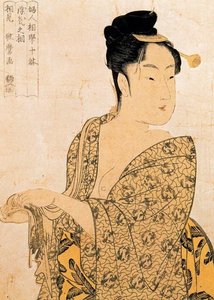
Kitagawa Utamaro (1753–1806) stands as an undisputed titan amongst Edo period artists, celebrated primarily for his breathtaking *bijin-ga*, or portraits of beautiful women. His masterpiece, "Uwaki no So" ("The Light-hearted Type"), exemplifies the pinnacle of this genre and continues to captivate audiences today—a testament to Utamaro’s unparalleled skill in capturing not just physical likeness but also psychological nuance and subtle emotional resonance. Produced around 1792–93 during a period of burgeoning artistic innovation, this woodblock print transcends mere representation; it embodies the spirit of its time and speaks volumes about Edo society's fascination with aesthetics and social categorization.Composition and Technique: Mastering Flat Perspective
Utamaro’s genius lies in his masterful manipulation of *ukiyo-e* technique—a method characterized by a distinctive flatness of perspective that prioritizes decorative patterns and vibrant color over realistic depth. The print utilizes finely carved wooden blocks to transfer ink onto paper, often incorporating mica powder for shimmering highlights – a technique perfected during Utamaro’s lifetime and adopted by numerous other artists. The central figure dominates the image, positioned slightly off-center to create visual dynamism. Vertical columns of Japanese text frame her portrait on the left, reinforcing the traditional aesthetic conventions of the era. These meticulous lines contribute to an overall sense of refinement and elegance, mirroring Utamaro’s unwavering commitment to precision and detail.Color Palette and Symbolism: Earth Tones Illuminated
The color palette employed in “Uwaki no So” is deliberately restrained—primarily muted earth tones accented by splashes of crimson and black. Beige and cream dominate the background, grounding the figure while subtly hinting at notions of purity and serenity. Crimson appears prominently in the woman’s hair ornaments – a deliberate choice reflecting Edo society's preoccupation with status symbols and conveying an aura of sophistication. The subtle shading achieved through careful linework enhances the contours of her face and clothing, creating a tactile impression that invites contemplation. Beyond mere visual beauty, Utamaro imbues his artwork with symbolic significance. As noted by Christine Guth in “Japanese Art of the Edo Period,” the print draws upon established physiognomic classifications—a practice rooted in humoral theory—to define the woman’s character as “light-hearted” or “fancy-free.” This designation aligns with depictions found in erotic books of the time, highlighting Utamaro's awareness of prevailing social mores and artistic influences.Historical Context: Edo Society’s Obsession with Beauty
“Uwaki no So” emerged during a period marked by intense cultural exchange between Japan and Europe—specifically, the burgeoning influence of Impressionism. Artists like Claude Monet were profoundly moved by Utamaro's aesthetic sensibilities, recognizing in his work a precursor to their own explorations of fleeting moments and atmospheric effects. The print reflects Edo society’s obsession with beauty—a preoccupation fueled by advancements in printing technology and driven by a desire to elevate artistic expression beyond mere imitation of nature. Utamaro’s meticulous attention to detail—from the delicate folds of her kimono to the subtle shimmer of mica powder—demonstrates his unwavering dedication to capturing not just appearance but also psychological state, cementing his legacy as one of Japan's most influential artists.Emotional Resonance: Capturing a Moment of Contemplation
Ultimately, “Uwaki no So” transcends its formal conventions to evoke a profound emotional response in the viewer. The woman’s serene gaze and composed posture convey an aura of grace and dignity—a testament to Utamaro's ability to distill complex emotions into visual form. As Smith observes in "The Best-Known of the Incomplete Set 'Ten Female Faces'", the print embodies “the best-known of the incomplete set ‘Ten Female Faces’,” reflecting Utamaro’s masterful portrayal of an individual classified by physiognomy as a ‘type.’ The subtle lighting—soft and diffused—creates an atmosphere of tranquility, inviting contemplation and prompting viewers to consider the woman's inner life. This enduring appeal underscores Utamaro’s achievement in creating not merely a beautiful image but also a powerful conduit for conveying human emotion—a feat that continues to inspire admiration centuries after its creation.Obras relacionadas
Biografía del artista
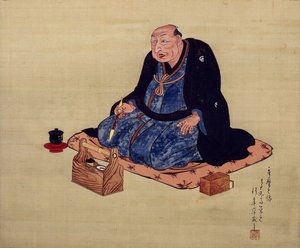
Kitagawa Utamaro: Un Maestro del Bijin-ga
- Nacido: Tokio, Japón (1753)
- Fallecido: 1806
Kitagawa Utamaro fue un artista japonés reconocido por sus contribuciones al *ukiyo-e*, particularmente sus representaciones de mujeres hermosas (*bijin-ga*). Se erige como uno de los diseñadores más celebrados de grabados y pinturas del período Edo, dejando un legado duradero tanto en el arte japonés como en el Impresionismo occidental.
Vida Temprana y Formación
- Se sabe poco con certeza sobre la vida temprana de Utamaro. Se cree que nació como Kitagawa Ichitarō alrededor de 1753, aunque su lugar de nacimiento sigue siendo incierto, con diversas ubicaciones sugeridas incluyendo Kioto, Osaka, Yoshiwara (Edo) y Kawagoe.
- Entró bajo la tutela de Toriyama Sekien, un practicante del *ukiyo-e* que también se formó en la prestigiosa escuela Kanō de pintura de clase alta. Sekien reconoció el talento de Utamaro y fomentó su desarrollo artístico.
- Su primera obra publicada conocida apareció alrededor de 1770, una ilustración para una antología de poesía haikai. Posteriormente trabajó bajo el nombre de Kitagawa Toyoaki, ilustrando literatura popular y ocasionalmente produciendo retratos de actores kabuki.
Ascenso a la Fama: El Maestro del Bijin-ga
- En 1782, Utamaro se unió al editor Tsutaya Jūzaburō, marcando un momento crucial en su carrera. Esta asociación condujo a la creación de obras innovadoras y solidificó su reputación.
- El estilo característico de Utamaro surgió a principios de la década de 1790: retratos de mujeres con rasgos exagerados y alargados. Estos *bijin-ga* se volvieron inmensamente populares, estableciéndolo como una figura líder en el mundo del arte.
- Innovó dentro del género al centrarse en figuras individuales y capturar momentos íntimos, alejándose de las representaciones tradicionales en grupo. Su atención al detalle al retratar telas, peinados y expresiones fue excepcional.
- Utamaro produjo más de 2000 grabados conocidos a lo largo de su carrera, demostrando una productividad y versatilidad artística notables.
Influencias y Desarrollo Artístico
- Kiyonaga: Utamaro fue influenciado por Torii Kiyonaga, un retratista preeminente de mujeres hermosas en la década de 1780, adoptando y refinando la estética elegante establecida por Kiyonaga.
- Shunshō: Se inspiró en Katsukawa Shunshō, quien introdujo el estilo *ōkubi-e* ("imagen de cabeza grande"), que Utamaro adaptó para sus retratos de mujeres.
- Impresionismo Europeo: La obra de Utamaro impactó significativamente a los pintores impresionistas europeos como Monet y Cassatt. Su uso de vistas parciales, énfasis en la luz y la sombra, y enfoque en temas cotidianos resonaron con estos artistas, que buscaban emular sus técnicas.
Vida Posterior, Controversia y Legado
- En 1804, Utamaro enfrentó problemas legales por crear grabados que representaban a Toyotomi Hideyoshi, un tema delicado debido a sus implicaciones políticas. Fue arrestado y esposado durante cincuenta días.
- Falleció dos años después en 1806, dejando atrás un rico legado artístico.
- La obra de Utamaro ganó reconocimiento generalizado en Europa a mediados del siglo XIX, particularmente en Francia, donde impulsó el movimiento Japonismo e influyó profundamente en el arte occidental.
- Sus *bijin-ga* siguen siendo representaciones icónicas de la belleza del período Edo y continúan siendo celebradas por su elegancia, arte y significado cultural.
Kitagawa Utamaro
1753 - 1806 , Japón
Datos clave
- Artistas Que Influyeron:
- Kiyonaga
- Shunshō
- Fecha De Fallecimiento: 1806
- Fecha De Nacimiento: 1753
- Influenciado A Artistas:
- Impresionistas
- Toulouse-Lautrec
- Lugar De Nacimiento: Tokio, Japón
- Movimiento Artístico: Ukiyo-e
- Nacionalidad: Japonés
- Nombre Completo: Kitagawa Utamaro
- Obras Notables:
- Utamaro Okita
- Viajes fantásticos
Artículos relacionados

Katsushika Hokusai: Las 25 Obras Maestras del Ukiyo-e que Transformaron el Arte Japonés | ArtsDot
Descubre las 25 obras maestras de Katsushika Hokusai, el genio del ukiyo-e. Explora 'La Gran Ola', paisajes japoneses y su impacto en el arte moderno. Reproducciones de alta calidad para tu hogar en ArtsDot.com.
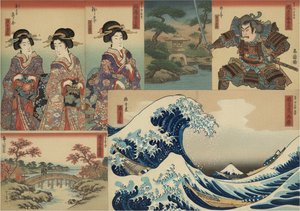
Ukiyo-e: Un Viaje al Corazón del Mundo Flotante Japonés y su Legado Artístico
Descubre el fascinante mundo del Ukiyo-e, el arte japonés del Período Edo. Explora las técnicas de grabado, los maestros Hokusai y Hiroshige, y su legado perdurable. ¡Un viaje cultural inolvidable!
Suzuki Harunobu: Pioneering Ukiyo-e & the Refinement of Edo Period Printmaking
Discover the revolutionary world of Suzuki Harunobu, a pioneer of ukiyo-e printmaking. Explore his exquisite nishiki-e techniques, diverse subjects & lasting impact on Japanese art history. Learn more at ArtsDot.
The Enduring Legacy of Woodblock Printmaking: Technique, History & Artistic Expression
Explore the rich history of woodblock printmaking – from ancient techniques to Ukiyo-e masterpieces. Discover expert insights on collecting, preserving & appreciating this enduring art form.
Tsukioka Yoshitoshi: A Master of Ukiyo-e's Final Flourish – Narrative, Innovation, and the Meiji Transition
Explore the life & art of Tsukioka Yoshitoshi, the last great master of ukiyo-e woodblock printing. Discover his dramatic warrior prints, innovative series like 'One Hundred Aspects of the Moon,' and legacy reflecting Japan's Meiji transition.

